
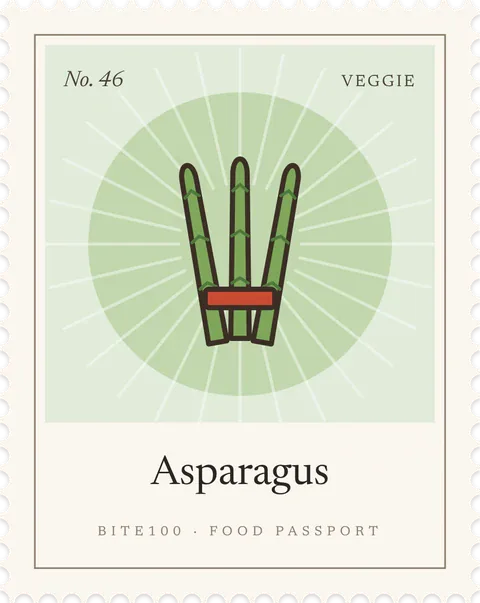
No. 46 · Veggies Passport food
When can babies have asparagus?
Can babies have asparagus?
Babies can have asparagus from about 6 months, as soon as they are ready for solids. Start with asparagus steamed very soft and blended into a smooth puree on a spoon, then offer lumpier mash and whole soft-cooked thick spears to hold from 7–8 months. Raw asparagus is a choking hazard, so always cook it soft.
How to serve asparagus by age
Shapes and textures change as your baby’s grasp and chewing grow.

6 months
Snap off the tough bottom ends, steam asparagus until very soft, then blend it with a little cooking water, breast milk or formula into a smooth puree. It is tastier mixed with smooth potato, avocado or pea puree and offered on a spoon.

7–8 months
Mash soft cooked asparagus with a fork, or chop it finely into mashed potato or egg for a lumpier texture. You can also offer a whole thick spear, steamed or roasted until it squashes easily between your thumb and finger, for your baby to hold in a fist and gnaw on. Thin spears break into small firm bits, so mash those instead.

9–12 months
Cut soft cooked asparagus into small pieces about the size of a pea, or chop it finely into scrambled egg, pasta, or rice. Cooked tips are soft and easy to pick up for pincer practice.

12 months +
Serve soft cooked asparagus in bite-size pieces with family meals, in omelets, risotto or pasta. Keep cooking it until tender, since raw or crisp asparagus is hard and fibrous to chew.
Why it’s good
Asparagus gives babies folate, vitamin K, vitamin A, vitamin C and fiber. Asparagus also contains prebiotic fiber that feeds healthy gut bacteria, and its grassy flavor helps babies get used to green vegetables.
Safety notes
- Never serve raw or crisp asparagus to babies. Cook it until it is very soft and squashes easily between your fingers.
- Snap or cut off the woody bottom ends, and peel the lower part of thick spears if the skin looks tough. Stringy fibers can make babies gag.
- Use thick spears for whole-spear serving. Thin spears can break into small firm pieces, so mash or chop them instead.
- If your baby bites off a large piece, stay calm and let them work it forward. Gagging is common with fibrous vegetables and is a normal part of learning.
- Skip canned asparagus with added salt, or rinse it well. Plain fresh or frozen asparagus is the better choice.
A low-allergy food, still worth watching
Asparagus is not one of the Top 9 allergens and allergy is rare, though some people react to handling or eating it. Watch for a rash around the mouth, hives, swelling or vomiting the first few times.
Asparagus for babies: questions parents ask
Quick answers about asparagus for babies and toddlers.
When can babies have asparagus?
Babies can have asparagus from about 6 months, as soon as they are ready to start solids. Asparagus should be cooked until very soft and served as a smooth puree at first, with whole soft thick spears to hold from about 7–8 months.
Can babies have asparagus?
Yes, babies can eat asparagus from 6 months when it is cooked soft. Asparagus is a nutritious green vegetable with folate, vitamin K and fiber.
Is asparagus a choking hazard for babies?
Asparagus can be a choking hazard for babies when it is raw, undercooked, stringy or cut into small firm pieces. Cook asparagus until very soft, remove the woody ends, and stay with your baby while they eat.
Is asparagus a common allergen?
No, asparagus is not a common allergen and is not one of the Top 9 allergens. Asparagus allergy is rare, but watch for hives, swelling or vomiting when you first offer it.
How do I serve asparagus to a 6 month old?
To serve asparagus to a 6 month old, snap off the tough ends, steam it until very soft and blend it into a smooth puree, or mix it into smooth potato or avocado. Offer it on a spoon. Whole soft-cooked spears to hold can follow at 7–8 months.
Why does my baby's pee smell after eating asparagus?
Asparagus contains natural sulfur compounds that break down during digestion and can give urine a strong smell within hours. The smell is harmless and goes away on its own, and not everyone can detect it.
Can babies have frozen or canned asparagus?
Frozen asparagus is a good option for babies because it cooks soft quickly and has no added salt. Canned asparagus is very soft but often salty, so choose a no-salt-added can or rinse it well before serving.
Is asparagus good for teething babies?
Soft cooked asparagus spears give teething babies something to gnaw on, and some babies enjoy them slightly chilled from the fridge. Do not offer raw or frozen asparagus spears for teething, because hard pieces can break off.
Can asparagus cause gas in babies?
Asparagus contains fiber and natural sugars that can cause some gas in babies, especially when new. Start with a small amount and offer asparagus with other foods; gas usually settles as your baby gets used to it.
The takeaway
- Babies can have asparagus from about 6 months, as soon as they are ready for solids.
- Snap off the tough bottom ends, steam asparagus until very soft, then blend it with a little cooking water, breast milk or formula into a smooth puree.
- Choking risk is medium. Not a Top 9 allergen, but offer a small amount first and watch for any reaction.
Read next



Sources
This guide follows current advice from these organizations.
- Starting Solid Foods American Academy of Pediatrics (HealthyChildren.org)
- When, What, and How to Introduce Solid Foods Centers for Disease Control and Prevention
- Choking Hazards Centers for Disease Control and Prevention
- Choking Prevention American Academy of Pediatrics (HealthyChildren.org)
- Foods and Drinks to Avoid or Limit Centers for Disease Control and Prevention
Stamp asparagus in your baby’s passport
Track the first 100 foods and the Top 9 allergens. 7 days free.
More vegetables for babies
Updated November 2026. Reviewed by our dietitians. Based on AAP, CDC and NIAID guidance. Written for healthy, full-term babies; not a substitute for your pediatrician. If your baby was born early, has a medical condition, feeding difficulties or a known allergy, check with them first (medical disclaimer). Always stay with your baby while they eat.