
Veggies Food Library
When can babies have baby corn?
Can babies have baby corn?
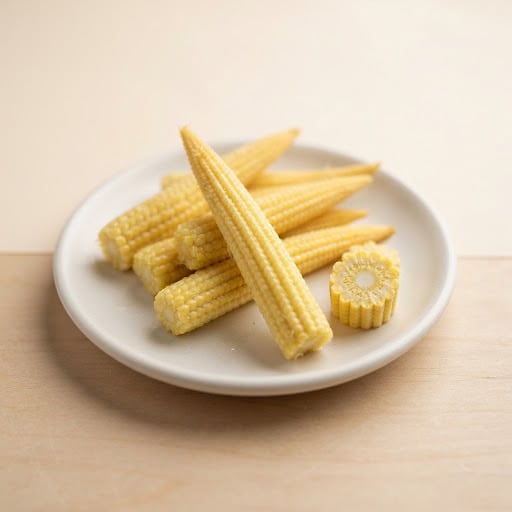
Babies can have baby corn from about 6 months if it is cooked until very soft. Start with a smooth puree on a spoon, then offer soft strips cut lengthwise from 7–8 months. Whole baby corn is firm and shaped like a small cylinder, which makes it a choking hazard for babies and young toddlers. Canned baby corn is softer but salty, so rinse it well.
How to serve baby corn by age
Shapes and textures change as your baby’s grasp and chewing grow.

6 months
Steam or boil baby corn until very soft, then blend it with a little water, breast milk or formula into a smooth puree, pressing it through a sieve if it stays fibrous. Offer it on a spoon, alone or mixed into other vegetable purees.

7–8 months
Mash very soft cooked baby corn with a fork or chop it finely into thicker vegetable mashes. Your baby can also hold soft baby corn cut lengthwise into quarters, as long as each strip squashes easily between your thumb and finger.

9–12 months
Cut very soft baby corn lengthwise into quarters, then chop the strips into small pieces for pincer practice. Never cut whole spears into round coins, which keep the risky cylinder shape.

12 months +
Toddlers can eat soft-cooked baby corn halved or quartered lengthwise, in stir-fries, soups and noodle dishes. Keep cutting it lengthwise and wait until your child chews well, often around 2 years or later, before offering whole spears or crunchy raw baby corn.
Why it’s good
Baby corn is low in calories and gives babies fiber, folate, vitamin C and small amounts of potassium and vitamin A. Because it is harvested young, it is less starchy and sweet than mature corn kernels. It is a fun shape and texture for babies to explore and fits easily into family stir-fries and soups.
Safety notes
- Whole baby corn is firm and round, the exact shape that can block a child's airway. Always cook it soft and slice it lengthwise for babies and young toddlers.
- Do not cut baby corn into round coins, even small ones. Quarter it lengthwise first, then chop.
- Raw or lightly cooked baby corn is crunchy. Cook it until fully soft for babies under 12 months.
- Canned and jarred baby corn is packed in salted brine. Choose no-salt-added if you can, and drain and rinse it well before serving.
- Stir-fry sauces like soy sauce and oyster sauce are very salty. Set aside your baby's portion before adding sauce.
A low-allergy food, still worth watching
Corn is not a Top 9 allergen and corn allergy is uncommon in babies. As with any new food, offer baby corn a few times and watch for hives, vomiting or swelling.
Baby corn for babies: questions parents ask
Quick answers about baby corn for babies and toddlers.
When can babies have baby corn?
Babies can have baby corn from about 6 months, when they start solids. Start with very soft cooked baby corn blended into a puree, then cut it lengthwise into soft strips from 7–8 months to lower the choking risk.
Can babies have baby corn?
Yes, babies can eat baby corn when it is cooked soft and served in safe textures. Baby corn is mild and a little sweet; start with a smooth puree, and from 7–8 months soft lengthwise strips are fun for babies to hold.
Is baby corn a choking hazard for babies?
Yes, baby corn is a choking hazard when served whole or cut into rounds because of its firm, cylindrical shape. Cook baby corn until soft and slice it lengthwise into quarters for babies and young toddlers.
Is corn a common allergen?
No, corn is not one of the Top 9 common food allergens, and corn allergy is uncommon. Watch for signs like hives or vomiting the first few times you offer baby corn, as with any new food.
How do I serve baby corn to a 6 month old?
To serve baby corn to a 6 month old, steam it until very soft and blend it with a little water, breast milk or formula into a smooth puree. Offer it on a spoon. Soft lengthwise strips to hold can follow at 7–8 months.
Can babies have canned baby corn?
Yes, babies can have canned baby corn if you drain and rinse it well to remove extra salt. Canned baby corn is already fairly soft, but still cut it lengthwise into quarters before serving.
Is baby corn the same as regular corn?
Baby corn is regular corn picked very young, before the kernels develop, so the whole small cob is tender and edible. Baby corn is less sweet and starchy than mature corn and has a different texture.
Can babies have raw baby corn?
Babies should not eat raw baby corn because raw baby corn is crunchy and hard to chew. Cook baby corn until soft for babies, and save lightly cooked or raw baby corn for older children who chew well.
Can toddlers eat baby corn in stir-fry?
Toddlers can eat baby corn in stir-fry if the baby corn is cooked soft and sliced lengthwise. Take out your toddler's portion before adding salty sauces like soy sauce or oyster sauce.
The takeaway
- Babies can have baby corn from about 6 months if it is cooked until very soft.
- Steam or boil baby corn until very soft, then blend it with a little water, breast milk or formula into a smooth puree, pressing it through a sieve if it stays fibrous.
- Choking risk is high. Not a Top 9 allergen, but offer a small amount first and watch for any reaction.
Read next


Sources
This guide follows current advice from these organizations.
- Starting Solid Foods American Academy of Pediatrics (HealthyChildren.org)
- When, What, and How to Introduce Solid Foods Centers for Disease Control and Prevention
- Choking Hazards Centers for Disease Control and Prevention
- Choking Prevention American Academy of Pediatrics (HealthyChildren.org)
- Foods and Drinks to Avoid or Limit Centers for Disease Control and Prevention
Track every new food in your baby’s passport
Track the first 100 foods and the Top 9 allergens. 7 days free.
More vegetables for babies
Updated November 2026. Reviewed by our dietitians. Based on AAP, CDC and NIAID guidance. Written for healthy, full-term babies; not a substitute for your pediatrician. If your baby was born early, has a medical condition, feeding difficulties or a known allergy, check with them first (medical disclaimer). Always stay with your baby while they eat.