
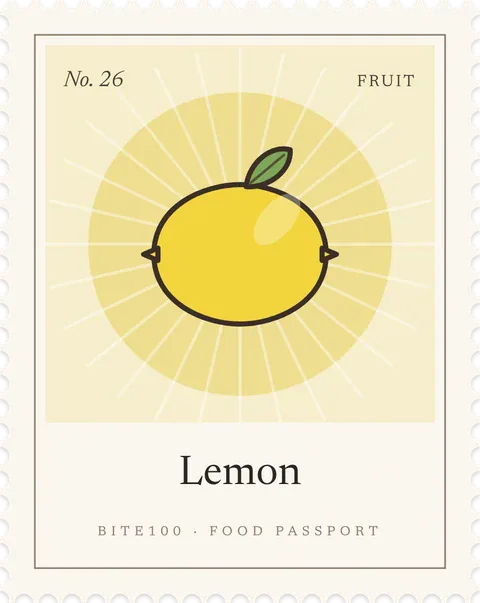
No. 26 · Fruit Passport food
When can babies have lemons?
Can babies have lemons?
Babies can have lemon from about 6 months, as soon as they are ready for solids. Lemon works best as a squeeze of juice or a little zest over other foods, which adds flavor without salt; skip lemonade and sweetened lemon drinks before 2 years.
How to serve lemons by age
Shapes and textures change as your baby’s grasp and chewing grow.

6 months
Squeeze a few drops of fresh, seedless lemon juice into smooth foods your baby already eats, such as mashed avocado, vegetable purees, pureed fish or lentils. Lemon is a seasoning at this age, not something to suck on.

7–8 months
Keep adding a few drops of lemon juice or a little finely grated zest to lumpier mashes, fish and lentils. Lemon stays a seasoning at this age, so skip wedges to lick or suck and let baby taste it through food.

9–12 months
Use lemon juice and finely grated zest to flavor mashed vegetables, yogurt, hummus, grains and fish instead of adding salt. Keep lemon as a seasoning rather than serving lemon pieces.

12 months +
Lemon can flavor family meals freely, from salad dressings to roast chicken and soups. Toddlers can drink water with a squeeze of lemon, but avoid lemonade and other sweetened lemon drinks, which are high in added sugar.
Why it’s good
Lemon juice adds vitamin C, which helps babies absorb iron from plant foods like beans, lentils, spinach and fortified cereal. Its bright sour taste also helps babies get used to a wide range of flavors and makes it easier to cook without added salt.
Safety notes
- Use lemon as a flavor, not a food on its own. Do not serve lemon pieces, rind or pith to young babies; the rind is tough and easy to bite off.
- Remove seeds before squeezing lemon over baby's food, as seeds are slippery and can be inhaled.
- Lemon's acid can redden the skin around the mouth or cause a sore diaper area. This is usually irritation, not allergy.
- Frequent sipping of lemon water or sucking on lemon can wear down tooth enamel. Offer lemon with meals and offer plain water between meals.
- Skip lemonade, lemon candies and sweetened lemon desserts before 2 years because of added sugar, and never sweeten lemon with honey before 12 months.
A low-allergy food, still worth watching
Lemon is not a common allergen. Citrus allergy is uncommon and is sometimes seen as oral allergy syndrome in children with pollen allergies, so watch for hives, lip swelling or vomiting.
Lemons for babies: questions parents ask
Quick answers about lemons for babies and toddlers.
When can babies have lemons?
Babies can have lemons from about 6 months of age, once they are ready to start solids. Lemon is best offered as a squeeze of juice or a little zest over other foods rather than as pieces to eat.
Can babies have lemon?
Yes, babies can have lemon from around 6 months, mainly as a seasoning on other foods. Many babies are surprised by the sour taste, and some love it, but lemon pieces, rind and seeds should not be eaten.
Is lemon a choking hazard for babies?
Lemon is a low choking risk for babies when used as juice or zest in food. The risks come from seeds and from bitten-off pieces of rind, so remove the seeds and keep lemon wedges away from babies.
Is lemon a common allergen?
No, lemon is not one of the Top 9 common food allergens. Lemon allergy is uncommon, and the red rash some babies get around the mouth is usually acid irritation rather than a true allergy.
How do I serve lemon to a 6 month old?
To serve lemon to a 6 month old, squeeze a few drops of fresh, seedless lemon juice into a smooth food baby already eats, like mashed avocado, broccoli puree or pureed fish. Lemon stays a seasoning in food at 7–8 months too, rather than a wedge to suck.
Can babies have food seasoned with lemon juice?
Yes, babies can have food seasoned with lemon juice from 6 months, and lemon is one of the best ways to add flavor without salt. Lemon juice also helps babies absorb iron from plant foods like lentils and beans.
When can babies drink lemonade?
Babies should not have lemonade, because it is loaded with added sugar and the AAP advises no added sugar before 2 years. After 12 months, toddlers can have plain water with a squeeze of fresh lemon in an open cup with meals.
Is lemon water safe for babies?
Babies under 6 months should only have breast milk or formula, so no lemon water. From 6 months, small sips of plain water are fine with meals, and a drop of lemon is okay occasionally, but frequent lemon water can affect developing tooth enamel.
Can babies have lemon zest?
Babies can eat finely grated lemon zest mixed into food from 6 months, as long as the lemon is washed well first. Use a fine grater to avoid the bitter white pith and choose organic or unwaxed lemons when you can.
Is lemon good for babies?
Lemon is good for babies from about 6 months as a seasoning, not as a food on its own. A few drops of juice add vitamin C, help absorb iron from beans and lentils, and add flavor without salt; remove the seeds, skip rind and wedges, and expect an occasional harmless rash around the mouth.
Is lemon water good for toddlers?
Lemon water is fine for toddlers 12 months and older as plain water with a squeeze of fresh lemon and no added sugar. Serve it with meals rather than for sipping all day, because frequent acidic drinks can wear down tooth enamel, and keep plain water and whole milk as the main drinks.
The takeaway
- Babies can have lemon from about 6 months, as soon as they are ready for solids.
- Squeeze a few drops of fresh, seedless lemon juice into smooth foods your baby already eats, such as mashed avocado, vegetable purees, pureed fish or lentils.
- Choking risk is low. Not a Top 9 allergen, but offer a small amount first and watch for any reaction.
Read next


Sources
This guide follows current advice from these organizations.
- Starting Solid Foods American Academy of Pediatrics (HealthyChildren.org)
- When, What, and How to Introduce Solid Foods Centers for Disease Control and Prevention
- Choking Hazards Centers for Disease Control and Prevention
- Foods and Drinks to Avoid or Limit Centers for Disease Control and Prevention
- Dietary Guidelines for Americans, 2020-2025 U.S. Department of Agriculture and HHS
Stamp lemon in your baby’s passport
Track the first 100 foods and the Top 9 allergens. 7 days free.
Recipes with lemon
More fruit for babies
Updated November 2026. Reviewed by our dietitians. Based on AAP, CDC and NIAID guidance. Written for healthy, full-term babies; not a substitute for your pediatrician. If your baby was born early, has a medical condition, feeding difficulties or a known allergy, check with them first (medical disclaimer). Always stay with your baby while they eat.