
Veggies Food Library
When can babies have arugula?
Can babies have arugula?
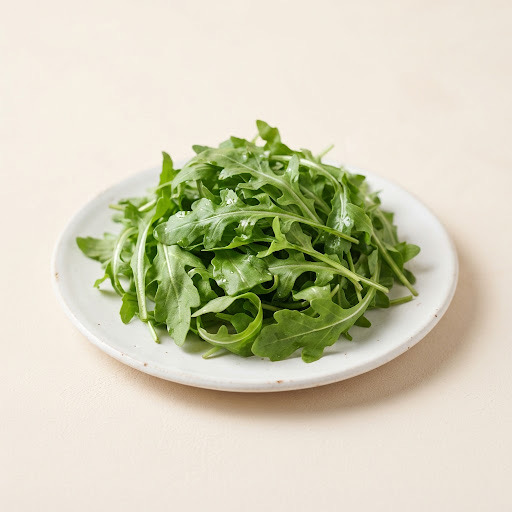
Babies can have arugula (rocket) from about 6 months, ideally wilted or finely chopped and mixed into other foods. Raw leaves are thin and can stick to the roof of the mouth, which often causes gagging. Arugula's peppery flavor is a great way to introduce bitter greens early.
How to serve arugula by age
Shapes and textures change as your baby’s grasp and chewing grow.

6 months
Wilt arugula in a warm pan or steam it briefly, then blend it smoothly into a puree like potato, pea or zucchini, or into a salt-free pesto thinned into soft food. Offer it on a spoon, since whole leaves are hard for young babies to manage.

7–8 months
Chop wilted arugula very finely and stir it into thicker mashes, scrambled egg or soft pasta sauce. Your baby can also hold soft foods with a little arugula mixed in, like a strip of soft omelet.

9–12 months
Keep offering finely chopped arugula, wilted or raw, mixed into omelets, risotto, ricotta or soft pasta. Your baby can also try small pieces of soft flatbread or pizza topped with a little chopped arugula.

12 months +
Toddlers can try small raw arugula leaves in salads, especially when tossed with a little oil and a sweeter food like pear or avocado. Chop larger leaves and keep stems short, since long leaves can still cause gagging.
Why it’s good
Arugula gives babies vitamin K, folate, vitamin A (from beta carotene), vitamin C and calcium, plus small amounts of iron. Like other leafy greens in the mustard family, arugula contains plant compounds called glucosinolates. Its peppery taste helps babies get used to bitter and strong flavors, which may make them more open to vegetables later.
Safety notes
- Whole raw leaves can stick to the roof of the mouth and cause gagging or coughing. Wilt and finely chop arugula for babies under 12 months.
- Rinse loose arugula well under running water (bagged arugula labeled ready-to-eat or triple-washed does not need rewashing), and keep it cold. Leafy greens can carry germs like E. coli and are best bought fresh and used quickly.
- Arugula is naturally high in nitrates. This is not a concern for babies over 6 months eating normal amounts, but refrigerate cooked arugula dishes promptly and use within 1 to 2 days.
- Do not use arugula water or homemade green purees for babies under 3 months; for older babies, offer greens as part of a varied diet rather than in large daily amounts.
- Pesto made with arugula often contains nuts, cheese and salt. Make it at home with little or no salt, and use smooth nut butter or ground nuts only after nuts have been introduced.
A low-allergy food, still worth watching
Arugula is not a Top 9 allergen and reactions are rare. Arugula is in the mustard family, so children with mustard allergy may react; watch for itchy mouth, hives or vomiting the first few times you offer arugula.
Arugula for babies: questions parents ask
Quick answers about arugula for babies and toddlers.
When can babies have arugula?
Babies can have arugula from about 6 months, when they start solids. Arugula is easiest for babies when wilted, finely chopped and mixed into other foods.
Can babies have arugula?
Yes, babies can eat arugula. Arugula's peppery taste is a good introduction to bitter greens, and cooking or chopping it makes it much easier for babies to eat.
Is arugula a choking hazard for babies?
Arugula is a low choking risk, but whole raw leaves can stick to the roof of the mouth and cause gagging. Wilt and chop arugula finely for babies, and save small whole raw leaves for toddlers.
Is arugula a common allergen?
No, arugula is not one of the Top 9 common food allergens. Allergy to arugula is rare, but children allergic to mustard may be more likely to react.
How do I serve arugula to a 6 month old?
To serve arugula to a 6 month old, wilt a handful in a pan, then blend it until smooth into a soft food like mashed potato, avocado or pea puree and offer it on a spoon. Finely chopped arugula in soft omelet strips can follow at 7–8 months.
Do I need to worry about nitrates in arugula for my baby?
Nitrates in arugula are not a concern for most babies over 6 months eating normal portions as part of a varied diet. The main nitrate risk is for babies under 3 months, so do not give homemade vegetable purees or vegetable water to young infants, and refrigerate cooked greens quickly.
Can babies have raw arugula?
Babies can eat raw arugula if it is very finely chopped and mixed into a soft food. Whole raw leaves are better for toddlers, since thin raw leaves often cause gagging in younger babies.
Why does my baby make a face when eating arugula?
Many babies make a face at arugula because of its peppery, bitter taste, not because they dislike it. Keep offering arugula mixed with foods your baby enjoys, as repeated exposure helps babies accept bitter greens.
Is arugula the same as rocket?
Yes, arugula and rocket are the same leafy green. Rocket is the common name in the UK, Australia and New Zealand, while arugula is used in the US and Canada.
The takeaway
- Babies can have arugula (rocket) from about 6 months, ideally wilted or finely chopped and mixed into other foods.
- Wilt arugula in a warm pan or steam it briefly, then blend it smoothly into a puree like potato, pea or zucchini, or into a salt-free pesto thinned into soft food.
- Choking risk is low. Not a Top 9 allergen, but offer a small amount first and watch for any reaction.
Read next



Sources
This guide follows current advice from these organizations.
- Starting Solid Foods American Academy of Pediatrics (HealthyChildren.org)
- When, What, and How to Introduce Solid Foods Centers for Disease Control and Prevention
- Choking Hazards Centers for Disease Control and Prevention
- Infant Methemoglobinemia: The Role of Dietary Nitrate in Food and Water Greer FR, Shannon M; American Academy of Pediatrics. Pediatrics. 2005;116(3):784-786
Track every new food in your baby’s passport
Track the first 100 foods and the Top 9 allergens. 7 days free.
More vegetables for babies
Updated November 2026. Reviewed by our dietitians. Based on AAP, CDC and NIAID guidance. Written for healthy, full-term babies; not a substitute for your pediatrician. If your baby was born early, has a medical condition, feeding difficulties or a known allergy, check with them first (medical disclaimer). Always stay with your baby while they eat.