
Family foods Food Library
When can babies have veggie straws?
Can babies have veggie straws?
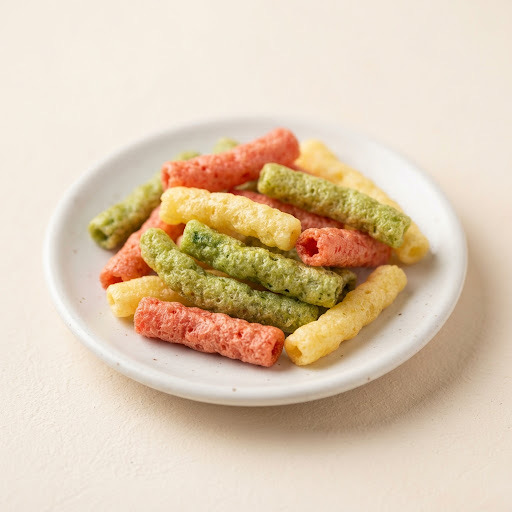
Veggie straws are best saved for toddlers from about 2 years, as an occasional snack. Veggie straws are mostly potato starch and oil with a little vegetable powder, so they are not a vegetable serving, and they are salty. They are crunchy and do not melt as fast as baby puffs.
How to serve veggie straws by age
Shapes and textures change as your baby’s grasp and chewing grow.

6 months
Skip veggie straws. Offer real vegetables instead, like smooth steamed carrot, pumpkin or sweet potato puree on a spoon.

7–8 months
Still skip veggie straws. Offer real vegetables instead, such as lumpy mashed vegetables or steamed carrot sticks and roasted sweet potato wedges cooked until they squash easily between your fingers.

9–12 months
Still skip veggie straws. Offer melt-in-the-mouth puffs for pincer practice, and soft-cooked vegetable pieces about the size of a pea for real vegetable nutrition.

12 months +
From about 2 years, toddlers can have a small handful of veggie straws now and then, sitting down and supervised. Serve them with a real fruit or vegetable and a drink of water.
Why it’s good
Veggie straws give mostly starch and fat for energy. The vegetable powders add color but very little fiber, vitamins or minerals, and the salt adds up fast. Real vegetables, puffs made for babies or whole grain snacks give more nutrition.
Safety notes
- Veggie straws are crunchy and can soften into a sticky lump. Wait until about 2 years, and always have your child sit while eating them.
- Veggie straws are salty. Keep portions to a small handful and do not let them replace vegetables.
- Do not confuse veggie straws with baby puffs. Most baby puffs are designed to melt quickly, while veggie straws stay crunchy longer.
- Check labels on flavored varieties for milk, soy and wheat.
- Avoid snacking in the car or while walking, when it is hard to watch for choking.
A low-allergy food, still worth watching
Plain veggie straws are usually made from potato starch, vegetable powders and oil and do not contain Top 9 allergens. Flavored versions, like ranch or cheddar, may contain milk, soy or wheat.
Veggie straws for babies: questions parents ask
Quick answers about veggie straws for babies and toddlers.
When can babies have veggie straws?
Toddlers can have veggie straws from about 2 years as an occasional snack. Before then, baby puffs that dissolve quickly and soft-cooked vegetables are better choices.
Can babies have veggie straws?
Babies under 2 are better off without veggie straws. Veggie straws are salty, low in nutrition and crunchier than snacks made for babies.
Are veggie straws a choking hazard for babies?
Veggie straws are a medium choking risk for babies because they are crunchy and can turn into a sticky clump when chewed. Veggie straws are safer for toddlers from about 2 years who sit and eat with an adult nearby.
Are veggie straws a common allergen?
Plain veggie straws are usually not a common allergen, since they are made from potato starch, vegetable powders and oil. Flavored veggie straws may contain milk, soy or wheat, so check the label.
How do I serve veggie straws to a 6 month old?
Veggie straws are not recommended for a 6 month old. Offer real vegetables instead, like smooth carrot or sweet potato puree on a spoon. Soft roasted vegetable wedges can follow at 7–8 months.
Are veggie straws healthy for toddlers?
Veggie straws are not much healthier than potato chips for toddlers. Veggie straws contain only small amounts of vegetable powder and do not count toward vegetable servings.
Are veggie straws the same as baby puffs?
Veggie straws are not the same as baby puffs. Baby puffs are made to melt quickly in the mouth and are usually lower in salt, while veggie straws are crunchier and saltier.
What are healthier swaps for veggie straws?
Healthier swaps for veggie straws include hummus with soft pita, steamed vegetable sticks, whole grain puffs and cheese with soft fruit. These give more protein, fiber and vitamins.
The takeaway
- Veggie straws are best saved for toddlers from about 2 years, as an occasional snack.
- From about 2 years, toddlers can have a small handful of veggie straws now and then, sitting down and supervised.
- Choking risk is medium. Not a Top 9 allergen, but offer a small amount first and watch for any reaction.
Read next


Sources
This guide follows current advice from these organizations.
- Starting Solid Foods American Academy of Pediatrics (HealthyChildren.org)
- When, What, and How to Introduce Solid Foods Centers for Disease Control and Prevention
- Choking Hazards Centers for Disease Control and Prevention
- Choking Prevention American Academy of Pediatrics (HealthyChildren.org)
- Foods and Drinks to Avoid or Limit Centers for Disease Control and Prevention
Recipes with veggie straws
Track every new food in your baby’s passport
Track the first 100 foods and the Top 9 allergens. 7 days free.
More family foods for babies
Updated November 2026. Reviewed by our dietitians. Based on AAP, CDC and NIAID guidance. Written for healthy, full-term babies; not a substitute for your pediatrician. If your baby was born early, has a medical condition, feeding difficulties or a known allergy, check with them first (medical disclaimer). Always stay with your baby while they eat.