
Family foods Food Library
When can babies have arroz con leche?
Can babies have arroz con leche?
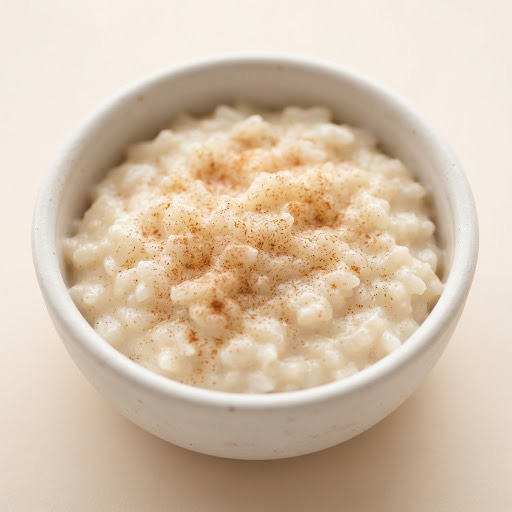
Babies can have arroz con leche from about 6 months if you make it at home without added sugar. Cook the rice until very soft in whole cow's milk, mash or blend it smooth at first, and flavor it with a little cinnamon or vanilla instead of sugar or condensed milk. Arroz con leche contains milk, so introduce dairy on its own first.
How to serve arroz con leche by age
Shapes and textures change as your baby’s grasp and chewing grow.

6 months
Simmer white rice in whole cow's milk until it is very soft and creamy, with no added sugar. Blend or mash it smooth, let it cool, and offer it on a spoon or a pre-loaded spoon. A pinch of ground cinnamon or a drop of vanilla adds flavor.

7–8 months
Mash the soft rice pudding more roughly so it keeps small, soft lumps. Stir in mashed ripe banana, pear or mango for natural sweetness, and let your baby practice with a pre-loaded spoon.

9–12 months
Serve unblended arroz con leche thick enough to scoop, with soft rice grains your baby can manage. Top it with small pieces of soft fruit for pincer practice.

12 months +
Toddlers can eat arroz con leche with a spoon as a snack or breakfast. Keep it lightly sweetened with fruit, and save traditional versions made with sugar or condensed milk for an occasional treat after age 2.
Why it’s good
Arroz con leche gives babies energy from rice, plus protein, calcium, vitamin D (from fortified milk) and fat from whole milk. Made without added sugar, it is a soft, filling food that is easy to swallow. Pairing it with fruit adds fiber and vitamins.
Safety notes
- Arroz con leche contains cow's milk, a Top 9 allergen. Introduce dairy on its own first, then serve rice pudding once your baby tolerates it.
- Traditional recipes use sugar, sweetened condensed milk or dulce de leche. Skip added sugar for children under 2 and sweeten with mashed fruit instead.
- Remove cinnamon sticks, lemon or orange peel and whole cloves before serving. They are choking hazards.
- Whole raisins are a choking risk for babies. Leave them out, or chop soaked raisins very finely for older babies.
- Rice can contain inorganic arsenic. Cook rice in plenty of water or milk, and offer a variety of grains rather than rice every day.
Introduce arroz con leche on its own, then keep it in
Arroz con leche is made with cow's milk, a Top 9 allergen, and some recipes add egg yolk. Introduce milk products like yogurt on their own first, then watch for hives, vomiting, swelling or wheezing when you serve rice pudding.
Arroz con leche for babies: questions parents ask
Quick answers about arroz con leche for babies and toddlers.
When can babies have arroz con leche?
Babies can have arroz con leche from about 6 months, once dairy has been introduced, if it is made at home without added sugar and blended or mashed smooth.
Can babies have arroz con leche?
Yes, babies can eat arroz con leche made with very soft rice, whole cow's milk and no added sugar. Flavor it with cinnamon, vanilla or mashed fruit instead of sugar or condensed milk.
Is arroz con leche a choking hazard for babies?
Arroz con leche is a low choking risk when the rice is cooked very soft. Remove cinnamon sticks, citrus peel and whole cloves, leave out whole raisins, and stay with your baby while they eat.
Is arroz con leche a common allergen?
Yes, arroz con leche contains cow's milk, one of the Top 9 allergens, and some versions add egg. Introduce dairy on its own before serving it.
How do I serve arroz con leche to a 6 month old?
To serve arroz con leche to a 6 month old, cook rice in whole cow's milk until very soft, skip the sugar, blend it smooth and offer it on a spoon once it has cooled.
Can babies have cow's milk in arroz con leche?
Yes, babies can have whole cow's milk cooked into foods like arroz con leche from 6 months. Breast milk or formula should still be their main drink until 12 months.
Can I add sugar to my baby's arroz con leche?
It is best not to add sugar to arroz con leche for children under 2. Mashed ripe banana, pear, mango or a little cinnamon gives plenty of flavor.
Can babies have rice pudding every day?
It is better to offer rice pudding a few times a week rather than every day, because rice can contain arsenic. Rotate it with oatmeal, quinoa and other grains.
The takeaway
- Babies can have arroz con leche from about 6 months if you make it at home without added sugar.
- Simmer white rice in whole cow's milk until it is very soft and creamy, with no added sugar.
- Choking risk is low. Dairy is one of the Top 9 allergens: offer a small amount first, watch for a reaction, then keep it in the diet regularly.
Read next


Sources
This guide follows current advice from these organizations.
- Starting Solid Foods American Academy of Pediatrics (HealthyChildren.org)
- When, What, and How to Introduce Solid Foods Centers for Disease Control and Prevention
- Choking Hazards Centers for Disease Control and Prevention
- Foods and Drinks to Avoid or Limit Centers for Disease Control and Prevention
- What You Can Do to Limit Exposure to Arsenic U.S. Food and Drug Administration
- Dietary Guidelines for Americans, 2020-2025 U.S. Department of Agriculture and HHS
- The Effects of Early Nutritional Interventions on the Development of Atopic Disease in Infants and Children Greer FR, Sicherer SH, Burks AW; American Academy of Pediatrics. Pediatrics. 2019;143(4):e20190281
Track every new food in your baby’s passport
Track the first 100 foods and the Top 9 allergens. 7 days free.
More family foods for babies

Updated November 2026. Reviewed by our dietitians. Based on AAP, CDC and NIAID guidance. Written for healthy, full-term babies; not a substitute for your pediatrician. If your baby was born early, has a medical condition, feeding difficulties or a known allergy, check with them first (medical disclaimer). Always stay with your baby while they eat.