
Fruit Food Library
When can babies have pomelo?
Can babies have pomelo?
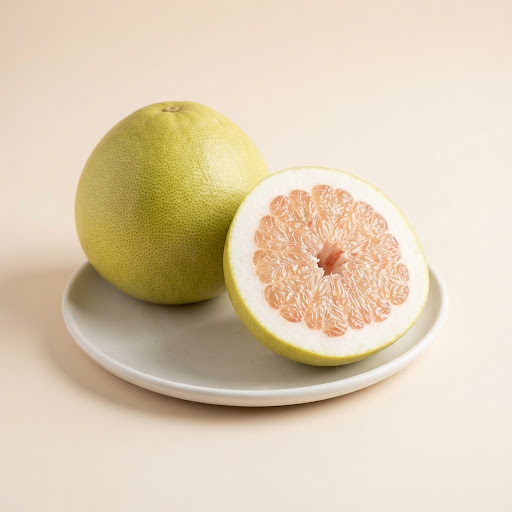
Babies can have pomelo from about 6 months when the flesh is taken out of its tough membrane and all seeds are removed. Whole segments with membrane are hard to chew and can be a choking hazard. Pomelo is a large, mild citrus fruit and is not a common allergen.
How to serve pomelo by age
Shapes and textures change as your baby’s grasp and chewing grow.

6 months
Peel the thick rind, pull each segment open and remove all membrane and seeds. Mash the juicy pulp with a fork or blend it until smooth, then offer it on a spoon on its own or stirred into yogurt.

7–8 months
Mash membrane-free pomelo pulp more roughly so it keeps some texture. Your baby can also hold a large, membrane-free, seedless chunk of flesh to suck and munch on, since the juicy pulp squashes easily.

9–12 months
Break membrane-free pomelo flesh into small, juicy pieces about the size of a chickpea for pincer practice. Check carefully for seeds.

12 months +
Toddlers can eat bite-sized pieces of pomelo flesh, still without the tough membrane. Older toddlers can practice peeling segments with help.
Why it’s good
Pomelo is rich in vitamin C, which helps babies absorb iron from plant foods, and offers potassium, vitamin B6 and some fiber. Its mild, sweet taste is less sour than grapefruit, which many babies enjoy.
Safety notes
- The membrane around each segment is tough and stringy. Remove it before serving to babies and toddlers.
- Pomelo seeds are a choking and aspiration risk. Check each piece and remove every seed.
- Like grapefruit, pomelo can interact with some medicines. If your child takes daily medication, ask your pediatrician or pharmacist before serving pomelo.
- Pomelo is acidic and may cause a red rash around the mouth, which is usually irritation.
A low-allergy food, still worth watching
Pomelo is not a common allergen. Babies with a citrus allergy may react, so offer a small amount first and watch for hives, swelling or vomiting.
Pomelo for babies: questions parents ask
Quick answers about pomelo for babies and toddlers.
When can babies have pomelo?
Babies can have pomelo from about 6 months when the flesh is removed from the membrane and all seeds are taken out. Pomelo is mild and juicy, which makes it a good first citrus.
Can babies have pomelo?
Yes, babies can eat pomelo when it is prepared safely without the membrane or seeds. Pomelo is a great source of vitamin C.
Is pomelo a choking hazard for babies?
Yes, pomelo can be a choking hazard if segments are served with their tough membrane or seeds. Removing the membrane and seeds lowers the risk.
Is pomelo a common allergen?
No, pomelo is not a common allergen. Citrus allergy can happen, so start small.
How do I serve pomelo to a 6 month old?
To serve pomelo to a 6 month old, peel the fruit, remove all membrane and seeds, and mash or blend the juicy flesh until smooth. Offer it on a spoon or stirred into yogurt. Large membrane-free chunks to hold can follow at 7–8 months.
Can babies drink pomelo juice?
Babies should not have pomelo juice before 12 months. Offer the whole fruit instead, which has more fiber and less sugar per serving.
Does pomelo interact with medicine?
Pomelo, like grapefruit, contains compounds that can affect how some medicines work. Ask your pediatrician or pharmacist before serving pomelo if your child takes regular medication.
How do I pick a ripe pomelo?
A ripe pomelo feels heavy for its size and smells fragrant at the stem end. The rind should give slightly when pressed.
The takeaway
- Babies can have pomelo from about 6 months when the flesh is taken out of its tough membrane and all seeds are removed.
- Peel the thick rind, pull each segment open and remove all membrane and seeds.
- Choking risk is medium. Not a Top 9 allergen, but offer a small amount first and watch for any reaction.
Read next



Sources
This guide follows current advice from these organizations.
- Starting Solid Foods American Academy of Pediatrics (HealthyChildren.org)
- When, What, and How to Introduce Solid Foods Centers for Disease Control and Prevention
- Choking Hazards Centers for Disease Control and Prevention
- Choking Prevention American Academy of Pediatrics (HealthyChildren.org)
Track every new food in your baby’s passport
Track the first 100 foods and the Top 9 allergens. 7 days free.
More fruit for babies
Updated November 2026. Reviewed by our dietitians. Based on AAP, CDC and NIAID guidance. Written for healthy, full-term babies; not a substitute for your pediatrician. If your baby was born early, has a medical condition, feeding difficulties or a known allergy, check with them first (medical disclaimer). Always stay with your baby while they eat.