
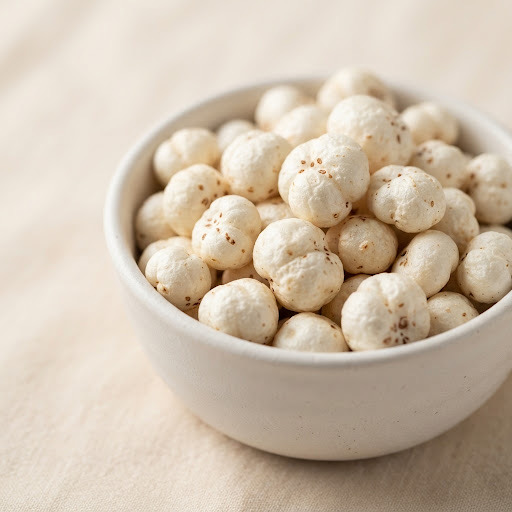
Nuts & seeds Food Library
When can babies have makhana?
Can babies have makhana?
Makhana (fox nuts, puffed lotus seeds) can be offered from 6 months, roasted and ground into a fine powder and cooked into porridge or mixed into purées. Whole crunchy makhana is a choking hazard for babies, because the pieces are hard and do not dissolve fully. Crush or grind it, and skip salted, buttered or flavored snack packs.
How to serve makhana by age
Shapes and textures change as your baby’s grasp and chewing grow.

6 months
Dry roast plain makhana, cool it and grind it into a fine powder. Cook a spoonful into a smooth porridge with water, breast milk or formula, or stir it into mashed banana or another smooth puree, and offer it on a spoon.

7–8 months
Keep using makhana powder in thicker porridge or khichdi. You can also soak roasted makhana in warm breast milk or formula until it is fully soft, then mash it with a fork into a lumpier texture. Avoid whole, crunchy pieces.

9–12 months
Keep using makhana powder in porridge, pancakes or khichdi. You can also soak roasted makhana in warm breast milk, formula or whole cow's milk until it is fully soft, then mash it with a fork. Avoid whole, crunchy pieces.

12 months +
Keep crushing makhana into small crumbs or soaking it until soft. Wait to offer whole crunchy makhana until your child chews well and sits calmly to eat, and always stay close.
Why it’s good
Makhana is the puffed seed of the fox nut (lotus) plant. It is low in fat and gives some protein, magnesium, potassium and phosphorus. As a gluten-free powder, it is an easy way to thicken porridge and add variety to a baby’s grains.
Safety notes
- Whole roasted makhana is hard and crunchy and is a choking hazard for babies and young toddlers. Grind, crush or soak it until soft.
- Choose plain makhana. Snack packs are often high in salt, butter, sugar or spices.
- Do not sweeten makhana with honey before 12 months, and avoid added sugar before 2 years.
- Cook makhana powder fully in liquid so it has a smooth, lump-free texture.
- Makhana is not the same as lotus root. It is the seed, sold puffed and dried.
A low-allergy food, still worth watching
Makhana is not a Top 9 allergen, and reactions are rare. Offer a small amount first and watch for hives, vomiting or swelling. Some snack brands are made in factories that also handle nuts, so check labels if your child has a nut allergy.
Makhana for babies: questions parents ask
Quick answers about makhana for babies and toddlers.
When can babies have makhana?
Babies can have makhana from 6 months, roasted and ground into a fine powder and cooked into porridge or purées. Avoid whole, crunchy makhana for babies.
Is makhana a choking hazard for babies?
Yes, whole roasted makhana is a choking hazard because the pieces are hard and do not dissolve fully. Grind it into a powder, crush it into crumbs, or soak it until soft.
How do I make makhana powder for babies?
Dry roast plain makhana in a pan until crisp, let it cool, then grind it to a fine powder. Store it in an airtight jar and cook it into porridge with water or milk.
Is makhana a nut?
No. Makhana is the seed of the fox nut (lotus) plant, not a tree nut. It is not one of the Top 9 allergens.
Can babies have store-bought flavored makhana?
It is best to avoid it. Flavored makhana snacks are often high in salt, butter, sugar or spices. Use plain makhana and season it at home.
Is makhana good for babies?
Makhana is a gentle, gluten-free food with some protein, magnesium and potassium. It is a nice way to add variety, but it is not essential.
Can makhana cause constipation in babies?
Makhana is not known to cause constipation. If your baby seems constipated, offer more water with meals and fruits like pears, prunes and plums.
How much makhana can I give my baby?
Start with a teaspoon or two of makhana powder cooked into porridge. As your baby gets used to it, you can offer it a few times a week as part of a varied diet.
The takeaway
- Makhana (fox nuts, puffed lotus seeds) can be offered from 6 months, roasted and ground into a fine powder and cooked into porridge or mixed into purées.
- Dry roast plain makhana, cool it and grind it into a fine powder.
- Choking risk is high. Not a Top 9 allergen, but offer a small amount first and watch for any reaction.
Read next



Sources
This guide follows current advice from these organizations.
- Starting Solid Foods American Academy of Pediatrics (HealthyChildren.org)
- When, What, and How to Introduce Solid Foods Centers for Disease Control and Prevention
- Choking Hazards Centers for Disease Control and Prevention
- Choking Prevention American Academy of Pediatrics (HealthyChildren.org)
- Foods and Drinks to Avoid or Limit Centers for Disease Control and Prevention
- Dietary Guidelines for Americans, 2020-2025 U.S. Department of Agriculture and HHS
Track every new food in your baby’s passport
Track the first 100 foods and the Top 9 allergens. 7 days free.
More nuts and seeds for babies
Updated November 2026. Reviewed by our dietitians. Based on AAP, CDC and NIAID guidance. Written for healthy, full-term babies; not a substitute for your pediatrician. If your baby was born early, has a medical condition, feeding difficulties or a known allergy, check with them first (medical disclaimer). Always stay with your baby while they eat.