
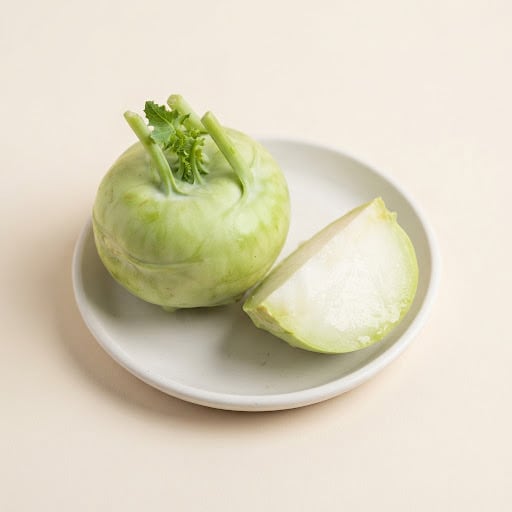
Veggies Food Library
When can babies have kohlrabi?
Can babies have kohlrabi?
Babies can have kohlrabi from about 6 months when it is peeled and cooked until completely soft. Raw kohlrabi is hard and crunchy, which makes it a choking hazard for babies and toddlers. Kohlrabi is mild, slightly sweet and not a common allergen.
How to serve kohlrabi by age
Shapes and textures change as your baby’s grasp and chewing grow.

6 months
Peel kohlrabi, cut it up and steam or boil until a fork slides through easily. Blend or mash it smooth with potato or carrot and a little breast milk, formula or water, and offer it on a spoon.

7–8 months
Cut peeled kohlrabi into thick sticks about the size of an adult finger and steam or roast until it squashes easily between your fingers, then offer the sticks to hold. You can also fork-mash cooked kohlrabi with potato for a lumpier texture.

9–12 months
Offer small, soft cubes of cooked kohlrabi for pincer practice, or mix diced kohlrabi into soups and stews. Keep cooking it until very tender.

12 months +
Toddlers can have cooked kohlrabi in stir-fries, soups and roasted vegetable mixes. If you serve raw kohlrabi, grate it finely or slice it paper thin, and keep hard sticks for children over 4.
Why it’s good
Kohlrabi is rich in vitamin C, which helps babies absorb iron from other foods, and offers fiber, potassium and vitamin B6. Its mild, cabbage-like flavor helps babies get used to the brassica family of vegetables. The leaves are edible too and add vitamin K.
Safety notes
- Raw kohlrabi is hard and crunchy, a common choking hazard. Cook it until soft for babies.
- Peel away the tough outer skin and any woody parts before cooking.
- For toddlers, serve raw kohlrabi only finely grated or shaved very thin.
- Like cabbage, kohlrabi can cause gas. Start with small portions.
A low-allergy food, still worth watching
Kohlrabi is not a common allergen, and allergic reactions are rare. Introduce it in a small amount and watch for hives, swelling or vomiting.
Kohlrabi for babies: questions parents ask
Quick answers about kohlrabi for babies and toddlers.
When can babies have kohlrabi?
Babies can have kohlrabi from about 6 months when it is peeled and cooked until very soft. Raw kohlrabi is too hard for babies.
Can babies have kohlrabi?
Yes, babies can eat cooked kohlrabi as a vegetable. Kohlrabi is mild, slightly sweet and packed with vitamin C.
Is kohlrabi a choking hazard for babies?
Yes, kohlrabi is a choking hazard when raw because it is hard and crunchy. Cooking kohlrabi until it squashes easily lowers the risk.
Is kohlrabi a common allergen?
No, kohlrabi is not a common allergen. Reactions to kohlrabi are rare.
How do I serve kohlrabi to a 6 month old?
To serve kohlrabi to a 6 month old, peel it, steam or boil it until very soft, then mash or blend it smooth with potato or carrot and offer it on a spoon. Soft, finger-sized sticks of cooked kohlrabi can follow at 7–8 months.
Can babies have raw kohlrabi?
Babies should not eat raw kohlrabi sticks or chunks because they are hard. Toddlers can have raw kohlrabi finely grated or shaved paper thin.
Can babies have kohlrabi leaves?
Yes, babies can eat kohlrabi leaves if they are cooked until soft and finely chopped. Kohlrabi leaves can be used like kale or collard greens.
Can kohlrabi help babies poop?
Kohlrabi contains fiber and water, which can help keep babies' stools soft. Serve kohlrabi with plenty of other vegetables and fruits.
The takeaway
- Babies can have kohlrabi from about 6 months when it is peeled and cooked until completely soft.
- Peel kohlrabi, cut it up and steam or boil until a fork slides through easily.
- Choking risk is medium. Not a Top 9 allergen, but offer a small amount first and watch for any reaction.
Read next



Sources
This guide follows current advice from these organizations.
- Starting Solid Foods American Academy of Pediatrics (HealthyChildren.org)
- When, What, and How to Introduce Solid Foods Centers for Disease Control and Prevention
- Choking Hazards Centers for Disease Control and Prevention
- Choking Prevention American Academy of Pediatrics (HealthyChildren.org)
Track every new food in your baby’s passport
Track the first 100 foods and the Top 9 allergens. 7 days free.
More vegetables for babies
Updated November 2026. Reviewed by our dietitians. Based on AAP, CDC and NIAID guidance. Written for healthy, full-term babies; not a substitute for your pediatrician. If your baby was born early, has a medical condition, feeding difficulties or a known allergy, check with them first (medical disclaimer). Always stay with your baby while they eat.