
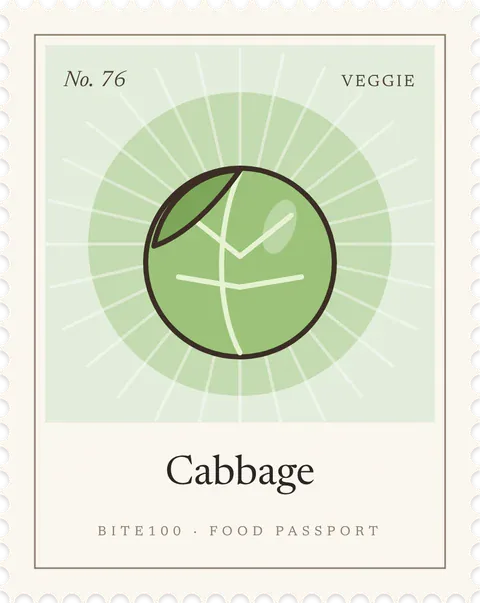
No. 76 · Veggies Passport food
When can babies eat cabbage?
Can babies eat cabbage?
Babies can have cabbage from about 6 months, as soon as they are ready for solids. Cabbage should be cooked until soft and tender for babies, while raw cabbage and slaw are best saved for toddlers who chew well.
How to serve cabbage by age
Shapes and textures change as your baby’s grasp and chewing grow.

6 months
Steam or simmer cabbage until very soft, remove the core and thick ribs, and blend it until smooth with a little cooking water. It is mild when mixed into smooth potato, lentils or apple puree on a spoon.

7–8 months
Finely chop well-cooked cabbage, with the core and thick ribs removed, and stir it into lumpier mashed potato or lentils. Cook it until it is very soft and floppy and squashes easily, and skip wedges to gnaw at this age.

9–12 months
Chop well-cooked cabbage into small pieces and mix it into scrambled eggs, fritters, fried rice, soups or stews. Thin, soft shreds of sauteed cabbage are also good pincer grasp practice.

12 months +
Serve cooked cabbage in family meals such as stir-fries, stuffed cabbage rolls and soups. From around 18 months, toddlers who chew well can try very thinly shredded raw cabbage in a lightly dressed slaw.
Why it’s good
Cabbage gives babies vitamin C, vitamin K, folate and fiber, and red cabbage adds colorful antioxidants called anthocyanins. The vitamin C in cabbage helps babies absorb iron from plant foods like beans and fortified cereals. Its mild flavor when cooked is a gentle way to introduce the cruciferous vegetable family.
Safety notes
- Cook cabbage until very soft for babies. Raw cabbage is crisp and fibrous, and thick pieces are hard for a baby to break down.
- Remove the hard inner core and thick ribs before chopping cabbage for babies.
- Sauerkraut and kimchi are high in salt, and kimchi is often spicy. Wait until after 12 months and offer only a small taste, or choose low-sodium versions.
- Avoid store-bought coleslaw for babies. It is raw, crunchy and often dressed with sugar and salt.
- Seat baby upright and stay within arm's reach at every meal.
A low-allergy food, still worth watching
Cabbage is not a common allergen and reactions are rare. Watch for hives, swelling, rash around the mouth or vomiting the first few times, as with any new food.
Cabbage for babies: questions parents ask
Quick answers about cabbage for babies and toddlers.
When can babies eat cabbage?
Babies can have cabbage from about 6 months, as soon as they are ready for solids. Cabbage should be steamed, roasted, sauteed or simmered until very soft before you offer it to a baby.
Can babies eat cabbage?
Yes, babies can eat cabbage from around 6 months when it is cooked until tender. Green, red, savoy and napa cabbage are all fine for babies, pureed at first and finely chopped into other foods from 7–8 months.
Is cabbage a choking hazard for babies?
Cabbage carries a moderate choking risk, mostly from raw cabbage and thick, firm pieces that are hard for babies to manage. Cook cabbage until floppy, remove the hard core, and stay close during meals.
Is cabbage a common allergen?
No, cabbage is not one of the Top 9 common food allergens. Cabbage allergy is rare, but watch for hives, swelling or vomiting when you first serve it.
How do I serve cabbage to a 6 month old?
To serve cabbage to a 6 month old, steam it until very soft, remove the core and ribs, and blend it smooth or mix it into mashed potato or lentils for spoon feeding. Soft, finely chopped cabbage in lumpier mashes can follow at 7–8 months.
Do I need to worry about nitrates in cabbage?
Nitrates in cabbage are not a concern for healthy babies over 6 months eating normal amounts of vegetables. Nitrate worries mainly apply to young infants under about 3 months, who should not be eating solids at all; ask your pediatrician if your water comes from a private well.
Does cabbage give babies gas?
Cabbage can give some babies extra gas, because it contains fibers and sulfur compounds that gut bacteria break down. This is normal and harmless; offer small amounts at first and pair cabbage with other foods.
Can babies eat sauerkraut or kimchi?
Sauerkraut and kimchi are best saved until after 12 months because they are high in salt and kimchi is usually spicy. Toddlers can try a small rinsed spoonful of sauerkraut mixed into a meal, or a low-sodium version.
Can babies eat raw cabbage?
Raw cabbage is not recommended for babies because it is crunchy and fibrous. From about 18 months, toddlers who chew well can try very finely shredded raw cabbage in a homemade slaw with a light dressing.
Is cabbage good for babies?
Yes, cabbage is a good vegetable for babies from about 6 months when cooked until very soft. It gives vitamin C, vitamin K, folate and fiber, and its vitamin C helps absorb iron from plant foods; it may cause a little harmless gas, and raw cabbage should wait until the toddler years.
The takeaway
- Babies can have cabbage from about 6 months, as soon as they are ready for solids.
- Steam or simmer cabbage until very soft, remove the core and thick ribs, and blend it until smooth with a little cooking water.
- Choking risk is medium. Not a Top 9 allergen, but offer a small amount first and watch for any reaction.
Read next



Sources
This guide follows current advice from these organizations.
- Starting Solid Foods American Academy of Pediatrics (HealthyChildren.org)
- When, What, and How to Introduce Solid Foods Centers for Disease Control and Prevention
- Choking Hazards Centers for Disease Control and Prevention
- Choking Prevention American Academy of Pediatrics (HealthyChildren.org)
- Infant Methemoglobinemia: The Role of Dietary Nitrate in Food and Water Greer FR, Shannon M; American Academy of Pediatrics. Pediatrics. 2005;116(3):784-786
Stamp cabbage in your baby’s passport
Track the first 100 foods and the Top 9 allergens. 7 days free.
More vegetables for babies
Updated November 2026. Reviewed by our dietitians. Based on AAP, CDC and NIAID guidance. Written for healthy, full-term babies; not a substitute for your pediatrician. If your baby was born early, has a medical condition, feeding difficulties or a known allergy, check with them first (medical disclaimer). Always stay with your baby while they eat.