
Veggies Food Library
When can babies have cassava?
Can babies have cassava?
Babies can have cassava from about 6 months, but only when it is peeled, soaked or boiled and fully cooked until very soft. Raw or undercooked cassava contains natural compounds that can release cyanide, so it must never be served raw. Well-cooked cassava mashes smoothly for spoon-feeding at 6 months and can be offered as soft spears from 7–8 months.
How to serve cassava by age
Shapes and textures change as your baby’s grasp and chewing grow.

6 months
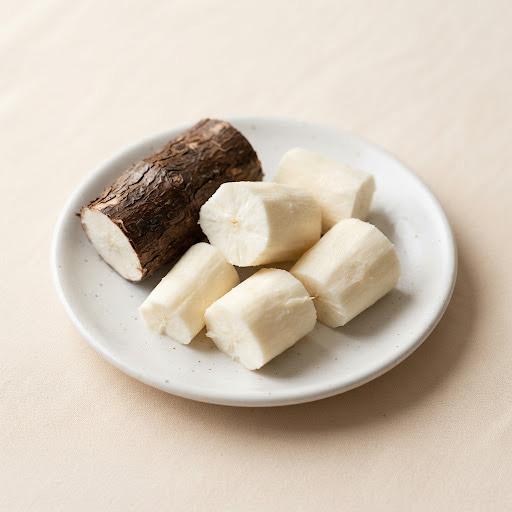
Peel cassava, remove the woody core and boil it in plenty of fresh water until it is very soft, then pour the water away. Mash or blend it smooth with a little olive oil, breast milk or formula and offer it on a spoon.

7–8 months
Mash well-boiled cassava more roughly so it has soft lumps, or serve it alongside stews and beans. You can also offer cooked spears about the length and width of an adult finger that squash easily between your thumb and finger.

9–12 months
Offer small, bite-sized pieces of well-boiled cassava for pincer-grasp practice, or mash it and form soft patties. You can also serve cooked cassava with stews, beans or fish.

12 months +
Toddlers can eat boiled cassava pieces, cassava mash, or oven-baked cassava wedges that are soft inside. Keep salt low, and save deep-fried cassava chips for an occasional treat.
Why it’s good
Cassava is a starchy root that gives babies plenty of energy from carbohydrates, plus vitamin C, potassium and some fiber. Cassava is low in protein and iron, so it works best served with protein and iron foods like beans, fish, meat or eggs.
Safety notes
- Never serve raw cassava. Raw and undercooked cassava contains cyanogenic compounds that can release cyanide in the body. Always peel it fully, discard the peel and cook it all the way through.
- Boil cassava in plenty of water and pour the cooking water away. Soaking peeled pieces in water before cooking helps reduce the natural compounds further, especially for bitter varieties.
- Remove the tough, stringy core running through the middle of the root, which can be hard for babies to chew.
- Buy sweet cassava (often sold as yuca) from grocery stores, or frozen peeled cassava. Bitter varieties need longer processing. Store-bought cassava flour and tapioca are already processed and safe to use in cooking.
- Tapioca pearls, such as in bubble tea, are a choking hazard for young children. Avoid them until at least age 4.
A low-allergy food, still worth watching
Cassava is not a common allergen, though reactions are possible. People with a latex allergy may react to cassava, so if your baby has a latex allergy, talk to your pediatrician before offering it.
Cassava for babies: questions parents ask
Quick answers about cassava for babies and toddlers.
When can babies have cassava?
Babies can have cassava from about 6 months, as long as it is peeled and fully cooked until very soft. Cassava should never be offered raw or undercooked.
Can babies have cassava?
Yes, babies can eat cassava when it is properly peeled, boiled and cooked through. Well-cooked cassava is a soft, filling, energy-rich food for babies starting solids.
Is cassava a choking hazard for babies?
Cassava is a low choking risk when it is boiled until very soft and the woody core is removed. Undercooked, fried or hard pieces of cassava are harder to manage, and tapioca pearls are a choking hazard for young children.
Is cassava a common allergen?
No, cassava is not a common allergen. Cassava allergy is rare, but it has been linked to latex allergy, so babies with a latex allergy should be watched closely.
How do I serve cassava to a 6 month old?
To serve cassava to a 6 month old, peel it, remove the core, and boil it in fresh water until it is very soft. Then mash or blend the cassava smooth with a little breast milk or formula and offer it on a spoon. Soft spears that squash easily can follow at 7–8 months.
Is raw cassava poisonous?
Yes, raw cassava can be poisonous because it contains natural compounds that release cyanide. Peeling, soaking and fully cooking cassava, then throwing away the cooking water, makes it safe to eat.
Is frozen cassava safe for babies?
Frozen cassava is safe for babies once it is fully cooked, and it is usually already peeled. Boil frozen cassava until it is very soft and remove any stringy core before serving.
Can babies have tapioca or cassava flour?
Babies can have foods made with tapioca starch or cassava flour from about 6 months, since these products are already processed to be safe. Cooked tapioca pudding without added sugar is fine, but chewy tapioca pearls are a choking hazard.
Is cassava the same as yuca?
Cassava and yuca are the same root, and it is also called manioc. Cassava is not the same as yucca, an ornamental plant with a similar name.
The takeaway
- Babies can have cassava from about 6 months, but only when it is peeled, soaked or boiled and fully cooked until very soft.
- Peel cassava, remove the woody core and boil it in plenty of fresh water until it is very soft, then pour the water away.
- Choking risk is low. Not a Top 9 allergen, but offer a small amount first and watch for any reaction.
Read next


Sources
This guide follows current advice from these organizations.
- Starting Solid Foods American Academy of Pediatrics (HealthyChildren.org)
- When, What, and How to Introduce Solid Foods Centers for Disease Control and Prevention
- Choking Hazards Centers for Disease Control and Prevention
Track every new food in your baby’s passport
Track the first 100 foods and the Top 9 allergens. 7 days free.
More vegetables for babies
Updated November 2026. Reviewed by our dietitians. Based on AAP, CDC and NIAID guidance. Written for healthy, full-term babies; not a substitute for your pediatrician. If your baby was born early, has a medical condition, feeding difficulties or a known allergy, check with them first (medical disclaimer). Always stay with your baby while they eat.