
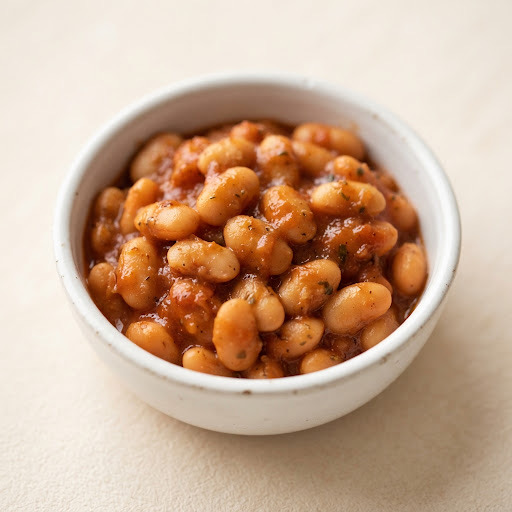
Protein Food Library
When can babies have baked beans?
Can babies eat baked beans?
Babies can have baked beans from about 6 months if they are homemade without sugar, honey, syrup or salt and served mashed or flattened. Canned baked beans, even reduced-sugar versions, contain added sugar and salt, so save them for occasional meals after age 2., served mashed or flattened. Regular canned baked beans are high in added sugar and salt, so save them for occasional meals after 12 months and preferably after 2 years. Baked beans are a good plant source of protein, iron and fiber.
How to serve baked beans by age
Shapes and textures change as your baby’s grasp and chewing grow.

6 months
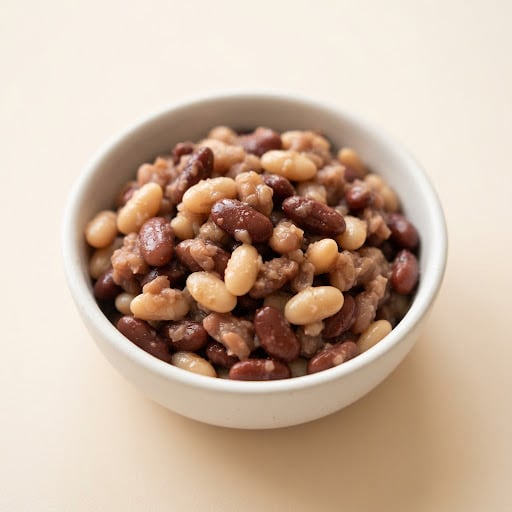
Blend or mash homemade or reduced-salt, reduced-sugar baked beans until smooth, adding a little water if thick, and offer them on a spoon. Make sure no whole beans or skins are left.

7–8 months
Fork-mash baked beans more roughly, or flatten each bean between your fingers, and offer them on a preloaded spoon or let baby scoop them. Mashed beans can also be spread thinly on a soft toast strip for baby to hold.

9–12 months
Offer soft whole beans, each one squashed flat, for pincer-grasp practice, or serve baked beans on toast cut into strips. Stick to low-sugar, low-salt versions.

12 months +
Toddlers can have baked beans on toast, with eggs or in a jacket potato. Homemade baked beans with no added sugar are best before age 2; keep canned baked beans, including reduced-sugar versions, for occasional meals after age 2.
Why it’s good
Baked beans are usually navy (haricot) beans, which give babies plant protein, iron, zinc, folate and fiber. The tomato sauce adds a little vitamin C and lycopene, which helps iron absorption. Regular canned versions also carry a lot of added sugar and salt, which babies do not need.
Safety notes
- Regular canned baked beans are high in sugar and salt. Choose reduced-sugar, reduced-salt cans or make them at home.
- Whole round beans can be a choking risk for young babies. Mash them or flatten each bean before serving.
- Avoid baked beans made with honey before 12 months, and skip versions with bacon, hot dogs or sausage, which are high in sodium.
- Some recipes include molasses or maple syrup. Cut these right down or leave them out for babies under 2.
- Beans can cause gas at first. Start with small portions and offer water with meals.
A low-allergy food, still worth watching
Baked beans are not a common allergen and beans are not in the Top 9. Some children with a peanut allergy react to other legumes, and some recipes contain wheat or mustard, so check labels.
Baked beans for babies: questions parents ask
Quick answers about baked beans for babies and toddlers.
When can babies have baked beans?
Babies can have baked beans from about 6 months if they are homemade or a reduced-salt, reduced-sugar variety. Regular canned baked beans are best kept as an occasional food for older toddlers.
Can babies eat baked beans?
Yes, babies can eat baked beans from 6 months when they are low in salt and sugar and served mashed or flattened. Regular canned baked beans have too much added sugar and salt for everyday baby meals.
Are baked beans a choking hazard for babies?
Baked beans are a medium choking risk for babies because whole round beans can slip into the airway. Mash baked beans or flatten each bean between your fingers before serving.
Are baked beans a common allergen?
Baked beans are not a common allergen, and beans are not one of the Top 9. Some baked bean recipes contain wheat, mustard or Worcestershire sauce, so read labels.
How do I serve baked beans to a 6 month old?
To serve baked beans to a 6 month old, blend or mash reduced-salt, reduced-sugar or homemade baked beans until smooth and offer them on a spoon. Lumpier mashed beans and thin toast strips spread with beans can follow at 7–8 months.
Are canned baked beans healthy for babies?
Canned baked beans contain useful protein and fiber, but regular versions are high in salt and sugar. Reduced-salt, reduced-sugar baked beans are a better choice, served in small amounts.
How do I make baked beans for a baby?
To make baked beans for a baby, simmer cooked navy beans in a simple sauce of crushed tomatoes, onion, garlic and a pinch of smoked paprika. Leave out sugar, honey and salt, and mash before serving.
Can baked beans help with baby constipation?
Baked beans are high in fiber, which can help soften stools in babies who are constipated. Offer water alongside and increase beans slowly to limit gas.
Can toddlers eat beans and franks?
Beans and franks are best limited for toddlers because hot dogs are processed, salty and a major choking hazard. If you serve hot dogs, cut them lengthwise into thin strips, never into rounds.
The takeaway
- Babies can have baked beans from about 6 months if they are homemade without sugar, honey, syrup or salt and served mashed or flattened.
- Blend or mash homemade or reduced-salt, reduced-sugar baked beans until smooth, adding a little water if thick, and offer them on a spoon.
- Choking risk is medium. Not a Top 9 allergen, but offer a small amount first and watch for any reaction.
Read next


Sources
This guide follows current advice from these organizations.
- Starting Solid Foods American Academy of Pediatrics (HealthyChildren.org)
- When, What, and How to Introduce Solid Foods Centers for Disease Control and Prevention
- Choking Hazards Centers for Disease Control and Prevention
- Choking Prevention American Academy of Pediatrics (HealthyChildren.org)
- Foods and Drinks to Avoid or Limit Centers for Disease Control and Prevention
- Iron Centers for Disease Control and Prevention
- Dietary Guidelines for Americans, 2020-2025 U.S. Department of Agriculture and HHS
Track every new food in your baby’s passport
Track the first 100 foods and the Top 9 allergens. 7 days free.
More protein foods for babies
Updated November 2026. Reviewed by our dietitians. Based on AAP, CDC and NIAID guidance. Written for healthy, full-term babies; not a substitute for your pediatrician. If your baby was born early, has a medical condition, feeding difficulties or a known allergy, check with them first (medical disclaimer). Always stay with your baby while they eat.