
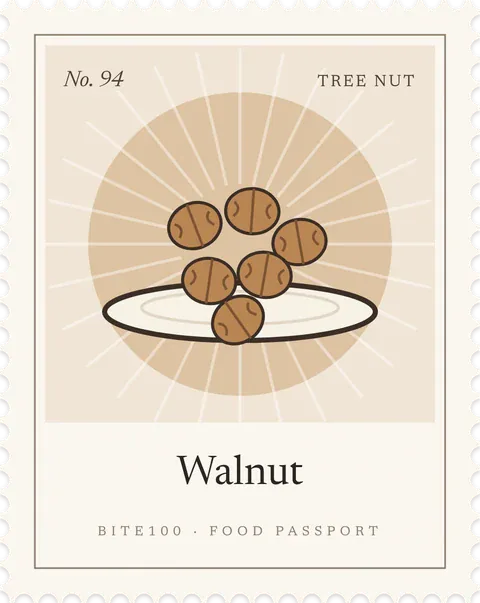
No. 94 · Nuts & seeds Passport food
When can babies have walnuts?
Can babies eat walnuts?
Babies can have walnuts from about 6 months when they are finely ground or made into a smooth butter and mixed into food, never whole or in pieces. Walnut is a tree nut, one of the Top 9 allergens, so introduce it on its own and keep it in the diet regularly.
How to serve walnuts by age
Shapes and textures change as your baby’s grasp and chewing grow.

6 months
Grind unsalted walnuts in a clean coffee grinder or blender into a fine powder with no visible bits, then stir about half a teaspoon into oatmeal, yogurt or a smooth fruit puree. Smooth walnut butter thinned with warm water, breast milk or formula and stirred into food also works.

7–8 months
Keep stirring ground walnut or thinned walnut butter into thicker, lumpier oatmeal and mashes. You can also roll soft, slippery foods like ripe banana or mango spears in ground walnut for grip, or spread thinned walnut butter in a see-through layer on soft toast strips.

9–12 months
Keep using ground walnut in oatmeal, pancakes, muffins and meatballs, or spread thinned walnut butter in a see-through layer on toast fingers. Avoid chopped walnut pieces, which are still a choking risk.

12 months +
Mix ground walnut into baking, pesto or sauces, and spread walnut butter thinly on toast or crackers. Whole and chopped walnuts are a choking hazard until at least age 4, so skip walnut halves in salads, brownies and trail mix for now.
Why it’s good
Walnuts give babies plant omega-3 fat (ALA), which helps the body build healthy brain and eye tissue, along with protein, magnesium, copper and manganese. Walnuts are one of the few nuts with a meaningful amount of omega-3, which makes them a helpful addition for families who eat little fish. A small sprinkle of ground walnut adds a lot of energy in a tiny portion.
Safety notes
- Never serve whole walnuts, halves or chopped walnut pieces. Their irregular, firm shape can block a small airway, and they are a choking hazard until at least age 4.
- Grind walnuts to a fine powder with no visible chunks, and check by rubbing a pinch between your fingers.
- Walnut butter is thick and sticky. Thin it with warm liquid or stir it into food, and never offer it off a spoon in a glob.
- Walnuts go rancid quickly because of their oils. Store them in the fridge or freezer and taste before using; bitter or paint-like smell means toss them.
- Always seat baby upright and stay within arm's reach while they eat.
Introduce walnut on its own, then keep it in
Walnut is a tree nut, one of the Top 9 food allergens, and walnut allergy is closely linked to pecan allergy because the nuts are related. Offer a small amount first, watch for hives, swelling, vomiting or breathing changes, and check with your pediatrician first if your baby has severe eczema or another food allergy.
Walnuts for babies: questions parents ask
Quick answers about walnuts for babies and toddlers.
When can babies have walnuts?
Babies can have walnuts from about 6 months, as soon as they are ready for solids, if the walnuts are finely ground or made into a smooth, thinned butter. Whole and chopped walnuts should wait until at least age 4.
Can babies eat walnuts?
Yes, babies can eat walnuts in a safe form such as ground walnut stirred into food or a thin layer of walnut butter. Walnuts are a tree nut allergen, so introducing them early and offering them often may help lower allergy risk.
Are walnuts a choking hazard for babies?
Yes, walnuts are a high choking hazard for babies and toddlers when served whole, halved or chopped. Grinding walnuts to a fine powder or using thinned walnut butter removes most of that risk.
Are walnuts a common allergen?
Yes, walnuts are a common allergen because they are a tree nut, part of the Top 9 food allergens. Children allergic to walnut are often also allergic to pecan, so ask your pediatrician or allergist before introducing pecans if walnut causes a reaction.
How do I serve walnuts to a 6 month old?
To serve walnuts to a 6 month old, grind them into a fine powder and stir a small amount into oatmeal, yogurt or a puree. You can also thin smooth walnut butter with warm water and mix it into food.
Can babies drink walnut milk?
Walnut milk can be used in small amounts in cooking, but it should not replace breast milk or formula before 12 months. After 12 months, most walnut milks are too low in protein and calcium to be a main drink unless fortified and approved by your pediatrician.
Are walnuts good for baby brain development?
Walnuts contain ALA, a plant omega-3 fat that the body uses as a building block for brain and eye health. Walnuts are a helpful addition, but the omega-3s from fish like salmon are more directly used by the body, so it is best to offer both if you can.
How much walnut should my baby eat?
For a first taste, about a quarter to half a teaspoon of ground walnut or walnut butter mixed into food is plenty. Once tolerated, a teaspoon or so a few times a week is a reasonable amount to keep walnut in the diet.
Can babies eat walnut bread or baked goods?
Babies can have baked goods made with finely ground walnut, but not ones studded with walnut pieces. Store-bought walnut bread, brownies and banana bread usually contain chunks and added sugar, so homemade versions with ground walnut are safer.
The takeaway
- Babies can have walnuts from about 6 months when they are finely ground or made into a smooth butter and mixed into food, never whole or in pieces.
- Grind unsalted walnuts in a clean coffee grinder or blender into a fine powder with no visible bits, then stir about half a teaspoon into oatmeal, yogurt or a smooth fruit puree.
- Choking risk is high. Tree nut is one of the Top 9 allergens: offer a small amount first, watch for a reaction, then keep it in the diet regularly.
Read next


Sources
This guide follows current advice from these organizations.
- Starting Solid Foods American Academy of Pediatrics (HealthyChildren.org)
- When, What, and How to Introduce Solid Foods Centers for Disease Control and Prevention
- Choking Hazards Centers for Disease Control and Prevention
- Choking Prevention American Academy of Pediatrics (HealthyChildren.org)
- Peanut Allergy: What to Know About the Latest Prevention Guidelines American Academy of Pediatrics (HealthyChildren.org)
- Iron Centers for Disease Control and Prevention
- The Effects of Early Nutritional Interventions on the Development of Atopic Disease in Infants and Children Greer FR, Sicherer SH, Burks AW; American Academy of Pediatrics. Pediatrics. 2019;143(4):e20190281
Stamp walnut in your baby’s passport
Track the first 100 foods and the Top 9 allergens. 7 days free.
More nuts and seeds for babies
Updated November 2026. Reviewed by our dietitians. Based on AAP, CDC and NIAID guidance. Written for healthy, full-term babies; not a substitute for your pediatrician. If your baby was born early, has a medical condition, feeding difficulties or a known allergy, check with them first (medical disclaimer). Always stay with your baby while they eat.