
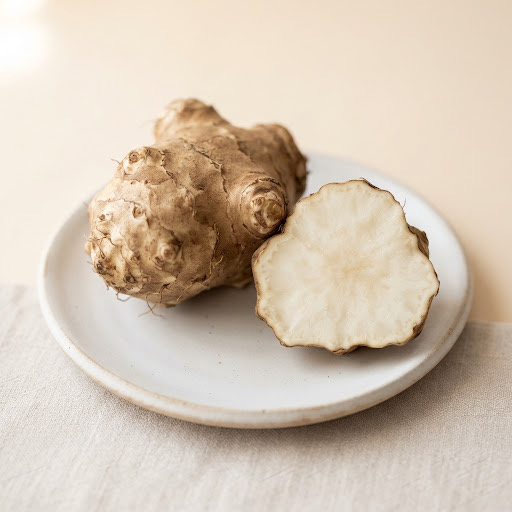
Veggies Food Library
When can babies have sunchokes?
Can babies have sunchokes?
Babies can have sunchokes, also called Jerusalem artichokes, from about 6 months when they are cooked until soft. Raw or undercooked sunchokes are hard and crunchy and can be a choking hazard, so roast, steam or mash them well. Sunchokes are not a common allergen, but they can cause gas, so start with a small amount.
How to serve sunchokes by age
Shapes and textures change as your baby’s grasp and chewing grow.

6 months
Scrub sunchokes well, then steam or roast them until very soft and blend or mash them into a smooth puree, alone or mixed with potato. Start with a spoonful or two, since sunchokes can cause gas.

7–8 months
Mash soft cooked sunchokes with a fork so some lumps remain, or offer large soft wedges or thick slices that squash easily between your thumb and finger.

9–12 months
Offer small, soft pieces of roasted or steamed sunchoke about the size of a chickpea, or mix mashed sunchoke into potato cakes and soups. Make sure every piece is cooked through.

12 months +
Toddlers can eat roasted sunchoke pieces, sunchoke soup and mashed sunchokes. Thin, cooked slices are fine, but raw sunchoke chips and chunks should wait until your child chews hard foods well.
Why it’s good
Sunchokes give babies iron, potassium, thiamin and inulin, a type of fiber that feeds healthy gut bacteria. Plant iron absorbs best when paired with vitamin C foods like tomato, broccoli or bell pepper. Sunchokes have a nutty, slightly sweet taste similar to a mix of potato and artichoke.
Safety notes
- Raw or undercooked sunchokes are hard and crunchy, which makes them a choking hazard. Always cook them until soft for babies.
- Sunchokes are high in inulin, which can cause gas, bloating and loose stools. Start with a spoonful or two and increase slowly.
- Scrub sunchokes well with a vegetable brush, since soil collects in their knobby skin. Peeling is optional once they are clean.
- Cut sunchokes darken quickly. Cook them right away or keep them in water with a squeeze of lemon.
- Store sunchokes in the fridge wrapped in a paper towel and use them within a week or two. Throw them out if they turn soft and wrinkled or moldy.
A low-allergy food, still worth watching
Sunchokes are not one of the Top 9 allergens, and reactions are rare. Sunchokes are in the same plant family as sunflowers and ragweed, so babies with those allergies may rarely react; watch for rash, hives, vomiting or swelling.
Sunchokes for babies: questions parents ask
Quick answers about sunchokes for babies and toddlers.
When can babies have sunchokes?
Babies can have sunchokes from about 6 months, when they start solid foods. Sunchokes must be cooked until soft before serving to babies.
Can babies have sunchokes?
Yes, babies can eat cooked sunchokes from 6 months. Sunchokes offer iron, potassium and gut-friendly fiber, but start with a small amount since they can cause gas.
Is sunchoke a choking hazard for babies?
Raw or undercooked sunchoke is a choking hazard because it is hard and crunchy. Cook sunchokes until they squash easily, and serve them mashed, in large soft wedges or in small soft pieces depending on age.
Is sunchoke a common allergen?
No, sunchoke is not a common allergen and is not one of the Top 9 allergens. Rare reactions may happen in people with sunflower or ragweed allergies.
How do I serve sunchokes to a 6 month old?
To serve sunchokes to a 6 month old, scrub them, steam or roast until very soft, and mash them into a smooth puree or mix them with mashed potato. Offer it on a spoon. Soft sunchoke wedges to hold can follow at 7–8 months.
Can sunchokes make babies gassy?
Yes, sunchokes can make babies gassy because they are rich in inulin, a fiber that gut bacteria ferment. Start with a small portion of sunchokes and serve them alongside other foods.
Are sunchokes and Jerusalem artichokes the same thing?
Yes, sunchokes and Jerusalem artichokes are the same vegetable. Sunchokes are the knobby roots of a type of sunflower and are not related to globe artichokes.
Do I need to peel sunchokes for my baby?
You do not need to peel sunchokes for your baby if you scrub them well. The thin skin of sunchokes softens with cooking, but peeling can make mashing smoother.
Are sunchokes a good source of iron for babies?
Yes, sunchokes contain a useful amount of plant iron for a vegetable. Serve sunchokes with a vitamin C food like tomato or bell pepper to help your baby absorb more of that iron.
The takeaway
- Babies can have sunchokes, also called Jerusalem artichokes, from about 6 months when they are cooked until soft.
- Scrub sunchokes well, then steam or roast them until very soft and blend or mash them into a smooth puree, alone or mixed with potato.
- Choking risk is medium. Not a Top 9 allergen, but offer a small amount first and watch for any reaction.
Read next


Sources
This guide follows current advice from these organizations.
- Starting Solid Foods American Academy of Pediatrics (HealthyChildren.org)
- When, What, and How to Introduce Solid Foods Centers for Disease Control and Prevention
- Choking Hazards Centers for Disease Control and Prevention
- Choking Prevention American Academy of Pediatrics (HealthyChildren.org)
- Iron Centers for Disease Control and Prevention
Track every new food in your baby’s passport
Track the first 100 foods and the Top 9 allergens. 7 days free.
More vegetables for babies
Updated November 2026. Reviewed by our dietitians. Based on AAP, CDC and NIAID guidance. Written for healthy, full-term babies; not a substitute for your pediatrician. If your baby was born early, has a medical condition, feeding difficulties or a known allergy, check with them first (medical disclaimer). Always stay with your baby while they eat.