
Veggies Food Library
When can babies have sun-dried tomatoes?
Can babies have sun-dried tomatoes?
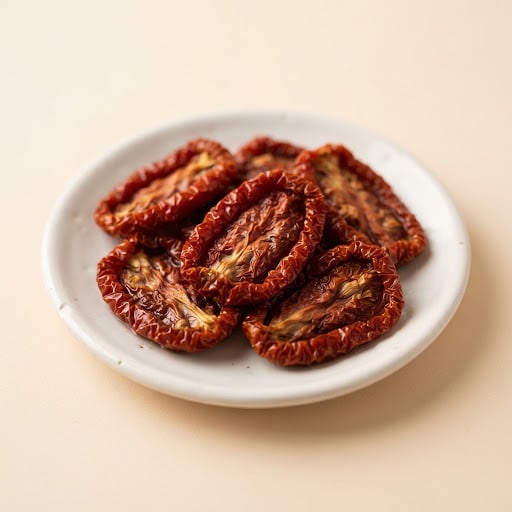
Babies can have sun-dried tomatoes from about 6 months when they are softened and blended into a sauce or spread. Whole or chopped sun-dried tomatoes are tough and chewy, which makes them a high choking risk, and many are very salty. Use them as a small flavor boost rather than a finger food.
How to serve sun-dried tomatoes by age
Shapes and textures change as your baby’s grasp and chewing grow.

6 months
Choose dry-packed sun-dried tomatoes with no added salt, soak them in hot water for 20 minutes, then blend a small amount until completely smooth into pasta sauce, hummus or lentil puree. Offer it on a spoon, always fully blended at this age.

7–8 months
Keep blending softened sun-dried tomatoes into thicker sauces, hummus and lentil mash. The sauce can be stirred through soft pasta or used as a dip for soft toast strips, but still no pieces of sun-dried tomato.

9–12 months
Keep blending softened sun-dried tomatoes into sauces and spreads, or mince them very finely into scrambled eggs or risotto. Pieces should be smaller than a grain of rice.

12 months +
Toddlers can have finely chopped sun-dried tomatoes in pasta, omelets, flatbreads and dips. Larger chewy strips should wait until your child chews well, and keep amounts small because of the salt.
Why it’s good
Sun-dried tomatoes are a concentrated source of lycopene, vitamin C, potassium and fiber, and contain some iron. Drying also concentrates their savory flavor, so a small amount adds lots of taste to plain foods. Jarred or salted versions can be high in sodium.
Safety notes
- Sun-dried tomatoes are tough, leathery and chewy, which makes pieces a high choking hazard. Blend or mince them very finely for babies.
- Many sun-dried tomatoes are salted before drying. Look for no-salt-added versions, or soak and rinse them, and keep portions small.
- Oil-packed sun-dried tomatoes often contain added salt, herbs and garlic. Drain and rinse them, and check the label for added ingredients.
- Homemade sun-dried tomatoes in oil carry a botulism risk if stored at room temperature. Keep any homemade tomatoes in oil in the fridge and use them within a few days, or buy commercially prepared jars.
- Some sun-dried tomatoes are treated with sulfites. Choose sulfite-free products if your family has asthma or a sulfite sensitivity.
A low-allergy food, still worth watching
Sun-dried tomatoes are not a common allergen, though tomato allergy can occur. Their acidity may cause a mild rash around the mouth, which is usually irritation rather than allergy, but call your pediatrician for hives, swelling or vomiting.
Sun-dried tomatoes for babies: questions parents ask
Quick answers about sun-dried tomatoes for babies and toddlers.
When can babies have sun-dried tomatoes?
Babies can have sun-dried tomatoes from about 6 months when they are softened and blended into a sauce, dip or puree. Pieces of sun-dried tomato are chewy and a choking risk, so save small chopped bits for later.
Can babies have sun-dried tomatoes?
Yes, babies can eat sun-dried tomatoes in small amounts when they are rehydrated and blended. Pick unsalted, dry-packed sun-dried tomatoes when you can, and use them as a flavor boost rather than a main food.
Are sun-dried tomatoes a choking hazard for babies?
Yes, sun-dried tomatoes are a high choking hazard for babies because they are tough, chewy and hard to break down. Blending sun-dried tomatoes into sauces or mincing them very finely makes them safer, and always supervise meals.
Are sun-dried tomatoes a common allergen?
No, sun-dried tomatoes are not a common allergen. A few babies are allergic to tomato, so offer a small amount first and watch for hives, swelling or vomiting.
How do I serve sun-dried tomatoes to a 6 month old?
To serve sun-dried tomatoes to a 6 month old, soak a few unsalted sun-dried tomatoes in hot water until soft, then blend them into tomato sauce, hummus or a lentil puree and offer it on a spoon. Using the sauce as a dip for soft toast strips can follow at 7–8 months.
Are sun-dried tomatoes high in salt?
Sun-dried tomatoes can be very high in salt, especially jarred or salted kinds. Choose no-salt-added sun-dried tomatoes, soak and rinse salted ones, and keep portions to a teaspoon or so for babies.
Are oil-packed sun-dried tomatoes okay for babies?
Oil-packed sun-dried tomatoes from a store jar are fine for babies once drained, rinsed and blended. Check the label for added salt and garlic, and refrigerate the jar after opening.
Can I make sun-dried tomatoes in oil at home for my baby?
Homemade sun-dried tomatoes stored in oil can grow the bacteria that cause botulism if left at room temperature. If you make sun-dried tomatoes in oil at home, keep them in the fridge and use them within a few days, or freeze them.
Are sun-dried tomatoes healthier than fresh tomatoes?
Sun-dried tomatoes have more concentrated nutrients per bite than fresh tomatoes, including lycopene and potassium, but also more salt in many brands. For babies, fresh or cooked tomatoes are easier to serve, with sun-dried tomatoes as an occasional extra.
The takeaway
- Babies can have sun-dried tomatoes from about 6 months when they are softened and blended into a sauce or spread.
- Choose dry-packed sun-dried tomatoes with no added salt, soak them in hot water for 20 minutes, then blend a small amount until completely smooth into pasta sauce, hummus or lentil puree.
- Choking risk is high. Not a Top 9 allergen, but offer a small amount first and watch for any reaction.
Read next


Sources
This guide follows current advice from these organizations.
- Starting Solid Foods American Academy of Pediatrics (HealthyChildren.org)
- When, What, and How to Introduce Solid Foods Centers for Disease Control and Prevention
- Choking Hazards Centers for Disease Control and Prevention
- Choking Prevention American Academy of Pediatrics (HealthyChildren.org)
- Foods and Drinks to Avoid or Limit Centers for Disease Control and Prevention
Track every new food in your baby’s passport
Track the first 100 foods and the Top 9 allergens. 7 days free.
More vegetables for babies
Updated November 2026. Reviewed by our dietitians. Based on AAP, CDC and NIAID guidance. Written for healthy, full-term babies; not a substitute for your pediatrician. If your baby was born early, has a medical condition, feeding difficulties or a known allergy, check with them first (medical disclaimer). Always stay with your baby while they eat.