
Veggies Food Library
When can babies have Swiss chard?
Can babies have Swiss chard?
Babies can have Swiss chard from about 6 months when it is cooked until soft and finely chopped or blended. The leaves are easy to soften, but the thick stalks stay firm and fibrous, which raises the choking risk. Swiss chard is not a common allergen.
How to serve Swiss chard by age
Shapes and textures change as your baby’s grasp and chewing grow.

6 months
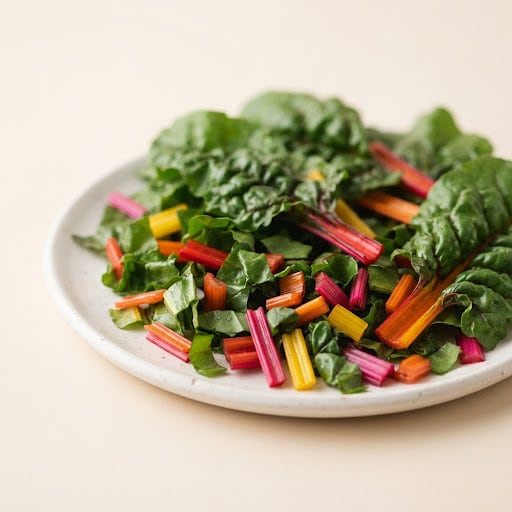
Steam or saute Swiss chard leaves until very soft, remove the stalks, and blend the leaves smooth into mashed potato, lentils or a vegetable puree. Offer it on a spoon.

7–8 months
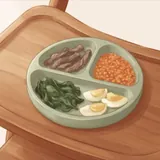
Finely chop very soft cooked chard leaves and stir them into lumpier mashed potato, soft scrambled eggs, lentils or pasta sauce. Cook the stalks until very soft and mash them, or leave them out.

9–12 months
Mix finely chopped cooked chard into omelet strips, patties, risotto or soft pasta. Small flecks are easier to manage than long, stringy leaves.

12 months +
Toddlers can eat chopped cooked chard as a side, in soups, quiche or grain bowls. Cut cooked stalks into small pieces and make sure they are tender.
Why it’s good
Swiss chard gives babies vitamin K, vitamin A, vitamin C, magnesium, potassium and plant iron. Serving chard with vitamin C-rich foods or with meat, fish or eggs helps babies absorb more iron.
Safety notes
- Raw or long, stringy leaves can stick in the mouth and cause gagging. Cook chard until soft and chop it finely.
- Thick stalks are firm and fibrous. Remove them or cook them until very soft and chop small.
- Swiss chard contains nitrates, like spinach and beets. Serving it as part of varied meals is fine from 6 months; refrigerate leftovers promptly.
- Chard is high in oxalates, which slightly reduce calcium and iron absorption. Rotate it with other greens.
- Wash leaves well to remove grit.
A low-allergy food, still worth watching
Swiss chard is not a Top 9 allergen, and allergic reactions are rare. Chard is related to beets and spinach, so offer a small amount first if your baby reacts to those foods.
Swiss chard for babies: questions parents ask
Quick answers about Swiss chard for babies and toddlers.
When can babies have Swiss chard?
Babies can have Swiss chard from about 6 months, as soon as they start solids. Swiss chard should be cooked until soft and chopped or blended.
Can babies have Swiss chard?
Yes, babies can eat Swiss chard when it is cooked and prepared for their age. Swiss chard adds vitamins, minerals and plant iron to a baby's meals.
Is Swiss chard a choking hazard for babies?
Swiss chard can be a choking hazard, mainly because of the firm, fibrous stalks and stringy leaves. Cook Swiss chard until soft and chop it finely to lower the risk.
Is Swiss chard a common allergen?
No, Swiss chard is not a common allergen. Allergic reactions to Swiss chard are rare.
How do I serve Swiss chard to a 6 month old?
To serve Swiss chard to a 6 month old, steam the leaves until very soft, blend them smooth and stir them into a familiar food like mashed potato or lentils, then offer it on a spoon. Remove the stalks, or cook them until very soft and blend them too.
Do I need to worry about nitrates in Swiss chard?
Nitrates in Swiss chard are not a concern for babies 6 months and older eating a varied diet. Refrigerate cooked chard promptly and do not leave it warm for long periods.
Can babies have Swiss chard stems?
Babies can eat Swiss chard stems if they are cooked until very soft and chopped small or mashed. Raw or firm stems are too fibrous for babies.
Is Swiss chard a good source of iron for babies?
Yes, Swiss chard provides plant iron, though the body absorbs it less easily than iron from meat. Pairing Swiss chard with tomatoes, citrus or meat helps babies absorb more.
Can I use rainbow chard for my baby?
Yes, rainbow chard is simply Swiss chard with colorful stems and can be served the same way. Red stems may tint urine or stool pink, which is harmless.
The takeaway
- Babies can have Swiss chard from about 6 months when it is cooked until soft and finely chopped or blended.
- Steam or saute Swiss chard leaves until very soft, remove the stalks, and blend the leaves smooth into mashed potato, lentils or a vegetable puree.
- Choking risk is medium. Not a Top 9 allergen, but offer a small amount first and watch for any reaction.
Read next


Sources
This guide follows current advice from these organizations.
- Starting Solid Foods American Academy of Pediatrics (HealthyChildren.org)
- When, What, and How to Introduce Solid Foods Centers for Disease Control and Prevention
- Choking Hazards Centers for Disease Control and Prevention
- Choking Prevention American Academy of Pediatrics (HealthyChildren.org)
- Iron Centers for Disease Control and Prevention
Track every new food in your baby’s passport
Track the first 100 foods and the Top 9 allergens. 7 days free.
More vegetables for babies
Updated November 2026. Reviewed by our dietitians. Based on AAP, CDC and NIAID guidance. Written for healthy, full-term babies; not a substitute for your pediatrician. If your baby was born early, has a medical condition, feeding difficulties or a known allergy, check with them first (medical disclaimer). Always stay with your baby while they eat.