
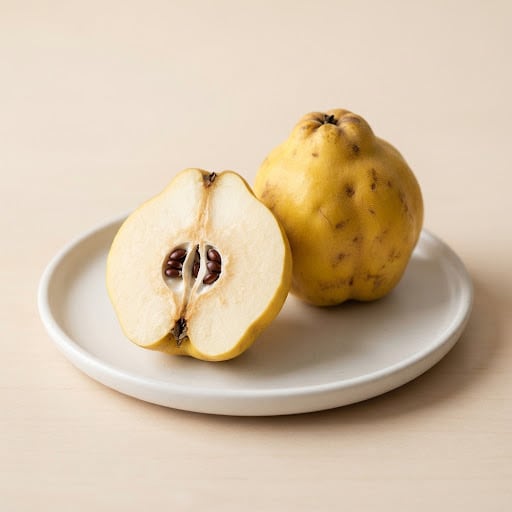
Fruit Food Library
When can babies have quince?
Can babies have quince?
Babies can have quince from about 6 months, but only cooked until very soft. Raw quince is hard, sour and a choking risk, so poach, bake or stew it first. Quince is not a common allergen, and quince paste is too sugary for babies.
How to serve quince by age
Shapes and textures change as your baby’s grasp and chewing grow.

6 months
Peel, core and slice quince, then poach or bake it in water until very soft. Mash or blend the cooked quince until smooth and offer it on a spoon, on its own or stirred into yogurt or oatmeal.

7–8 months
Mash cooked quince more roughly so it keeps soft lumps. Your baby can also hold large, soft wedges of poached or baked quince, as long as they squash easily between your thumb and finger.

9–12 months
Cut cooked, soft quince into small pieces about the size of a chickpea, or keep offering mashed quince. Cooked quince also pairs well with roasted meats.

12 months +
Toddlers can have stewed or baked quince pieces, quince in crumbles or muffins, or as a sauce with meat. Keep raw quince off the menu, as it stays hard and sour.
Why it’s good
Quince gives babies fiber, vitamin C, potassium and copper. Cooked quince turns rosy, soft and fragrant, with a flavor between apple and pear, and its fiber and pectin can support regular poops.
Safety notes
- Raw quince is very hard and is a choking hazard. Cook it until it squashes easily between your thumb and finger.
- Remove the core and seeds completely. Quince seeds should not be eaten.
- Quince paste (membrillo) and quince jam are very high in sugar. Avoid them before 2 years and offer rarely after.
- Do not add sugar or honey when cooking quince for babies. Cook it with apple or pear for natural sweetness.
A low-allergy food, still worth watching
Quince is not a common food allergen. Quince is related to apples and pears, so babies with oral allergy to those fruits may also react; start with a small amount and watch for itching or swelling.
Quince for babies: questions parents ask
Quick answers about quince for babies and toddlers.
When can babies have quince?
Babies can have quince from about 6 months, once they are ready for solids. Quince must be peeled, cored and cooked until very soft before serving.
Can babies have quince?
Yes, babies can eat cooked quince. Poached or baked quince is soft, sweet-smelling and full of fiber, but raw quince is too hard and sour for babies.
Is quince a choking hazard for babies?
Raw quince is a choking hazard for babies because it is very hard and firm. Cook quince until soft, remove the core and seeds, and always stay with your baby while they eat.
Is quince a common allergen?
No, quince is not a common allergen and is not one of the Top 9 food allergens. Introduce quince in a small amount and watch for signs of a reaction.
How do I serve quince to a 6 month old?
To serve quince to a 6 month old, peel and core the fruit, poach or bake slices until very soft, then mash or blend them smooth and offer it on a spoon, alone or in yogurt or oatmeal. Large soft wedges to hold can follow at 7–8 months.
Can babies have raw quince?
No, babies should not eat raw quince. Raw quince is very hard, astringent and a choking risk, and it only becomes soft and sweet when cooked.
Can babies have quince paste?
Babies should skip quince paste (membrillo) because it is made with a large amount of sugar. Plain cooked quince gives the same flavor without added sugar.
Can quince help babies poop?
Quince contains fiber and pectin, which can help keep a baby's poops soft and regular. Offer water with meals and plenty of other fruits and vegetables too.
The takeaway
- Babies can have quince from about 6 months, but only cooked until very soft.
- Peel, core and slice quince, then poach or bake it in water until very soft.
- Choking risk is medium. Not a Top 9 allergen, but offer a small amount first and watch for any reaction.
Read next



Sources
This guide follows current advice from these organizations.
- Starting Solid Foods American Academy of Pediatrics (HealthyChildren.org)
- When, What, and How to Introduce Solid Foods Centers for Disease Control and Prevention
- Choking Hazards Centers for Disease Control and Prevention
- Choking Prevention American Academy of Pediatrics (HealthyChildren.org)
- Foods and Drinks to Avoid or Limit Centers for Disease Control and Prevention
Track every new food in your baby’s passport
Track the first 100 foods and the Top 9 allergens. 7 days free.
More fruit for babies

Updated November 2026. Reviewed by our dietitians. Based on AAP, CDC and NIAID guidance. Written for healthy, full-term babies; not a substitute for your pediatrician. If your baby was born early, has a medical condition, feeding difficulties or a known allergy, check with them first (medical disclaimer). Always stay with your baby while they eat.