
Fruit Food Library
When can babies have sapodilla?
Can babies have sapodilla?
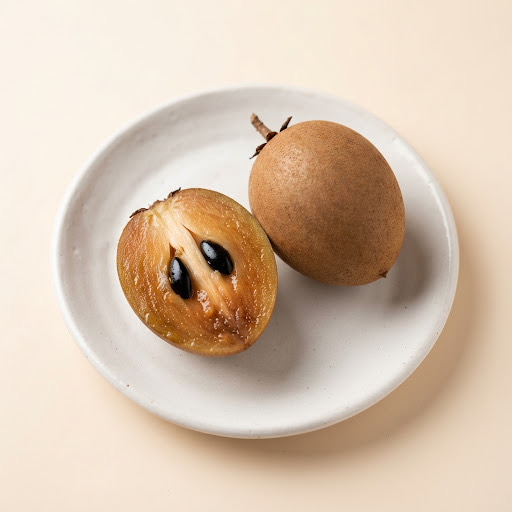
Babies can have ripe sapodilla from about 6 months, with the skin and seeds removed. Ripe sapodilla is soft and sweet like a pear mixed with brown sugar, but unripe fruit is firm and full of sticky latex. The hard, hooked seeds are a choking hazard, so always take them out.
How to serve sapodilla by age
Shapes and textures change as your baby’s grasp and chewing grow.

6 months
Choose a very ripe sapodilla that gives to gentle pressure, peel it, remove every seed and mash or blend the flesh until smooth. Offer it on a spoon or stir it into plain yogurt or iron-fortified cereal.

7–8 months
Mash ripe sapodilla more roughly so it has soft lumps, or offer large, soft wedges of peeled, fully seeded ripe fruit that squash easily between your fingers.

9–12 months
Offer small, soft pieces of ripe sapodilla for pincer-grasp practice, or mix mashed sapodilla into yogurt or oatmeal. Double-check for seeds.

12 months +
Toddlers can eat bite-sized pieces of ripe sapodilla, blend it into smoothies or mix it with other fruits. Keep removing seeds.
Why it’s good
Sapodilla gives babies fiber, vitamin C, potassium, carbohydrates for energy and some iron. The vitamin C in sapodilla helps the body absorb iron. Sapodilla's natural sweetness makes it an easy fruit for babies to accept.
Safety notes
- Remove all seeds. Sapodilla seeds are hard, slippery and have a small hook, making them a choking hazard, and they should not be eaten.
- Serve only fully ripe sapodilla. Unripe fruit is firm, astringent and full of sticky white latex that can irritate the mouth and be hard to swallow.
- Peel off the brown skin, which is rough and can be chewy.
- Ripen sapodilla at room temperature until it gives to gentle pressure, like a ripe kiwi, then refrigerate.
- Sapodilla is high in fiber and natural sugar, so very large amounts may loosen stools.
A low-allergy food, still worth watching
Sapodilla is not a common allergen. Rare mild mouth itching has been reported, especially in people with latex or other fruit allergies, so watch for rash, itching or swelling the first time.
Sapodilla for babies: questions parents ask
Quick answers about sapodilla for babies and toddlers.
When can babies have sapodilla?
Babies can have sapodilla from about 6 months, as long as it is fully ripe, peeled and seeded. Ripe sapodilla is soft enough for babies to mash with their gums.
Can babies have sapodilla?
Yes, babies can eat ripe sapodilla with the skin and seeds removed. Sapodilla is a sweet, soft fruit that offers fiber, vitamin C and some iron.
Is sapodilla a choking hazard for babies?
Ripe sapodilla flesh is a low choking risk when prepared correctly. The hard, hooked seeds and firm unripe fruit are choking hazards, so remove all seeds and serve only ripe fruit.
Is sapodilla a common allergen?
No, sapodilla is not a common allergen. Rare cases of mild mouth itching have been reported, so watch your baby the first time.
How do I serve sapodilla to a 6 month old?
To serve sapodilla to a 6 month old, peel a very ripe fruit, remove every seed and mash the flesh until smooth, then offer it on a spoon or stirred into yogurt or oatmeal. Large soft wedges to hold can follow at 7–8 months.
How do I know if sapodilla is ripe?
A ripe sapodilla gives slightly when pressed, and the skin no longer shows green when lightly scratched. Unripe sapodilla is hard and has sticky white latex inside.
Are sapodilla seeds safe for babies?
No, sapodilla seeds are not safe for babies. They are hard and have a small hook that can catch in the throat, so remove every seed before serving.
Can sapodilla cause constipation in babies?
Ripe sapodilla is high in fiber and usually helps keep stools soft rather than causing constipation. Unripe sapodilla is astringent, so serve only ripe fruit.
Is sapodilla the same as chikoo?
Yes, sapodilla is also called chikoo, chico or naseberry depending on the region. Sapodilla is different from mamey sapote and black sapote, though all can be served to babies when ripe.
The takeaway
- Babies can have ripe sapodilla from about 6 months, with the skin and seeds removed.
- Choose a very ripe sapodilla that gives to gentle pressure, peel it, remove every seed and mash or blend the flesh until smooth.
- Choking risk is low. Not a Top 9 allergen, but offer a small amount first and watch for any reaction.
Read next


Sources
This guide follows current advice from these organizations.
- Starting Solid Foods American Academy of Pediatrics (HealthyChildren.org)
- When, What, and How to Introduce Solid Foods Centers for Disease Control and Prevention
- Choking Hazards Centers for Disease Control and Prevention
- Iron Centers for Disease Control and Prevention
Track every new food in your baby’s passport
Track the first 100 foods and the Top 9 allergens. 7 days free.
More fruit for babies
Updated November 2026. Reviewed by our dietitians. Based on AAP, CDC and NIAID guidance. Written for healthy, full-term babies; not a substitute for your pediatrician. If your baby was born early, has a medical condition, feeding difficulties or a known allergy, check with them first (medical disclaimer). Always stay with your baby while they eat.