
Family foods Food Library
When can babies have pickles?
Can babies have pickles?
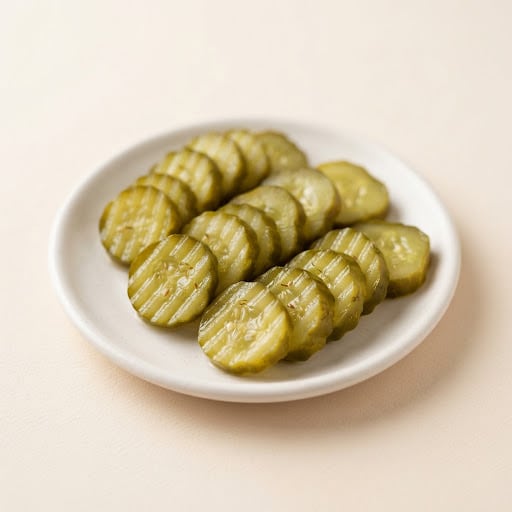
Pickles are best saved until about 12 months, and then only as a tiny, finely chopped taste mixed into food, because they are very salty. Firm pickle spears and round slices can be a choking hazard. Pickles are not a common allergen.
How to serve pickles by age
Shapes and textures change as your baby’s grasp and chewing grow.

6 months
Skip pickles at this age. They are very salty and firm, and your baby does not need them; if you want a tangy flavor, a little plain yogurt or a few drops of lemon in a smooth puree works instead.

7–8 months
Keep skipping pickles. Offer soft, peeled cucumber that squashes easily, or plain yogurt with a little dill, instead.

9–12 months
Still skip pickles before 12 months. Thin strips of soft, peeled cucumber are a fresh, unsalted alternative.

12 months +
Toddlers can have thin, small pieces of pickle as part of a meal. Cut spears lengthwise into thin strips and avoid round chips, and keep servings small.
Why it’s good
Pickles are mostly cucumber and brine, so they offer little nutrition beyond a small amount of vitamin K. Fermented pickles contain live cultures, but the high sodium in pickles outweighs the benefit for babies. The bold sour flavor can be fun for babies to explore.
Safety notes
- Pickles are very high in sodium. One pickle spear can carry a large share of a baby's daily sodium limit, so offer only tastes.
- Firm pickle chunks and round slices can block a small airway. For babies, mince pickle very finely and mix it into soft food.
- Sweet pickles and bread and butter pickles contain added sugar. Choose dill pickles if you share any.
- Home-canned pickles must be made with a tested recipe to avoid botulism. If a jar is bulging, leaking or smells off, throw it out.
- Some pickles contain hot peppers, garlic or spices. Check the jar for heat.
A low-allergy food, still worth watching
Pickles are not a Top 9 allergen. Some pickles are made with mustard seed or other spices that can rarely cause reactions, so check ingredients and watch for rash around the mouth.
Pickles for babies: questions parents ask
Quick answers about pickles for babies and toddlers.
When can babies have pickles?
Babies do not need pickles in the first year. From about 12 months, a tiny taste of finely chopped pickle mixed into food is fine. Pickles are very salty, so they should be an occasional flavor rather than a regular food.
Can babies have pickles?
Yes, from about 12 months, as a few finely chopped bits mixed into food. Keep portions tiny because of the sodium.
Are pickles a choking hazard for babies?
Yes, pickles can be a choking hazard because they are firm and slippery, especially round slices and chunks. Very finely minced pickle mixed into soft food is the safer way to offer a taste.
Are pickles a common allergen?
No, pickles are not a common allergen. Some pickles contain mustard seed or spices, which can rarely cause reactions.
How do I serve pickles to a 6 month old?
Pickles are not recommended for a 6 month old because they are very salty and firm. Stick with smooth purees, and wait until about 12 months for a tiny, finely chopped taste.
Are pickles good for teething babies?
Pickles are sometimes given for teething, but they are too salty and can break into pieces. A chilled teether, cold washcloth or a large cucumber spear are safer choices for sore gums.
Are fermented pickles healthier than vinegar pickles?
Fermented pickles contain live cultures, while vinegar pickles do not. Both types of pickles are high in sodium, so neither should be a regular food for babies.
Can babies drink pickle juice?
No, babies should not drink pickle juice because it is extremely salty. Toddlers also do not need pickle juice, even for muscle cramps or hydration.
How much pickle can a toddler have?
A toddler can have a few small pieces or one thin strip of pickle at a meal now and then. Balance a salty pickle with low-sodium foods like fruit, vegetables and plain grains.
Are pickles bad for babies?
Pickles are not a good food for babies under 12 months because they are very salty, and baby kidneys cannot handle much sodium. Firm pickle slices and chunks are also a choking hazard; from 12 months, a tiny, finely chopped taste of dill pickle mixed into food is fine.
The takeaway
- Pickles are best saved until about 12 months, and then only as a tiny, finely chopped taste mixed into food, because they are very salty.
- Toddlers can have thin, small pieces of pickle as part of a meal.
- Choking risk is medium. Not a Top 9 allergen, but offer a small amount first and watch for any reaction.
Read next


Sources
This guide follows current advice from these organizations.
- Starting Solid Foods American Academy of Pediatrics (HealthyChildren.org)
- When, What, and How to Introduce Solid Foods Centers for Disease Control and Prevention
- Choking Hazards Centers for Disease Control and Prevention
- Choking Prevention American Academy of Pediatrics (HealthyChildren.org)
- Foods and Drinks to Avoid or Limit Centers for Disease Control and Prevention
- Dietary Guidelines for Americans, 2020-2025 U.S. Department of Agriculture and HHS
Track every new food in your baby’s passport
Track the first 100 foods and the Top 9 allergens. 7 days free.
More family foods for babies
Updated November 2026. Reviewed by our dietitians. Based on AAP, CDC and NIAID guidance. Written for healthy, full-term babies; not a substitute for your pediatrician. If your baby was born early, has a medical condition, feeding difficulties or a known allergy, check with them first (medical disclaimer). Always stay with your baby while they eat.