
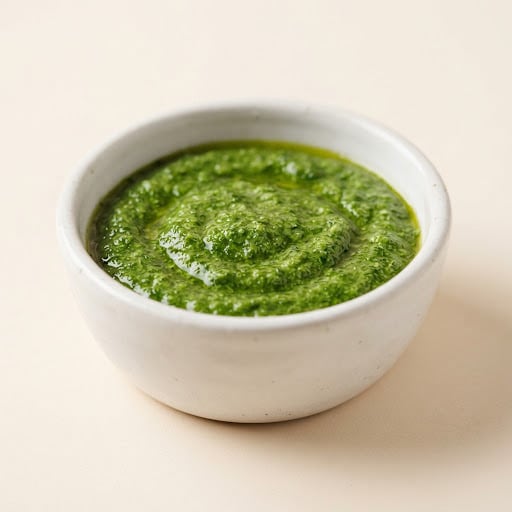
Family foods Food Library
When can babies have pesto?
Can babies have pesto?
Babies can have pesto from about 6 months as a thin coating on soft foods, ideally homemade with less cheese and no added salt. Classic pesto contains pine nuts and parmesan cheese, so it can include tree nut and dairy allergens. Some store-bought pesto also contains cashews or other nuts.
How to serve pesto by age
Shapes and textures change as your baby’s grasp and chewing grow.

6 months
Blend a homemade, low-salt pesto completely smooth and stir a small amount into smooth foods like mashed potato, pureed zucchini or blended white beans. Offer it on a spoon.

7–8 months
Stir smooth pesto into lumpier mashed potato or finely shredded chicken, or coat soft, well-cooked pasta with a thin layer. Large pasta shapes like rotini cooked very soft are easy to grab.

9–12 months
Toss smaller pasta shapes, soft vegetables or flaked fish with a thin layer of pesto for pincer practice. Spread a thin layer on toast strips or soft flatbread.

12 months +
Toddlers can enjoy pesto pasta, pesto swirled into soups, or spread on sandwiches. Store-bought pesto is fine in small amounts, but it can be salty, so thin it with olive oil or plain yogurt.
Why it’s good
Pesto gives healthy fats from olive oil and nuts, plus vitamin K from basil and calcium from parmesan. It is high in fat and often in salt, so a little goes a long way. Spinach or kale pesto adds extra vitamins and some iron.
Safety notes
- Blend pesto smooth so there are no whole or large pieces of nuts, which are a choking hazard.
- Store-bought pesto and lots of parmesan add sodium. Make your own with less cheese, or thin store-bought pesto with olive oil or water.
- Keep homemade pesto in the fridge and use within about 5 days, or freeze it in ice cube trays. Garlic in oil left at room temperature can grow harmful bacteria.
- Use pesto made with pasteurized cheese.
- Check store-bought labels for cashews, walnuts, almonds or peanuts, which some brands use instead of or with pine nuts.
Introduce pesto on its own, then keep it in
Pesto usually contains pine nuts, which the FDA treats as a tree nut, and parmesan, which is dairy, both Top 9 allergens. Introduce dairy and nuts separately first, then offer pesto in a small amount and watch for hives, vomiting, swelling or wheezing. Nut-free pesto can be made with sunflower seeds.
Pesto for babies: questions parents ask
Quick answers about pesto for babies and toddlers.
When can babies have pesto?
Babies can have pesto from about 6 months as a thin coating on soft foods. Homemade pesto with less cheese and no added salt is the best choice.
Can babies have pesto?
Yes, babies can eat smooth pesto from 6 months. Pesto adds healthy fats and fresh flavor to pasta, vegetables and meat.
Is pesto a choking hazard for babies?
Pesto is a low choking risk when it is blended smooth. Chunky pesto with large nut pieces is a choking risk, so blend pesto well before serving it to a baby.
Is pesto a common allergen?
Yes, pesto is a common allergen because most pesto contains pine nuts, treated as a tree nut, and parmesan cheese, which is dairy. Some brands also contain cashews, walnuts or other nuts.
How do I serve pesto to a 6 month old?
To serve pesto to a 6 month old, stir a small amount of smooth, low-salt pesto into mashed potato, pureed vegetables or blended beans and offer it on a spoon. Soft pasta spirals coated in pesto for baby to pick up can follow at 7–8 months.
Are pine nuts a tree nut allergy risk?
Pine nuts are seeds, but the FDA lists pine nuts as a tree nut for food labeling. Some children react to pine nuts, so introduce pesto in a small amount and watch for signs of a reaction.
Is store-bought pesto OK for babies?
Store-bought pesto is OK for babies in small amounts, but it is often salty and may contain several nuts. Choose a refrigerated pesto with a short ingredient list, and thin it with olive oil.
How do I make nut-free pesto for babies?
To make nut-free pesto for babies, blend basil, olive oil, a little parmesan and garlic with sunflower seeds or white beans instead of pine nuts. Nut-free pesto is useful if your baby has a tree nut allergy.
Can babies have raw garlic in pesto?
Babies can have a small amount of raw garlic in pesto, though raw garlic has a strong taste. Use half a clove or less in a batch of baby pesto, or roast the garlic for a milder flavor.
The takeaway
- Babies can have pesto from about 6 months as a thin coating on soft foods, ideally homemade with less cheese and no added salt.
- Blend a homemade, low-salt pesto completely smooth and stir a small amount into smooth foods like mashed potato, pureed zucchini or blended white beans.
- Choking risk is low. Tree nut is one of the Top 9 allergens: offer a small amount first, watch for a reaction, then keep it in the diet regularly.
Read next

Sources
This guide follows current advice from these organizations.
- Starting Solid Foods American Academy of Pediatrics (HealthyChildren.org)
- When, What, and How to Introduce Solid Foods Centers for Disease Control and Prevention
- Choking Hazards Centers for Disease Control and Prevention
- Peanut Allergy: What to Know About the Latest Prevention Guidelines American Academy of Pediatrics (HealthyChildren.org)
- Foods and Drinks to Avoid or Limit Centers for Disease Control and Prevention
- The Effects of Early Nutritional Interventions on the Development of Atopic Disease in Infants and Children Greer FR, Sicherer SH, Burks AW; American Academy of Pediatrics. Pediatrics. 2019;143(4):e20190281
Track every new food in your baby’s passport
Track the first 100 foods and the Top 9 allergens. 7 days free.
More family foods for babies
Updated November 2026. Reviewed by our dietitians. Based on AAP, CDC and NIAID guidance. Written for healthy, full-term babies; not a substitute for your pediatrician. If your baby was born early, has a medical condition, feeding difficulties or a known allergy, check with them first (medical disclaimer). Always stay with your baby while they eat.