
Family foods Food Library
When can babies have pepperoni?
Can babies have pepperoni?
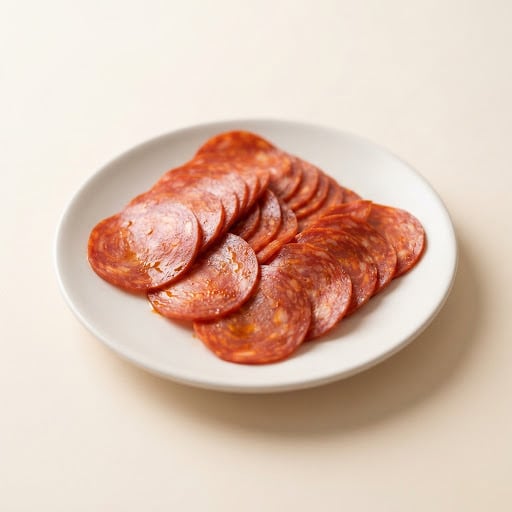
Pepperoni is best saved until after 12 months, and even then only as an occasional food in small, thin, finely chopped pieces. Pepperoni is a cured, processed meat that is very high in sodium, and its firm, round, chewy slices are a choking hazard. Pepperoni is not a common allergen, though some brands add milk, soy or wheat.
How to serve pepperoni by age
Shapes and textures change as your baby’s grasp and chewing grow.

6 months
Skip pepperoni at this age. For a similar flavor, blend cooked chicken, ground beef or lentils with a pinch of paprika, garlic and fennel into a smooth puree and serve it on a spoon.

7–8 months
Pepperoni is still off the menu. Offer minced chicken or ground beef seasoned with paprika, garlic and fennel in lumpy mashes, or soft meatballs that fall apart easily, instead.

9–12 months
Pepperoni is still best avoided before the first birthday. If the family is having pizza, pick off the pepperoni and offer a soft cheese pizza strip instead.

12 months +
Offer a little pepperoni now and then, sliced paper-thin and chopped into tiny bits, or baked into a pizza where it softens. Never serve whole slices, chunks or pepperoni sticks to young toddlers.
Why it’s good
Pepperoni contains protein, fat, vitamin B12 and zinc, but it also brings a lot of sodium and saturated fat. Health groups advise limiting processed meats for everyone, especially young children. Fresh meats, beans and eggs are better everyday protein choices.
Safety notes
- Pepperoni slices are firm, round and chewy and can block a child's airway. Chop pepperoni very finely for toddlers, and avoid pepperoni sticks and thick chunks until age 4 or later.
- Pepperoni is very high in sodium. A few slices can provide a large share of a toddler's daily sodium, so keep it occasional.
- Pepperoni is a cured meat with nitrates or nitrites, including uncured products made with celery powder. Limit processed meats for young children.
- Many brands are spicy. Check the heat level and offer only a small taste at first.
- Pepperoni is sold ready to eat. Keep it refrigerated after opening and use it by the date on the package.
A low-allergy food, still worth watching
Pepperoni is not a Top 9 allergen, but some brands contain milk, soy or wheat as fillers or flavorings. Read labels, especially if your child has a known food allergy.
Pepperoni for babies: questions parents ask
Quick answers about pepperoni for babies and toddlers.
When can babies have pepperoni?
Babies can have pepperoni after 12 months, and only occasionally in tiny, finely chopped pieces. Pepperoni is high in sodium and is a choking hazard, so it is best avoided before the first birthday.
Can babies have pepperoni?
Babies under 12 months should not eat pepperoni because of its high sodium and choking risk. Toddlers can have a small amount of finely chopped pepperoni now and then.
Is pepperoni a choking hazard for babies?
Yes, pepperoni is a choking hazard because the slices are round, firm and chewy. Pepperoni sticks are a high choking risk, so chop pepperoni finely and keep sticks away from young children.
Is pepperoni a common allergen?
No, pepperoni is not a common allergen. Some pepperoni brands contain milk, soy or wheat, so check the label.
How do I serve pepperoni to a 6 month old?
Pepperoni should not be served to a 6 month old. Instead, offer smooth pureed meats like chicken or ground beef seasoned with paprika and garlic for a similar flavor.
When can babies have pepperoni pizza?
Toddlers can try pepperoni pizza after 12 months if the pepperoni is chopped into tiny pieces and the pizza is cut into strips. Before 12 months, remove the pepperoni and offer a soft cheese pizza strip instead.
What is the difference between cured and uncured pepperoni?
Cured pepperoni uses added nitrites, while uncured pepperoni uses natural nitrites from celery powder or juice. Both types are processed meats with similar sodium, so neither is healthier for toddlers.
Is turkey pepperoni better for toddlers?
Turkey pepperoni has less fat than pork and beef pepperoni, but it is still a salty processed meat. Turkey pepperoni should also be an occasional food for toddlers.
How much pepperoni can a toddler have?
A toddler only needs a few finely chopped slices of pepperoni at most, and not every week. Pair pepperoni with vegetables and other low-sodium foods at that meal.
The takeaway
- Pepperoni is best saved until after 12 months, and even then only as an occasional food in small, thin, finely chopped pieces.
- Offer a little pepperoni now and then, sliced paper-thin and chopped into tiny bits, or baked into a pizza where it softens.
- Choking risk is high. Not a Top 9 allergen, but offer a small amount first and watch for any reaction.
Read next

Sources
This guide follows current advice from these organizations.
- Starting Solid Foods American Academy of Pediatrics (HealthyChildren.org)
- When, What, and How to Introduce Solid Foods Centers for Disease Control and Prevention
- Choking Hazards Centers for Disease Control and Prevention
- Choking Prevention American Academy of Pediatrics (HealthyChildren.org)
- Foods and Drinks to Avoid or Limit Centers for Disease Control and Prevention
Track every new food in your baby’s passport
Track the first 100 foods and the Top 9 allergens. 7 days free.
More family foods for babies
Updated November 2026. Reviewed by our dietitians. Based on AAP, CDC and NIAID guidance. Written for healthy, full-term babies; not a substitute for your pediatrician. If your baby was born early, has a medical condition, feeding difficulties or a known allergy, check with them first (medical disclaimer). Always stay with your baby while they eat.