
Family foods Food Library
When can babies have miso?
Can babies have miso?
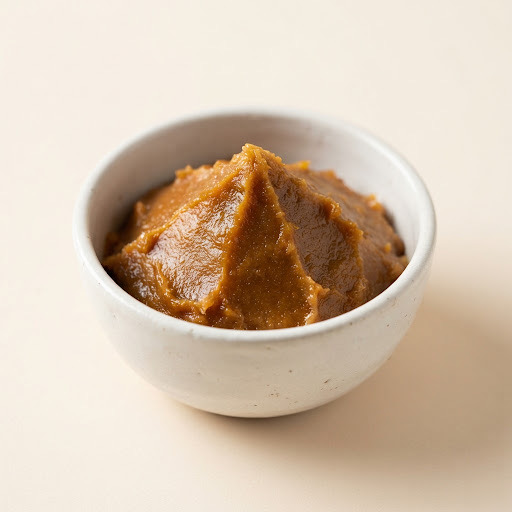
Babies can have miso from about 6 months in very small amounts as a seasoning. Miso is a fermented soybean paste that is very high in sodium, so a tiny dab stirred into a large batch of food is plenty. Miso is made from soy, and some types also contain wheat or barley, so introduce soy before serving it.
How to serve miso by age
Shapes and textures change as your baby’s grasp and chewing grow.

6 months
Stir a very small amount of miso, about a quarter teaspoon, into a large pot of soup, a pan of mashed squash or a batch of blended tofu to season the whole batch, then blend your baby's portion smooth and offer it on a spoon.

7–8 months
Keep using a tiny dab of miso to season a big batch of food, such as fork-mashed squash, lentils or soft rice cooked in diluted broth. Soft tofu or fish lightly seasoned this way can be offered in soft strips that squash easily.

9–12 months
Brush a thin layer of miso mixed with water onto salmon, tofu or roasted vegetables before cooking, or dilute it into low-sodium broth for noodles. Keep portions small because of the salt.

12 months +
Toddlers can have miso soup diluted with extra water, plus miso-glazed fish and vegetables in small amounts. Cut tofu and seaweed into small pieces and let soup cool.
Why it’s good
Miso adds savory flavor plus small amounts of protein, vitamin K, manganese and copper. Unpasteurized miso contains live cultures, but the amounts babies eat are too small to count on for gut benefits. Miso is very high in sodium, which is its main drawback for babies.
Safety notes
- Miso is very salty. Use a tiny amount to season a large batch of food, and avoid serving miso soup straight from a packet or restaurant to babies.
- Miso is made from soy and some varieties contain wheat or barley. Some instant miso soups add fish-based dashi, which adds the fish allergen.
- Avoid sweet miso candies and chewy miso snacks, which can be choking hazards and high in sugar.
- Let miso soup cool well and cut any tofu or seaweed pieces small and soft.
- Store miso in the fridge in a sealed container.
Introduce miso on its own, then keep it in
Miso is made from soybeans, one of the Top 9 allergens, and can also contain wheat, barley or fish from dashi. Introduce soy first, read the label for other allergens, and watch for hives, vomiting, swelling or wheezing.
Miso for babies: questions parents ask
Quick answers about miso for babies and toddlers.
When can babies have miso?
Babies can have miso from about 6 months in very small amounts as a seasoning. Miso is very high in sodium, so a tiny dab in a large batch of food is enough.
Can babies have miso?
Yes, babies can eat miso in tiny amounts mixed into family foods. Miso should be a seasoning, not a main food, because it is very salty.
Is miso a choking hazard for babies?
Miso paste is not a choking hazard when it is mixed into food or soup. Chewy miso candies and firm add-ins in miso soup, like large tofu cubes or seaweed strips, can be risky, so cut them small and soft.
Is miso a common allergen?
Yes, miso is a common allergen because it is made from soy, one of the Top 9 allergens. Some miso also contains wheat or barley, and miso soup may contain fish from dashi.
How do I serve miso to a 6 month old?
To serve miso to a 6 month old, stir about a quarter teaspoon of miso into a big pot of vegetable soup or mashed squash and give your baby a small portion. Taste it first to be sure it is not salty.
Is miso too salty for babies?
Miso is too salty to serve on its own or in large amounts to babies, since just one teaspoon contains a lot of sodium. Using a tiny amount to flavor a big batch keeps your baby's portion low in salt.
Can babies have miso soup?
Babies can have a few sips of homemade miso soup made with very little miso and extra water. Instant and restaurant miso soup are too salty for babies and often contain fish-based dashi.
Which type of miso is best for babies?
White or light miso has a milder, sweeter flavor and is often a little less salty than dark red miso, so it is a good starting point for babies. Compare sodium on labels, as amounts vary between brands.
Is miso a probiotic for babies?
Unpasteurized miso contains live cultures, but heating kills most of them and babies only eat tiny amounts. Miso should not be relied on as a probiotic for babies.
The takeaway
- Babies can have miso from about 6 months in very small amounts as a seasoning.
- Stir a very small amount of miso, about a quarter teaspoon, into a large pot of soup, a pan of mashed squash or a batch of blended tofu to season the whole batch, then blend your baby's portion smooth and offer it on a spoon.
- Choking risk is low. Soy is one of the Top 9 allergens: offer a small amount first, watch for a reaction, then keep it in the diet regularly.
Read next



Sources
This guide follows current advice from these organizations.
- Starting Solid Foods American Academy of Pediatrics (HealthyChildren.org)
- When, What, and How to Introduce Solid Foods Centers for Disease Control and Prevention
- Choking Hazards Centers for Disease Control and Prevention
- Foods and Drinks to Avoid or Limit Centers for Disease Control and Prevention
- The Effects of Early Nutritional Interventions on the Development of Atopic Disease in Infants and Children Greer FR, Sicherer SH, Burks AW; American Academy of Pediatrics. Pediatrics. 2019;143(4):e20190281
Track every new food in your baby’s passport
Track the first 100 foods and the Top 9 allergens. 7 days free.
More family foods for babies
Updated November 2026. Reviewed by our dietitians. Based on AAP, CDC and NIAID guidance. Written for healthy, full-term babies; not a substitute for your pediatrician. If your baby was born early, has a medical condition, feeding difficulties or a known allergy, check with them first (medical disclaimer). Always stay with your baby while they eat.