
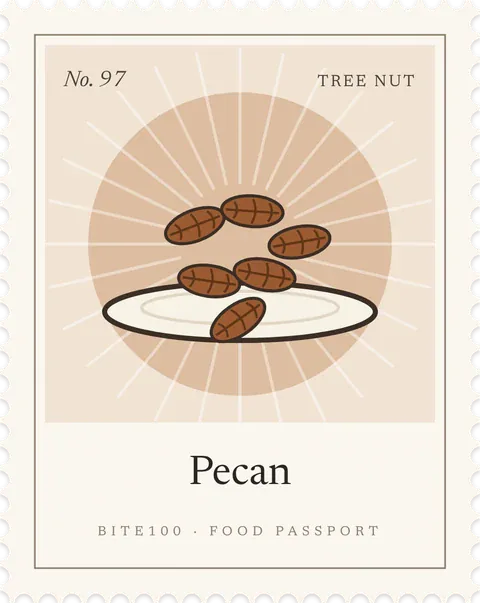
No. 97 · Nuts & seeds Passport food
When can babies have pecans?
Can babies eat pecans?
Babies can have pecans from about 6 months when they are finely ground or made into a smooth, thinned butter, never whole or chopped. Pecan is a tree nut, one of the Top 9 allergens, so introduce it on its own and keep offering it regularly.
How to serve pecans by age
Shapes and textures change as your baby’s grasp and chewing grow.

6 months
Grind plain, unsalted pecans to a fine meal and stir a small pinch into oatmeal, yogurt or mashed sweet potato, or thin smooth pecan butter with warm water, breast milk or formula until runny. Pecans are soft and oily, so grind in short pulses to get a powder instead of a paste.

7–8 months
Keep stirring ground pecan or thinned pecan butter into thicker, lumpier porridge and mashes. You can also spread a see-through layer of pecan butter on soft toast strips, or use ground pecan to coat slippery soft fruit like ripe banana so it is easier to hold.

9–12 months
Spread a see-through layer of pecan butter on toast or soft pancake strips, or mix ground pecan into muffins, banana bread and meatballs. Ground pecan also makes a good coating for slippery fruit like peach or banana.

12 months +
Use ground pecan in baking, oatmeal and as a sprinkle on yogurt, and keep pecan butter as a thin spread. Whole pecans and pecan pieces are a choking hazard until at least age 4, so skip pecan halves on salads and desserts.
Why it’s good
Pecans give babies healthy fats, fiber, iron, zinc, manganese, copper and thiamin, plus antioxidants that are naturally found in nuts. Zinc helps with growth and the immune system, and the rich, buttery taste of ground pecan makes plain foods more interesting without added sugar.
Safety notes
- Never serve whole pecans, halves or chopped pecans to babies and toddlers. They are hard to chew fully and can block the airway.
- Candied, praline, honey-glazed and maple-glazed pecans are not suitable for babies. They add sugar, and honey must be avoided in all forms before 12 months.
- Pecan pie and pecan pastries are high in sugar and full of nut pieces, so they are not baby foods. Bake with ground pecan instead.
- Grind pecans to a fine meal with no visible chunks, and thin pecan butter before serving so it does not form a sticky glob.
- Always seat baby upright and stay within arm's reach while they eat.
Introduce pecan on its own, then keep it in
Pecan is a tree nut, one of the Top 9 food allergens, and it is closely related to walnut, so children allergic to one are often allergic to the other. Offer a small amount first and watch for hives, swelling, vomiting or breathing trouble, and ask your pediatrician first if your baby has severe eczema or a known walnut allergy.
Pecans for babies: questions parents ask
Quick answers about pecans for babies and toddlers.
When can babies have pecans?
Babies can have pecans from about 6 months, once they are ready for solids, as finely ground pecan or thinned pecan butter mixed into food. Whole and chopped pecans should wait until at least age 4.
Can babies eat pecans?
Yes, babies can eat pecans when they are ground into a fine meal or made into a smooth butter and thinned. Pecan is a tree nut allergen, so introducing it early and keeping it in the diet may help lower allergy risk.
Are pecans a choking hazard for babies?
Yes, pecans are a high choking hazard for babies and toddlers when whole, halved or chopped. Finely ground pecan and pecan butter that is thinned or spread very thinly are the safe forms for young children.
Are pecans a common allergen?
Yes, pecans are a common allergen because they are a tree nut, part of the Top 9 food allergens. Pecan and walnut are botanical cousins, and allergy to one often means allergy to the other.
How do I serve pecans to a 6 month old?
To serve pecans to a 6 month old, grind unsalted pecans into a fine meal and stir a small amount into oatmeal, yogurt or a vegetable puree. Thinned smooth pecan butter mixed into food is another easy option.
Can babies eat pecan pie?
Pecan pie is not a good choice for babies because pecan pie is very high in sugar and contains whole or chopped nuts. Pecan pie filling is mostly sugar, so it is best saved until after age 2, and even then only as an occasional small taste with no nut pieces., but it does not count as safe allergen introduction for babies.
Can babies drink pecan milk?
Pecan milk should not replace breast milk or formula before 12 months. After 12 months, pecan milk is generally low in protein and calcium, so it works better as a cooking ingredient than as a main drink unless your pediatrician recommends otherwise.
Where can I find pecan butter?
Pecan butter is less common than other nut butters, but many larger grocery stores and online shops sell it. You can also make pecan butter at home by blending unsalted pecans in a food processor for a few minutes until smooth.
How do I store pecans for my baby?
Pecans are high in natural oils and turn rancid quickly at room temperature. Store pecans and ground pecan meal in an airtight container in the fridge for a few months or the freezer for longer, and throw them out if they smell bitter or stale.
The takeaway
- Babies can have pecans from about 6 months when they are finely ground or made into a smooth, thinned butter, never whole or chopped.
- Grind plain, unsalted pecans to a fine meal and stir a small pinch into oatmeal, yogurt or mashed sweet potato, or thin smooth pecan butter with warm water, breast milk or formula until runny.
- Choking risk is high. Tree nut is one of the Top 9 allergens: offer a small amount first, watch for a reaction, then keep it in the diet regularly.
Read next


Sources
This guide follows current advice from these organizations.
- Starting Solid Foods American Academy of Pediatrics (HealthyChildren.org)
- When, What, and How to Introduce Solid Foods Centers for Disease Control and Prevention
- Choking Hazards Centers for Disease Control and Prevention
- Choking Prevention American Academy of Pediatrics (HealthyChildren.org)
- Peanut Allergy: What to Know About the Latest Prevention Guidelines American Academy of Pediatrics (HealthyChildren.org)
- Foods and Drinks to Avoid or Limit Centers for Disease Control and Prevention
- Iron Centers for Disease Control and Prevention
- The Effects of Early Nutritional Interventions on the Development of Atopic Disease in Infants and Children Greer FR, Sicherer SH, Burks AW; American Academy of Pediatrics. Pediatrics. 2019;143(4):e20190281
Stamp pecan in your baby’s passport
Track the first 100 foods and the Top 9 allergens. 7 days free.
More nuts and seeds for babies
Updated November 2026. Reviewed by our dietitians. Based on AAP, CDC and NIAID guidance. Written for healthy, full-term babies; not a substitute for your pediatrician. If your baby was born early, has a medical condition, feeding difficulties or a known allergy, check with them first (medical disclaimer). Always stay with your baby while they eat.