
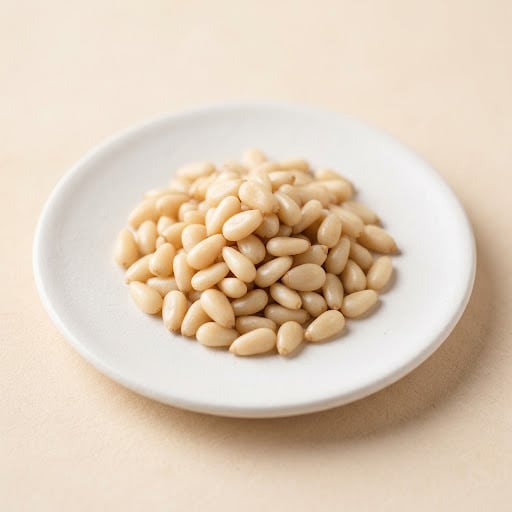
Nuts & seeds Food Library
When can babies have pine nuts?
Can babies have pine nuts?
Babies can have pine nuts from about 6 months when they are finely ground or blended into a smooth sauce like pesto. Whole pine nuts are a choking hazard and should be avoided until at least age 4. Pine nuts are seeds, but they are usually grouped with tree nuts for allergy purposes, so introduce them carefully.
How to serve pine nuts by age
Shapes and textures change as your baby’s grasp and chewing grow.

6 months
Grind pine nuts into a fine powder and stir a pinch into yogurt, oatmeal or smooth vegetable puree, or blend them into a smooth homemade pesto without salt and stir a little into mashed potato. Offer it on a spoon.

7–8 months
Keep pine nuts ground or blended. Stir smooth, low-salt pesto into lumpier mashed potato or toss it with very soft pasta shapes your baby can hold, and sprinkle ground pine nuts over soft mashed fruit or vegetables.

9–12 months
Keep pine nuts ground or blended. Toss soft pasta pieces in smooth, low-salt pesto, or sprinkle ground pine nuts over soft fruit or vegetables.

12 months +
Toddlers can have pesto and ground pine nuts in baked goods and sauces. Wait until at least age 4 before offering whole or chopped pine nuts.
Why it’s good
Pine nuts give babies healthy fats, iron, zinc, magnesium, manganese, vitamin E and some protein. Pairing pine nuts with vitamin C-rich foods like tomatoes or peppers helps babies absorb the iron.
Safety notes
- Whole pine nuts and nut pieces are a choking hazard. Serve them only finely ground or blended smooth until at least age 4.
- Store-bought pesto often contains a lot of salt and cheese. Make your own or use a small amount.
- Rarely, pine nuts cause a harmless but unpleasant bitter or metallic taste that lasts days, sometimes called pine mouth. Stop serving that batch if your child complains of a bad taste.
- Pine nuts go rancid quickly. Store them in the fridge or freezer and toss any that smell off.
- Toast pine nuts carefully, since they burn fast.
Introduce pine nut on its own, then keep it in
Pine nuts are usually treated as tree nuts on food labels, and pine nut allergy, though uncommon, can be severe. Offer a small amount of ground pine nut first and watch for hives, vomiting, swelling, coughing or wheezing. If your baby has another nut allergy or severe eczema, ask your pediatrician first.
Pine nuts for babies: questions parents ask
Quick answers about pine nuts for babies and toddlers.
When can babies have pine nuts?
Babies can have pine nuts from about 6 months when they are finely ground or blended smooth. Whole pine nuts should wait until at least age 4.
Can babies have pine nuts?
Yes, babies can eat pine nuts in ground form or blended into smooth sauces like homemade pesto. Pine nuts add iron, zinc and healthy fats to a baby's meals.
Are pine nuts a choking hazard for babies?
Yes, whole pine nuts are a choking hazard for babies and young children because they are small and firm. Grind pine nuts or blend them smooth for children under 4.
Are pine nuts a common allergen?
Pine nuts are seeds, but they are commonly grouped with tree nuts on food labels and allergy lists. Pine nut allergy is uncommon but can be serious, so introduce pine nuts in a small amount and watch closely.
How do I serve pine nuts to a 6 month old?
To serve pine nuts to a 6 month old, grind them into a fine powder and stir a pinch into plain yogurt or mashed vegetables. Smooth homemade pesto with no added salt is another easy option.
Can babies have pesto?
Yes, babies can have pesto from about 6 months if it is smooth and low in salt. Homemade pesto with basil, olive oil and pine nuts lets you skip the salt and use less cheese.
Are pine nuts a tree nut?
Pine nuts are seeds from pine cones, not true nuts, but they are often listed as tree nuts for allergy labeling. Children with other tree nut allergies may or may not react to pine nuts, so ask your allergist.
What is pine mouth?
Pine mouth is a bitter or metallic taste that some people notice a day or two after eating pine nuts, lasting days to weeks. Pine mouth is not dangerous, but stop using that batch of pine nuts if it happens.
How do I keep pine nuts in my baby's diet?
Once pine nuts are tolerated, offer them a few times a week in ground form or pesto to help keep the allergy risk low. Regular exposure matters more than large amounts.
The takeaway
- Babies can have pine nuts from about 6 months when they are finely ground or blended into a smooth sauce like pesto.
- Grind pine nuts into a fine powder and stir a pinch into yogurt, oatmeal or smooth vegetable puree, or blend them into a smooth homemade pesto without salt and stir a little into mashed potato.
- Choking risk is high. Tree nut is one of the Top 9 allergens: offer a small amount first, watch for a reaction, then keep it in the diet regularly.
Read next


Sources
This guide follows current advice from these organizations.
- Starting Solid Foods American Academy of Pediatrics (HealthyChildren.org)
- When, What, and How to Introduce Solid Foods Centers for Disease Control and Prevention
- Choking Hazards Centers for Disease Control and Prevention
- Choking Prevention American Academy of Pediatrics (HealthyChildren.org)
- Peanut Allergy: What to Know About the Latest Prevention Guidelines American Academy of Pediatrics (HealthyChildren.org)
- Iron Centers for Disease Control and Prevention
- The Effects of Early Nutritional Interventions on the Development of Atopic Disease in Infants and Children Greer FR, Sicherer SH, Burks AW; American Academy of Pediatrics. Pediatrics. 2019;143(4):e20190281
Track every new food in your baby’s passport
Track the first 100 foods and the Top 9 allergens. 7 days free.
More nuts and seeds for babies
Updated November 2026. Reviewed by our dietitians. Based on AAP, CDC and NIAID guidance. Written for healthy, full-term babies; not a substitute for your pediatrician. If your baby was born early, has a medical condition, feeding difficulties or a known allergy, check with them first (medical disclaimer). Always stay with your baby while they eat.