
Protein Food Library
When can babies have octopus?
Can babies have octopus?
Octopus is best offered from 12 months, fully cooked until very tender and finely minced. Octopus is rubbery and chewy, which makes it a high choking risk for babies. Octopus is a mollusk, and children with shellfish allergy can react to it.
How to serve octopus by age
Shapes and textures change as your baby’s grasp and chewing grow.

6 months
Hold off on octopus at this age because its rubbery texture is hard to break down. Offer smooth mashed or blended salmon or cod on a spoon instead to introduce fish as an allergen.

7–8 months
Octopus is still not recommended. Offer soft, flaky fish like salmon or cod mashed into potato, or soft flakes your baby can squash, to build fish skills.

9–12 months
Octopus is still best avoided. Keep offering soft, flaky fish and shellfish like finely chopped cooked shrimp if you want to introduce shellfish.

12 months +
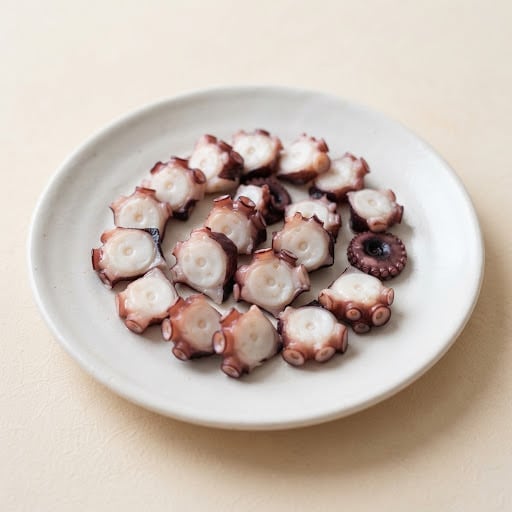
Simmer or braise octopus for 45 to 90 minutes until a knife slides in easily, then mince it finely and stir into rice, pasta or eggs. Avoid rings, tentacle pieces and grilled octopus, which stay chewy.
Why it’s good
Octopus is rich in protein, iron, vitamin B12, selenium and zinc, which support brain development and healthy blood. It is low in mercury. Paired with a vitamin C food like tomato or lemon, it helps round out an iron-rich meal.
Safety notes
- Octopus is rubbery and springy, making it a high choking risk. Cook it until very tender and mince it finely for toddlers.
- Never serve raw or undercooked octopus, including in sushi. Cook it until the flesh is opaque and tender.
- Avoid serving octopus tentacle rounds or rings, which are a similar shape to a small airway.
- Canned and marinated octopus can be very salty. Rinse it well or cook fresh or frozen octopus without salt.
- Buy octopus from a trusted source and keep it cold. Frozen octopus is often more tender after cooking.
Mollusk shellfish: introduce it carefully
Octopus is a mollusk shellfish. US labeling law does not list mollusks as a major allergen, but children with shellfish allergy can react, so introduce a small amount and watch for hives, swelling, vomiting or wheezing.
Octopus for babies: questions parents ask
Quick answers about octopus for babies and toddlers.
When can babies have octopus?
Babies can have octopus from about 12 months, cooked until very tender and finely minced. Octopus is chewy and rubbery, so softer seafood is a better choice before the first birthday.
Can babies have octopus?
Toddlers from 12 months can eat octopus that is thoroughly cooked and finely minced. Younger babies are better served with flaky fish or chopped shrimp.
Is octopus a choking hazard for babies?
Octopus is a high choking hazard for babies because it is rubbery, springy and hard to chew. Cooking octopus until tender and mincing it finely lowers the risk for toddlers.
Is octopus a common allergen?
Octopus is a mollusk, and some children with shellfish allergy react to it. Introduce octopus in a small amount and watch closely for signs of a reaction.
How do I serve octopus to a 6 month old?
Octopus is not recommended for a 6 month old because it is too chewy. Offer smooth mashed salmon or cod on a spoon instead, and wait until 12 months for finely minced, tender octopus.
How do I make octopus tender for a toddler?
To make octopus tender, simmer or braise it gently for 45 to 90 minutes until a knife slides in easily. Freezing octopus before cooking can also help soften it.
Is octopus high in mercury?
Octopus is low in mercury and is a fine seafood choice for children. Octopus can be high in sodium when canned or marinated, so choose plain versions.
Is octopus healthy for toddlers?
Octopus is healthy for toddlers, offering protein, iron, vitamin B12, zinc and selenium. A small amount of tender, minced octopus adds a lot of nutrition.
The takeaway
- Octopus is best offered from 12 months, fully cooked until very tender and finely minced.
- Simmer or braise octopus for 45 to 90 minutes until a knife slides in easily, then mince it finely and stir into rice, pasta or eggs.
- Choking risk is high. Not a Top 9 allergen, but offer a small amount first and watch for any reaction.
Read next

Sources
This guide follows current advice from these organizations.
- Starting Solid Foods American Academy of Pediatrics (HealthyChildren.org)
- When, What, and How to Introduce Solid Foods Centers for Disease Control and Prevention
- Choking Hazards Centers for Disease Control and Prevention
- Choking Prevention American Academy of Pediatrics (HealthyChildren.org)
- Foods and Drinks to Avoid or Limit Centers for Disease Control and Prevention
- Iron Centers for Disease Control and Prevention
Track every new food in your baby’s passport
Track the first 100 foods and the Top 9 allergens. 7 days free.
More protein foods for babies
Updated November 2026. Reviewed by our dietitians. Based on AAP, CDC and NIAID guidance. Written for healthy, full-term babies; not a substitute for your pediatrician. If your baby was born early, has a medical condition, feeding difficulties or a known allergy, check with them first (medical disclaimer). Always stay with your baby while they eat.