
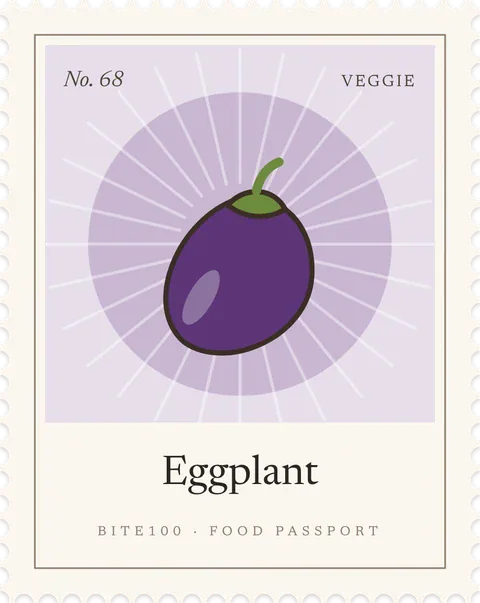
No. 68 · Veggies Passport food
When can babies have eggplant?
Can babies eat eggplant?
Babies can have eggplant from about 6 months, as soon as they are ready for solids, as long as it is cooked until very soft. Well-roasted or steamed eggplant melts in the mouth, but raw or undercooked eggplant is firm and slippery and a real choking risk, so never serve it raw.
How to serve eggplant by age
Shapes and textures change as your baby’s grasp and chewing grow.

6 months
Roast or steam eggplant until it is silky, scoop the flesh away from the skin, and mash or blend it smooth, like a no-salt baba ganoush. Serve it on a spoon on its own or stirred into lentils or yogurt.

7–8 months
Mash roasted eggplant more roughly into dips and lentils, or spread it on soft toast strips. You can also offer strips about the length of an adult finger that squash easily between your thumb and finger, with some skin left on for grip.

9–12 months
Cut well-cooked eggplant into small, soft pieces for pincer-grasp practice, or stir mashed eggplant into pasta, lentils or rice. Peel the skin if your baby struggles with it.

12 months +
Toddlers can eat soft cooked eggplant in curries, stews, ratatouille, moussaka and pasta sauces with the family. Keep salt low and avoid deep-fried eggplant, which soaks up a lot of oil.
Why it’s good
Eggplant gives babies fiber for healthy digestion, plus small amounts of potassium, manganese, folate and vitamin K. The purple skin contains antioxidants called anthocyanins. Eggplant is mild and absorbs flavors well, so it is a good way to introduce herbs and spices.
Safety notes
- Always cook eggplant until very soft. Raw or undercooked eggplant is spongy, hard to chew and can taste bitter.
- The skin stays chewy even after cooking. Leave it on strips for grip at first, but remove it if your baby gags or holds it in the mouth.
- Skip salting eggplant to remove bitterness for babies. Modern eggplants are rarely bitter, and any salt you use should be rinsed off well.
- Fried eggplant and store-bought dips can be high in salt and oil. Bake or roast eggplant with a little olive oil instead.
- Choose firm, glossy eggplants with no soft brown spots, and cook them within a few days.
A low-allergy food, still worth watching
Eggplant is not a common allergen, though rare reactions have been reported, including itching around the mouth. Watch for hives, vomiting or swelling the first few times you serve it, and call your pediatrician if you notice a reaction.
Eggplant for babies: questions parents ask
Quick answers about eggplant for babies and toddlers.
When can babies have eggplant?
Babies can have eggplant from about 6 months, as soon as they are ready for solids. Eggplant should be roasted, steamed or baked until it is very soft before you serve it.
Can babies eat eggplant?
Yes, babies can eat eggplant from 6 months when it is well cooked. Smooth mashed eggplant on a spoon is easy for new eaters, and soft eggplant strips can follow at 7–8 months.
Is eggplant a choking hazard for babies?
Eggplant carries a moderate choking risk, which drops a lot when it is cooked until it squashes easily. Raw or undercooked eggplant and chewy skin are harder to manage, so cook it fully and stay with your baby while they eat.
Is eggplant a common allergen?
No, eggplant is not a common allergen. Allergic reactions to eggplant are rare, but watch for itching around the mouth, hives, vomiting or swelling when you first offer it.
How do I serve eggplant to a 6 month old?
To serve eggplant to a 6 month old, roast or steam it until silky soft, scoop the flesh from the skin and mash it smooth into a dip, then offer it on a spoon. Soft eggplant strips to hold can follow at 7–8 months.
Can babies eat eggplant skin?
Babies can eat eggplant skin when it is well cooked, and leaving it on strips gives them something to grip. If your baby gags on the skin or keeps it in the mouth, peel it off and serve only the soft flesh.
Can babies eat raw eggplant?
Babies should not eat raw eggplant. Raw eggplant is tough and spongy, hard to digest and can taste bitter, so always cook eggplant until it is soft all the way through.
Do I need to salt eggplant before cooking it for my baby?
You do not need to salt eggplant before cooking it for a baby. Most eggplants sold today are mild, and skipping the salt keeps sodium low, which matters before age 2.
Is eggplant safe for babies since it is a nightshade?
Eggplant is safe for most babies even though it belongs to the nightshade family with tomatoes, peppers and potatoes. Cooked eggplant is a normal family food, and there is no need to avoid nightshades unless your pediatrician has advised it.
Is eggplant good for babies?
Yes, eggplant is a good vegetable for babies from about 6 months when it is cooked until very soft. It gives fiber plus small amounts of potassium, folate and vitamin K, and it soaks up herbs and spices well. Roast or steam it until silky, and never serve it raw.
The takeaway
- Babies can have eggplant from about 6 months, as soon as they are ready for solids, as long as it is cooked until very soft.
- Roast or steam eggplant until it is silky, scoop the flesh away from the skin, and mash or blend it smooth, like a no-salt baba ganoush.
- Choking risk is medium. Not a Top 9 allergen, but offer a small amount first and watch for any reaction.
Read next


Sources
This guide follows current advice from these organizations.
- Starting Solid Foods American Academy of Pediatrics (HealthyChildren.org)
- When, What, and How to Introduce Solid Foods Centers for Disease Control and Prevention
- Choking Hazards Centers for Disease Control and Prevention
- Choking Prevention American Academy of Pediatrics (HealthyChildren.org)
Stamp eggplant in your baby’s passport
Track the first 100 foods and the Top 9 allergens. 7 days free.
More vegetables for babies
Updated November 2026. Reviewed by our dietitians. Based on AAP, CDC and NIAID guidance. Written for healthy, full-term babies; not a substitute for your pediatrician. If your baby was born early, has a medical condition, feeding difficulties or a known allergy, check with them first (medical disclaimer). Always stay with your baby while they eat.