
Drinks & extras Food Library
When can babies have licorice?
Can babies have licorice?
Licorice is best saved until after 12 months, and licorice candy is best avoided until at least age 2. Real licorice root contains glycyrrhizin, which in larger amounts can raise blood pressure and lower potassium, and chewy candy ropes and woody root sticks are choking risks. Licorice is not a common allergen.
How to serve licorice by age
Shapes and textures change as your baby’s grasp and chewing grow.

6 months
Skip licorice. Do not offer licorice root sticks for teething or licorice tea. Breast milk or formula is the main drink, alongside smooth first purees on a spoon.

7–8 months
Keep skipping licorice, including root sticks and tea. If you want a similar sweet anise flavor, a tiny pinch of ground fennel seed in mashed food is a gentler choice, and a chilled teething ring helps sore gums.

9–12 months
Keep waiting on licorice. Offer a chilled teething ring or a soft cold washcloth instead of licorice root sticks for sore gums.

12 months +
Family dishes with a little anise-flavored spice are fine occasionally; skip licorice root powder, tea and sticks for toddlers. Keep licorice candy, especially black licorice made with real licorice extract, until after age 2, then offer only a small piece cut into thin bits.
Why it’s good
Licorice offers no meaningful nutrition for babies or toddlers. Licorice candy is mostly sugar, and real licorice root contains glycyrrhizin, a natural compound that can affect blood pressure and potassium when eaten in larger or regular amounts. It is best treated as an occasional flavor, not a food.
Safety notes
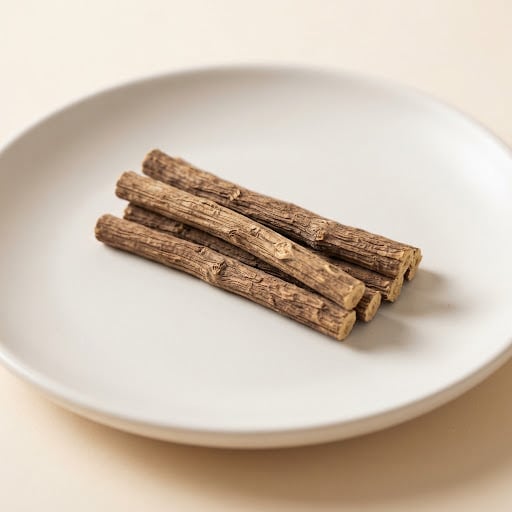
- Do not give licorice root sticks to babies for teething. The woody fibers can break off and become a choking hazard, and chewing them releases glycyrrhizin.
- Do not give licorice root tea or herbal remedies with licorice to babies and young children unless your pediatrician recommends it.
- Licorice candy is chewy and sticky and can be hard to swallow. Wait until after age 2 and cut it into small, thin pieces.
- Black licorice made with real licorice extract can raise blood pressure and lower potassium if eaten in large amounts. Keep portions small and occasional.
- Many red licorice candies contain no licorice at all but are still high in sugar and often contain wheat and artificial colors.
A low-allergy food, still worth watching
Licorice is not a common allergen, though rare reactions have been reported. Many licorice candies contain wheat flour, and some contain other allergens, so check labels carefully.
Licorice for babies: questions parents ask
Quick answers about licorice for babies and toddlers.
When can babies have licorice?
Licorice is best saved until after 12 months, and licorice candy until at least age 2. Before that, skip licorice root sticks, licorice tea and licorice candy.
Can babies have licorice?
Babies under 12 months should not eat licorice. Licorice candy is high in sugar, and real licorice root contains glycyrrhizin, which is not recommended for babies in more than tiny amounts.
Is licorice a choking hazard for babies?
Yes, licorice is a choking hazard for babies. Licorice root sticks can splinter into fibrous pieces, and chewy licorice candy can be hard to swallow and can block the airway.
Is licorice a common allergen?
No, licorice is not a common allergen. However, many licorice candies contain wheat flour, so licorice candy is not safe for children with a wheat allergy unless the label says otherwise.
How do I serve licorice to a 6 month old?
Licorice should not be served to a 6 month old. If you enjoy the anise flavor, If you enjoy the anise flavor, a tiny pinch of ground fennel seed in a cooked dish is a gentler way to introduce it. Skip star anise teas for babies.
Are licorice root sticks safe for teething babies?
Licorice root sticks are not recommended for teething babies. The fibers can break off and cause choking, and chewing the root releases glycyrrhizin, so use a chilled teething ring instead.
Can babies have licorice root tea?
Babies should not have licorice root tea. Babies under 12 months only need breast milk, formula and small sips of water, and licorice tea can affect blood pressure and potassium if used often.
Is licorice root the same as licorice candy?
Licorice root is the plant that real licorice flavor comes from, while licorice candy is a sugary sweet that may or may not contain real licorice extract. Many red licorice candies have no licorice at all.
Is black licorice bad for toddlers?
Black licorice is not ideal for toddlers because it is high in sugar and may contain glycyrrhizin from real licorice extract. A small piece once in a while after age 2 is fine, cut small and eaten while sitting.
The takeaway
- Licorice is best saved until after 12 months, and licorice candy is best avoided until at least age 2.
- Family dishes with a little anise-flavored spice are fine occasionally; skip licorice root powder, tea and sticks for toddlers.
- Choking risk is medium. Not a Top 9 allergen, but offer a small amount first and watch for any reaction.
Read next


Sources
This guide follows current advice from these organizations.
- Starting Solid Foods American Academy of Pediatrics (HealthyChildren.org)
- When, What, and How to Introduce Solid Foods Centers for Disease Control and Prevention
- Choking Hazards Centers for Disease Control and Prevention
- Choking Prevention American Academy of Pediatrics (HealthyChildren.org)
- Recommended Drinks for Young Children Ages 0-5 American Academy of Pediatrics (HealthyChildren.org)
- Foods and Drinks to Avoid or Limit Centers for Disease Control and Prevention
Track every new food in your baby’s passport
Track the first 100 foods and the Top 9 allergens. 7 days free.
More drinks and extras for babies

Updated November 2026. Reviewed by our dietitians. Based on AAP, CDC and NIAID guidance. Written for healthy, full-term babies; not a substitute for your pediatrician. If your baby was born early, has a medical condition, feeding difficulties or a known allergy, check with them first (medical disclaimer). Always stay with your baby while they eat.