
Protein Food Library
When can babies have hake?
Can babies have hake?
Babies can have hake from about 6 months when it is fully cooked, flaked and checked for bones. Hake is a mild, soft white fish that is low in mercury, which makes it a great first fish. Fish is a common allergen, so start with a small amount.
How to serve hake by age
Shapes and textures change as your baby’s grasp and chewing grow.

6 months
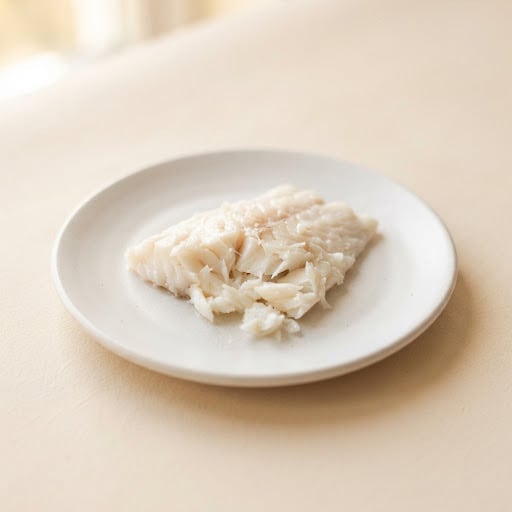
Bake, steam or poach hake until it is opaque and flakes easily, check carefully for bones, then mash or blend it with a little breast milk, formula or smooth vegetable puree. Mixing it into smooth mashed potato is an easy way to offer it on a spoon.

7–8 months
Break boneless cooked hake into soft flakes and mix them into lumpier mashed potato or vegetables, or offer a small pile of flakes. You can also shape flaked hake into soft fish cakes about the size of two adult fingers that squash easily.

9–12 months
Offer small, boneless flakes of cooked hake for pincer practice, or serve it in soft fish cakes, pasta or rice. Add a little lemon, herbs or unsalted butter for flavor.

12 months +
Toddlers can have hake in fish tacos, stews, pies and homemade fish fingers. Keep checking for bones, and aim for fish a couple of times a week as part of a varied diet.
Why it’s good
Hake gives babies lean protein, vitamin B12, phosphorus, selenium, iodine and some omega-3 fats for brain and eye development. It is a low-mercury fish, so it is a good choice for regular meals. Hake is not high in iron, so pair it with iron-rich sides like beans, lentils or leafy greens.
Safety notes
- Remove all bones. Run your fingers over the fish before and after cooking, and flake it apart to feel for small pin bones.
- Cook hake to 145 F (63 C) or until it is opaque and flakes easily. Never serve raw or undercooked fish to babies.
- Avoid battered, breaded and fried frozen hake products for babies, since they are often high in salt.
- Thaw frozen hake in the fridge, not on the counter, and cook it within a day of thawing.
- Fish is a top allergen. Offer hake early in the day so you can watch your baby for a reaction.
Introduce hake on its own, then keep it in
Hake is a fish, and fish is one of the Top 9 allergens. Introduce a small amount and watch for hives, vomiting, swelling, coughing or wheezing, and once your baby tolerates fish, keep it in the diet regularly to help maintain tolerance.
Hake for babies: questions parents ask
Quick answers about hake for babies and toddlers.
When can babies have hake?
Babies can have hake from about 6 months, as soon as they start solids. Hake should be fully cooked, flaked and completely free of bones.
Can babies have hake?
Yes, babies can eat hake, and its soft texture and mild taste make it an easy first fish. Hake is also low in mercury, so it can be served regularly.
Is hake a choking hazard for babies?
Hake is a low choking risk for babies when it is cooked and flaked, but fish bones can get stuck in the throat. Check hake carefully for pin bones before serving.
Is hake a common allergen?
Yes, hake is a common allergen because fish is one of the Top 9 food allergens. Start with a small amount of hake and watch for signs of an allergic reaction.
How do I serve hake to a 6 month old?
To serve hake to a 6 month old, bake or steam it until it flakes easily, remove every bone, then mash or blend it smooth into mashed potato or vegetable puree and offer it on a spoon. Soft flakes and finger-sized fish cakes can follow at 7–8 months.
Can babies have frozen hake?
Yes, plain frozen hake fillets are a convenient and safe choice for babies. Thaw frozen hake in the fridge, cook it fully, and skip breaded or battered frozen hake products.
Is hake high in mercury?
No, hake is a low-mercury fish and is considered a good choice for babies and young children. Babies can eat low-mercury fish like hake about twice a week in age-appropriate portions.
How much hake can a baby eat?
A baby can eat about an ounce of hake per serving, or less, a couple of times a week. Follow your baby's hunger cues and serve hake alongside vegetables and grains.
The takeaway
- Babies can have hake from about 6 months when it is fully cooked, flaked and checked for bones.
- Bake, steam or poach hake until it is opaque and flakes easily, check carefully for bones, then mash or blend it with a little breast milk, formula or smooth vegetable puree.
- Choking risk is low. Fish is one of the Top 9 allergens: offer a small amount first, watch for a reaction, then keep it in the diet regularly.
Read next


Sources
This guide follows current advice from these organizations.
- Starting Solid Foods American Academy of Pediatrics (HealthyChildren.org)
- When, What, and How to Introduce Solid Foods Centers for Disease Control and Prevention
- Choking Hazards Centers for Disease Control and Prevention
- Advice about Eating Fish U.S. Food and Drug Administration
- The Effects of Early Nutritional Interventions on the Development of Atopic Disease in Infants and Children Greer FR, Sicherer SH, Burks AW; American Academy of Pediatrics. Pediatrics. 2019;143(4):e20190281
Track every new food in your baby’s passport
Track the first 100 foods and the Top 9 allergens. 7 days free.
More protein foods for babies
Updated November 2026. Reviewed by our dietitians. Based on AAP, CDC and NIAID guidance. Written for healthy, full-term babies; not a substitute for your pediatrician. If your baby was born early, has a medical condition, feeding difficulties or a known allergy, check with them first (medical disclaimer). Always stay with your baby while they eat.