
Fruit Food Library
When can babies have feijoas?
Can babies have feijoas?
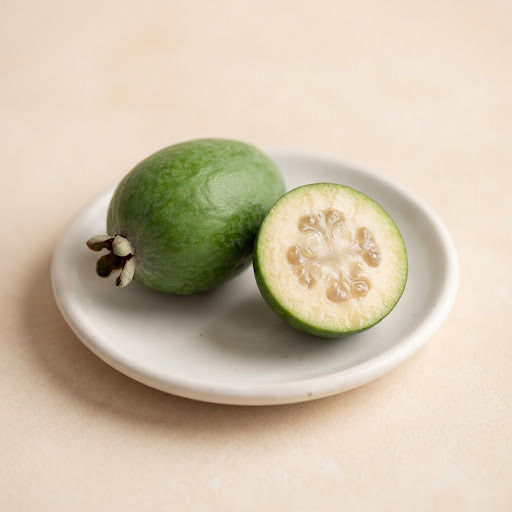
Babies can have feijoa from about 6 months, as long as it is fully ripe and soft. Feijoa, also called pineapple guava, has a sweet-tart, jelly-like center that is easy to scoop and mash. The skin is tough and bitter, so remove it for babies.
How to serve feijoas by age
Shapes and textures change as your baby’s grasp and chewing grow.

6 months
Cut a ripe feijoa in half, scoop out the soft flesh with a spoon and mash it smooth. Serve it on a spoon or a preloaded spoon, or stir it into plain yogurt or oatmeal. The tiny seeds are soft and edible, like those in a kiwi.

7–8 months
Mash ripe feijoa more roughly so it has soft lumps, or stir it into thicker oatmeal or yogurt. You can also offer soft, peeled pieces of very ripe feijoa that squash easily between your fingers.

9–12 months
Offer small, soft pieces of peeled ripe feijoa for pincer practice, or let your baby scoop the flesh from a halved fruit with your help. Mix it with banana or pear if the tart taste is strong.

12 months +
Toddlers can eat ripe feijoa halves with a spoon, or peeled slices chopped into bite-size pieces. Feijoa also works in smoothies, muffins and fruit salad.
Why it’s good
Feijoa gives babies vitamin C, fiber, folate and potassium, along with natural antioxidants. Its vitamin C helps the body absorb iron from plant foods like beans, lentils and fortified cereal eaten at the same meal. Feijoa is not a significant source of iron itself.
Safety notes
- Only serve ripe feijoa. A ripe feijoa gives slightly when gently squeezed and the inside is clear and jelly-like; underripe fruit is firm and hard to mash.
- Remove the skin for babies. Feijoa skin is edible for adults but tough and bitter, and can be hard for babies to chew.
- Throw out feijoas with brown, mushy flesh. They brown quickly once ripe, so use them within a few days.
- Wash the outside before cutting to keep dirt and germs on the skin away from the flesh.
- Feijoa can be tart and acidic, which may cause a mild rash around the mouth. This is common with acidic fruit and usually not an allergy.
A low-allergy food, still worth watching
Feijoa is not a common allergen, and reactions are rare. Start with a small portion and watch for hives, swelling, vomiting or trouble breathing, which need prompt medical attention.
Feijoas for babies: questions parents ask
Quick answers about feijoas for babies and toddlers.
When can babies have feijoa?
Babies can have feijoa from about 6 months of age, when they are ready to start solids. Feijoa should be ripe and soft, with the skin removed.
Can babies have feijoa?
Yes, babies can eat feijoa, also known as pineapple guava. The soft, scoopable center of a ripe feijoa is easy to mash and makes a good fruit for baby-led weaning.
Is feijoa a choking hazard for babies?
Feijoa is a low choking risk for babies when it is ripe, peeled and mashed or served in soft pieces. Underripe feijoa is firmer, so check ripeness and always stay with your baby during meals.
Is feijoa a common allergen?
No, feijoa is not a common allergen. Allergic reactions to feijoa are rare, but introduce a small amount the first time and watch for signs of a reaction.
How do I serve feijoa to a 6 month old?
To serve feijoa to a 6 month old, halve a ripe feijoa, scoop out the soft flesh and mash it. Feijoa can be offered on a preloaded spoon or mixed into yogurt or oatmeal.
Can babies have feijoa seeds?
Yes, babies can eat feijoa seeds. Feijoa seeds are tiny and soft, sit inside the jelly-like center and do not need to be removed, much like kiwi seeds.
Can babies have feijoa skin?
Feijoa skin is best removed for babies because it is tough, gritty and bitter. Toddlers and older children can try small pieces of washed feijoa skin if they like the taste.
How do I know if a feijoa is ripe?
A ripe feijoa feels slightly soft when gently squeezed, smells sweet and fragrant and often falls from the tree on its own. Inside, the flesh near the seeds should be clear and jelly-like, not brown.
Can feijoa help with baby constipation?
Feijoa is a good source of fiber, which can help soften stools in babies as part of a varied diet. Pair feijoa with other high-fiber fruits and vegetables and offer fluids with meals.
The takeaway
- Babies can have feijoa from about 6 months, as long as it is fully ripe and soft.
- Cut a ripe feijoa in half, scoop out the soft flesh with a spoon and mash it smooth.
- Choking risk is low. Not a Top 9 allergen, but offer a small amount first and watch for any reaction.
Read next


Sources
This guide follows current advice from these organizations.
- Starting Solid Foods American Academy of Pediatrics (HealthyChildren.org)
- When, What, and How to Introduce Solid Foods Centers for Disease Control and Prevention
- Choking Hazards Centers for Disease Control and Prevention
Track every new food in your baby’s passport
Track the first 100 foods and the Top 9 allergens. 7 days free.
More fruit for babies
Updated November 2026. Reviewed by our dietitians. Based on AAP, CDC and NIAID guidance. Written for healthy, full-term babies; not a substitute for your pediatrician. If your baby was born early, has a medical condition, feeding difficulties or a known allergy, check with them first (medical disclaimer). Always stay with your baby while they eat.