
Fruit Food Library
When can babies have durian?
Can babies eat durian?
Babies can have durian from about 6 months, once they are ready for solids. Always remove the large seeds, which are a serious choking hazard. Start with the soft, custardy flesh mashed smooth on a spoon, then offer soft pieces from 7–8 months. Durian is rich and filling, so a small amount is plenty.
How to serve durian by age
Shapes and textures change as your baby’s grasp and chewing grow.

6 months
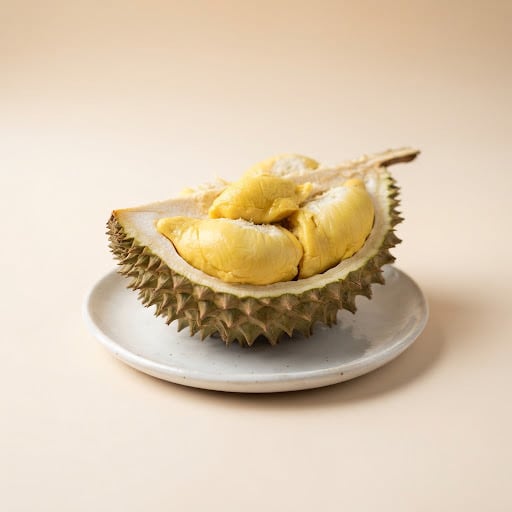
Scoop out a pod of ripe durian, remove the seed completely, and mash the soft flesh until smooth. Offer it on a spoon or a preloaded spoon, on its own or stirred into plain yogurt or iron-fortified cereal.

7–8 months
Mash seedless durian more roughly, or stir it into thicker oatmeal or yogurt. Your baby can also hold a large, soft piece of seedless flesh that squashes easily, or a soft toast strip with durian spread thinly on it.

9–12 months
Offer small, soft pieces of seedless durian flesh about the size of a chickpea for pincer practice, or keep mashing it into oatmeal or yogurt. Check every piece for seed fragments and stringy fibers.

12 months +
Toddlers can eat seedless durian pieces on their own, blended into smoothies or mixed with sticky rice. Keep seeds and the spiky husk out of reach.
Why it’s good
Durian gives babies energy from natural sugars and healthy fats, plus fiber, potassium, vitamin C and B vitamins such as thiamin and B6. Vitamin C helps the body absorb iron from plant foods eaten at the same meal. Durian is very energy dense, so small portions are enough for little tummies.
Safety notes
- Remove every durian seed before serving. The seeds are large, firm and slippery and are a high choking risk for babies and toddlers.
- Raw durian seeds are not edible. Do not let babies chew or mouth them.
- The husk is covered in sharp spikes. Open durian away from your baby and keep the shell out of reach.
- Choose ripe, soft durian. Underripe flesh is firmer and more fibrous; mash it well or wait until it softens.
- Store opened durian sealed in the fridge and use it within a day or two, or freeze the flesh in small portions.
A low-allergy food, still worth watching
Durian is not a common food allergen, and reactions are rare. As with any new food, start with a small amount and watch for hives, vomiting or swelling.
Durian for babies: questions parents ask
Quick answers about durian for babies and toddlers.
When can babies have durian?
Babies can have durian from about 6 months, when they are ready to start solids. The seed must be removed, and the soft flesh can be mashed smooth on a spoon at first, then smeared on toast or offered as a soft seedless piece from 7–8 months.
Can babies eat durian?
Yes, babies can eat ripe durian flesh with the seeds removed. Durian is soft, sweet and nutritious, but its strong smell and rich texture mean many babies do best with a small taste at first.
Is durian a choking hazard for babies?
Durian flesh is soft, but durian seeds are a high choking hazard for babies. Remove every seed, check for fragments, mash or tear the flesh into safe sizes, and always stay close while your baby eats.
Is durian a common allergen?
No, durian is not a common allergen and is not one of the Top 9 food allergens. Reactions are uncommon, but introduce durian in a small amount and watch for signs of a reaction, as with any new food.
How do I serve durian to a 6 month old?
To serve durian to a 6 month old, take the soft flesh from a ripe pod, remove the seed, and mash it smooth to offer on a spoon. Mixing durian into plain yogurt or oatmeal also works well. Soft pieces and toast strips can follow at 7–8 months.
How do I know if durian is ripe?
Ripe durian has a strong aroma, a husk that gives slightly when pressed near the base, and flesh that is soft and creamy. Frozen durian pods are picked ripe and are a convenient option once thawed.
Can babies eat frozen durian?
Yes, babies can eat frozen durian once it is fully thawed and the seeds are removed. Frozen durian is usually ripe and soft, which makes it easy to mash for babies.
Can durian cause constipation or gas in babies?
Durian contains fiber that usually supports regular poops, but its richness and sulfur compounds can cause gas in some babies. Start with a spoonful or two of durian and see how your baby's tummy responds.
How much durian can a baby eat?
A baby only needs a small amount of durian, such as a tablespoon or two of flesh at a meal. Durian is high in natural sugar and calories, so offer it alongside other fruits and vegetables rather than as a large serving.
The takeaway
- Babies can have durian from about 6 months, once they are ready for solids.
- Scoop out a pod of ripe durian, remove the seed completely, and mash the soft flesh until smooth.
- Choking risk is medium. Not a Top 9 allergen, but offer a small amount first and watch for any reaction.
Read next



Sources
This guide follows current advice from these organizations.
- Starting Solid Foods American Academy of Pediatrics (HealthyChildren.org)
- When, What, and How to Introduce Solid Foods Centers for Disease Control and Prevention
- Choking Hazards Centers for Disease Control and Prevention
- Choking Prevention American Academy of Pediatrics (HealthyChildren.org)
Track every new food in your baby’s passport
Track the first 100 foods and the Top 9 allergens. 7 days free.
More fruit for babies
Updated November 2026. Reviewed by our dietitians. Based on AAP, CDC and NIAID guidance. Written for healthy, full-term babies; not a substitute for your pediatrician. If your baby was born early, has a medical condition, feeding difficulties or a known allergy, check with them first (medical disclaimer). Always stay with your baby while they eat.