
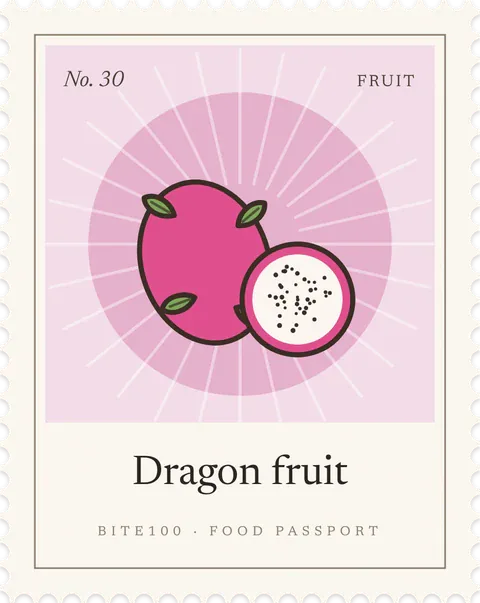
No. 30 · Fruit Passport food
When can babies have dragon fruit?
Can babies eat dragon fruit?
Babies can have dragon fruit (pitaya) from about 6 months, as soon as they are ready for solids. Ripe dragon fruit is soft and mild, and its tiny black seeds are safe to eat. Start with smooth mashed dragon fruit on a spoon, then offer soft spears from 7–8 months.
How to serve dragon fruit by age
Shapes and textures change as your baby’s grasp and chewing grow.

6 months
Scoop the flesh of a ripe dragon fruit and mash it with a fork or blend it until smooth. Offer it on a spoon or a pre-loaded spoon your baby can hold, on its own or stirred into plain yogurt or iron-fortified cereal.

7–8 months
Mash ripe dragon fruit more roughly so it has soft lumps. You can also offer peeled spears about the length and width of an adult finger, which squash easily between your fingers; roll them in ground oats or hemp seeds if they are slippery.

9–12 months
Cut peeled dragon fruit into small cubes about the size of a chickpea for pincer practice. You can also mash it into yogurt or blend it into smoothie bowls served with a spoon.

12 months +
Serve bite-size pieces, slices or cubes of dragon fruit on their own or in fruit salads. Toddlers can scoop dragon fruit halves with a spoon, which is good self-feeding practice.
Why it’s good
Dragon fruit gives babies vitamin C, fiber, magnesium and small amounts of iron, plus prebiotic fiber that feeds healthy gut bacteria. Red-fleshed varieties contain colorful plant pigments called betalains. Pair it with iron-rich foods for a more complete meal.
Safety notes
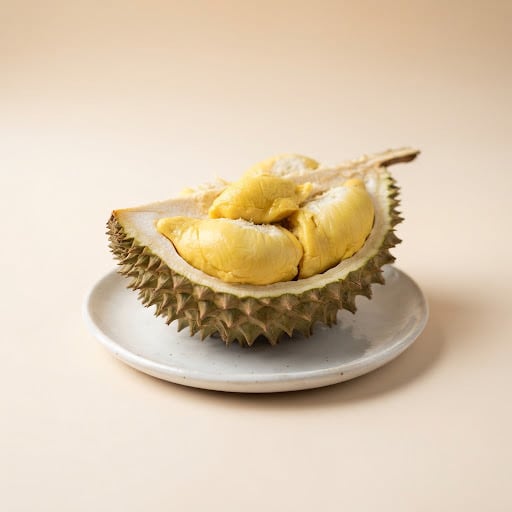
- Remove the thick, leathery pink or yellow skin before serving pieces. Skin left on as a handle is fine only if baby is not biting it.
- Choose ripe dragon fruit that gives slightly when pressed, like a ripe avocado. Firm, unripe fruit is less sweet and harder to mash.
- The tiny black seeds are soft and safe to eat; there is no need to remove them.
- Red or pink-fleshed dragon fruit can turn poop and pee reddish. This is harmless, but call your pediatrician if you see red when your baby has not eaten red foods.
- Seat baby upright and stay within arm's reach while they eat. Wet dragon fruit is slippery, so coat or mash it if baby struggles.
A low-allergy food, still worth watching
Dragon fruit is not a common allergen, though rare allergic reactions have been reported. Watch for hives, swelling, itching or vomiting the first few times you serve it.
Dragon fruit for babies: questions parents ask
Quick answers about dragon fruit for babies and toddlers.
When can babies have dragon fruit?
Babies can have dragon fruit from about 6 months of age, once they show signs of readiness for solids. Ripe dragon fruit is soft and mild, so it mashes easily into a smooth early fruit puree for spoon feeding.
Can babies eat dragon fruit?
Yes, babies can eat dragon fruit from around 6 months when it is ripe and the skin is removed. Dragon fruit can be mashed smooth at 6 months, served as soft spears at 7–8 months and cut into small cubes from about 9 months.
Is dragon fruit a choking hazard for babies?
Dragon fruit is a low choking risk for babies when it is ripe, peeled and served in an age-appropriate shape. Dragon fruit can be slippery, so roll spears in ground oats or serve it mashed if your baby has trouble holding it.
Is dragon fruit a common allergen?
No, dragon fruit is not one of the Top 9 common food allergens. Dragon fruit allergy is rare, but watch for hives, swelling or vomiting the first few times you offer it.
How do I serve dragon fruit to a 6 month old?
To serve dragon fruit to a 6 month old, scoop out the flesh of a ripe dragon fruit and mash or blend it until smooth. Offer it on a spoon or a pre-loaded spoon, or mix it into yogurt; soft spears to hold can follow at 7–8 months.
Can babies eat dragon fruit seeds?
Yes, babies can eat dragon fruit seeds. The tiny black seeds are soft and are eaten along with the flesh, so there is no need to remove them, and they may show up in diapers.
Why is my baby's poop red after eating dragon fruit?
Red or pink poop or pee after eating red dragon fruit is caused by natural pigments in the fruit and is harmless. Call your pediatrician if you see red in the diaper when your baby has not eaten red foods, or if your baby seems unwell.
Is red or white dragon fruit better for babies?
Red, white and yellow dragon fruit are all fine for babies. Yellow dragon fruit is often the sweetest, red-fleshed types contain more colorful pigments, and white-fleshed types are milder and the most widely sold.
Can babies eat frozen dragon fruit?
Frozen dragon fruit is fine for babies once fully thawed and mashed, or blended into a smoothie bowl served with a spoon. Do not offer hard frozen chunks, which are a choking risk.
Is dragon fruit good for babies?
Yes, dragon fruit is a good fruit for babies from about 6 months, with vitamin C, magnesium and prebiotic fiber that feeds healthy gut bacteria. Ripe dragon fruit is soft and mild and its tiny seeds are safe, so start with it mashed on a spoon and offer soft spears from 7–8 months.
The takeaway
- Babies can have dragon fruit (pitaya) from about 6 months, as soon as they are ready for solids.
- Scoop the flesh of a ripe dragon fruit and mash it with a fork or blend it until smooth.
- Choking risk is low. Not a Top 9 allergen, but offer a small amount first and watch for any reaction.
Read next



Sources
This guide follows current advice from these organizations.
- Starting Solid Foods American Academy of Pediatrics (HealthyChildren.org)
- When, What, and How to Introduce Solid Foods Centers for Disease Control and Prevention
- Choking Hazards Centers for Disease Control and Prevention
Stamp dragon fruit in your baby’s passport
Track the first 100 foods and the Top 9 allergens. 7 days free.
More fruit for babies

Updated November 2026. Reviewed by our dietitians. Based on AAP, CDC and NIAID guidance. Written for healthy, full-term babies; not a substitute for your pediatrician. If your baby was born early, has a medical condition, feeding difficulties or a known allergy, check with them first (medical disclaimer). Always stay with your baby while they eat.