
Drinks & extras Food Library
When can babies have capers?
Can babies have capers?
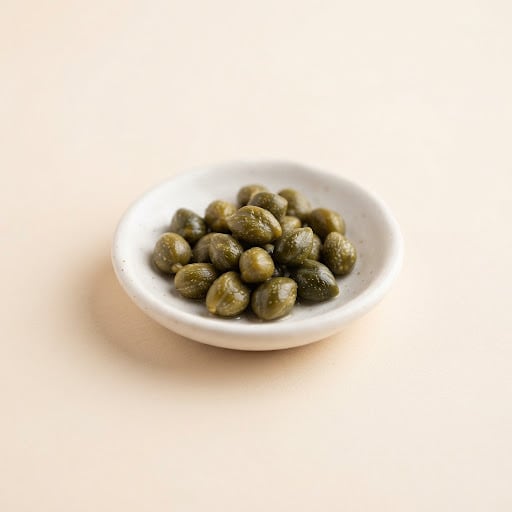
Babies can have capers from about 12 months, but only as a small, rinsed and finely chopped seasoning mixed into other foods. Capers are pickled or salt-packed, so they are very high in sodium and best used sparingly. Whole capers are small and firm, which makes them a choking risk for babies.
How to serve capers by age
Shapes and textures change as your baby’s grasp and chewing grow.

6 months
Skip capers for now; they are very salty even after rinsing. Use lemon zest or fresh herbs for a bright flavor instead.

7–8 months
Keep skipping capers. Finely chopped fresh herbs like dill or parsley stirred into lumpy mashes give flavor without the salt.

9–12 months
Still skip capers before 12 months. Take your baby's portion out before adding capers to family dishes.

12 months +
Toddlers can have rinsed capers chopped or flattened in dishes like chicken piccata, pasta, potato salad or tuna salad. Continue to use only a teaspoon or so in a family dish, and leave larger caper berries out until they can be cut into small pieces.
Why it’s good
Capers are eaten in such small amounts that they add flavor more than nutrition, though they do contain some vitamin K, fiber and plant antioxidants like quercetin. Their bold, briny taste can help babies get used to a range of flavors early. Capers are high in sodium, so their main role is as an occasional seasoning.
Safety notes
- Capers are very salty whether packed in brine or salt. Rinse them under running water and soak in fresh water for 10 to 15 minutes before using, and keep amounts small.
- Whole capers are round, firm and about the size of a pea, a shape that can block a small airway. Mince, mash or flatten them for babies and young toddlers.
- Caper berries are larger than capers and contain small seeds. Quarter them lengthwise or skip them until your child chews well.
- Keep opened jars in the fridge and use a clean spoon. Throw out capers that smell off, look cloudy or show mold.
- Watch for other salty ingredients in caper dishes, such as anchovies, olives and cheese, and skip added salt.
A low-allergy food, still worth watching
Capers are not a common allergen, though rare reactions have been reported. Introduce capers in a tiny amount mixed into a food your baby already eats, and watch for hives, swelling or vomiting.
Capers for babies: questions parents ask
Quick answers about capers for babies and toddlers.
When can babies have capers?
Babies can have capers from about 12 months as a rinsed, finely chopped seasoning in other foods. Capers are high in salt, so a few minced capers in a family dish is enough for a baby.
Can babies have capers?
Yes, babies can eat capers in small amounts once they start solids. Rinse and soak capers to reduce the salt, and always chop or mash them before serving.
Are capers a choking hazard for babies?
Capers are a choking hazard for babies when served whole because they are small, round and firm. Mincing or mashing capers and mixing them into soft food lowers the risk.
Are capers a common allergen?
Capers are not a common allergen and are not among the Top 9 food allergens. Allergic reactions to capers are rare, but offer a small amount first and watch for any signs of a reaction.
How do I serve capers to a 6 month old?
Capers are not recommended for a 6 month old because they are very salty. Use lemon zest or fresh herbs for flavor instead, and wait until about 12 months for capers.
Are capers too salty for babies?
Capers are very salty straight from the jar, which is why babies should only have small amounts. Rinsing and soaking capers removes some of the salt, and using them as a light seasoning keeps sodium in check.
Are capers healthy for babies?
Capers add flavor and small amounts of antioxidants and vitamin K, but babies eat too little of them for much nutritional benefit. Capers are best thought of as a way to expand flavors rather than a nutritious food.
What is the difference between capers and caper berries?
Capers are the unopened flower buds of the caper bush, while caper berries are the larger fruit that forms after the flower blooms. Caper berries contain seeds and are bigger, so they need to be cut into small pieces for toddlers.
Are salt-packed or brined capers better for babies?
Salt-packed and brined capers both need rinsing and soaking before serving to babies. Salt-packed capers often hold more salt, so soak them a little longer and change the water once.
The takeaway
- Babies can have capers from about 12 months, but only as a small, rinsed and finely chopped seasoning mixed into other foods.
- Toddlers can have rinsed capers chopped or flattened in dishes like chicken piccata, pasta, potato salad or tuna salad.
- Choking risk is medium. Not a Top 9 allergen, but offer a small amount first and watch for any reaction.
Read next


Sources
This guide follows current advice from these organizations.
- Starting Solid Foods American Academy of Pediatrics (HealthyChildren.org)
- When, What, and How to Introduce Solid Foods Centers for Disease Control and Prevention
- Choking Hazards Centers for Disease Control and Prevention
- Choking Prevention American Academy of Pediatrics (HealthyChildren.org)
- Recommended Drinks for Young Children Ages 0-5 American Academy of Pediatrics (HealthyChildren.org)
- Foods and Drinks to Avoid or Limit Centers for Disease Control and Prevention
Track every new food in your baby’s passport
Track the first 100 foods and the Top 9 allergens. 7 days free.
More drinks and extras for babies
Updated November 2026. Reviewed by our dietitians. Based on AAP, CDC and NIAID guidance. Written for healthy, full-term babies; not a substitute for your pediatrician. If your baby was born early, has a medical condition, feeding difficulties or a known allergy, check with them first (medical disclaimer). Always stay with your baby while they eat.