
Herbs & spices Food Library
When can babies have annatto?
Can babies have annatto?
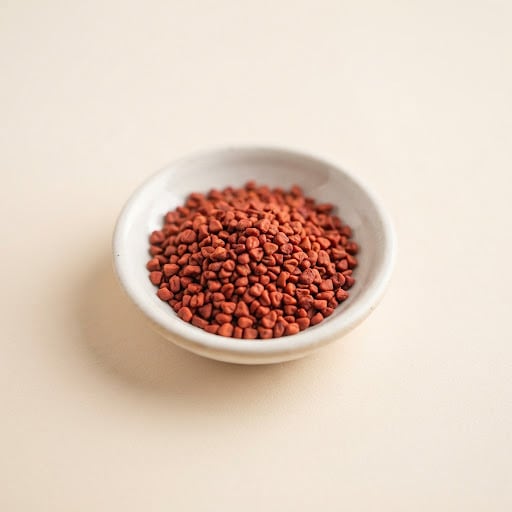
Babies can have annatto (achiote) from about 6 months, as ground powder or annatto-infused oil cooked into food. Whole annatto seeds are very hard, so strain them out, and check achiote paste labels for salt. Annatto is also the natural coloring in many orange cheeses and is safe in those amounts.
How to serve annatto by age
Shapes and textures change as your baby’s grasp and chewing grow.

6 months
Warm whole annatto seeds in oil, strain out every seed, and stir a little of the cooled orange oil into smooth purees like mashed potato, squash or blended chicken. You can also stir a tiny pinch of ground annatto into a smooth puree and offer it on a spoon.

7–8 months
Use strained annatto oil or a pinch of ground annatto in thicker, lumpier foods like fork-mashed beans, soft rice mashed with vegetables or finely minced chicken. Soft foods cooked with annatto, such as a strip of soft-cooked squash or a soft omelet strip, can be offered for your baby to hold.

9–12 months
Offer soft family foods colored with annatto oil or powder, such as rice, lentils or tender shredded pork or chicken, cut or shredded into small pieces. If you use store-bought achiote paste, use only a little and make the rest of the meal unsalted.

12 months +
Toddlers can share dishes like achiote chicken, rice or eggs cooked in annatto oil. Keep salty marinades and achiote pastes in small amounts, since most contain added salt and sometimes vinegar and garlic.
Why it’s good
Annatto is used in small amounts, so it adds color and a mild, earthy, slightly peppery flavor rather than meaningful nutrition. The seeds contain carotenoid pigments called bixin and norbixin, which give the bright orange color. Cooking with annatto oil also adds a little healthy fat to a baby's meal.
Safety notes
- Do not serve whole annatto seeds: they are tiny, rock hard and can crack teeth or get stuck. Strain them out of oil and grind them fully if using in food.
- Achiote paste and recado rojo often contain added salt. Check the label, choose a lower-sodium option, or make your own from ground annatto, spices and citrus.
- Annatto-infused oil is hot when made; cool it fully before using on baby food and store it in the fridge.
- Annatto stains skin, bibs and plastic orange. This is harmless, but a little oil on your baby's skin wipes off more easily than water alone.
- Annatto in packaged snacks like orange cheese puffs does not make those snacks baby food; they are salty and many puffy shapes are not suitable for young babies.
A low-allergy food, still worth watching
Annatto is not a Top 9 allergen, but rare allergic reactions, including hives and swelling, have been reported. Offer a small amount the first time and watch for skin rash, swelling, vomiting or breathing changes, and note that annatto hides in many orange cheeses and snack foods.
Annatto for babies: questions parents ask
Quick answers about annatto for babies and toddlers.
When can babies have annatto?
Babies can have annatto from about 6 months, when they are ready for solids. Use ground annatto or strained annatto oil cooked into food, and avoid whole seeds.
Can babies have annatto?
Yes, babies can eat annatto in the small amounts used to color and season food. Annatto oil on rice, mashed vegetables or shredded meat is an easy way to add flavor without much salt.
Is annatto a choking hazard for babies?
Ground annatto and annatto oil are not choking hazards. Whole annatto seeds are hard and small, so strain them out of oils and stews and never serve them whole.
Is annatto a common allergen?
No, annatto is not one of the Top 9 common food allergens. Rare reactions have been reported, so watch your baby the first few times and talk to your pediatrician if you notice hives or swelling after orange-colored foods.
How do I serve annatto to a 6 month old?
To serve annatto to a 6 month old, gently heat annatto seeds in oil until it turns orange, strain the seeds out, and stir a little of the cooled oil into a smooth food like mashed potato or avocado. A tiny pinch of ground annatto stirred into puree also works. Offer it on a spoon.
What is the difference between annatto and achiote?
Annatto and achiote come from the same tree and seeds. Achiote is the Spanish name for the tree and is often used for seasoning pastes, while annatto usually refers to the seeds, ground spice or the natural food coloring.
Is the annatto in cheese safe for babies?
Yes, the annatto used to color orange cheddar and other cheeses is safe for babies in normal amounts. Choose pasteurized, lower-sodium cheese and serve it grated or thinly sliced for babies.
Is achiote paste safe for babies?
Achiote paste can be used in small amounts for babies, but many brands contain added salt. Use a thin layer as a marinade for family meat, or make a salt-free version at home with ground annatto, garlic, cumin and orange juice.
Will annatto change the color of my baby's poop?
Annatto can tint a baby's poop orange or reddish after a meal with a lot of annatto. This is harmless, but call your pediatrician if you see red streaks you cannot link to food, black stool after the first days of life, or white or pale gray stool.
The takeaway
- Babies can have annatto (achiote) from about 6 months, as ground powder or annatto-infused oil cooked into food.
- Warm whole annatto seeds in oil, strain out every seed, and stir a little of the cooled orange oil into smooth purees like mashed potato, squash or blended chicken.
- Choking risk is low. Not a Top 9 allergen, but offer a small amount first and watch for any reaction.
Read next


Sources
This guide follows current advice from these organizations.
- Starting Solid Foods American Academy of Pediatrics (HealthyChildren.org)
- When, What, and How to Introduce Solid Foods Centers for Disease Control and Prevention
- Choking Hazards Centers for Disease Control and Prevention
- Foods and Drinks to Avoid or Limit Centers for Disease Control and Prevention
Track every new food in your baby’s passport
Track the first 100 foods and the Top 9 allergens. 7 days free.
More herbs and spices for babies
Updated November 2026. Reviewed by our dietitians. Based on AAP, CDC and NIAID guidance. Written for healthy, full-term babies; not a substitute for your pediatrician. If your baby was born early, has a medical condition, feeding difficulties or a known allergy, check with them first (medical disclaimer). Always stay with your baby while they eat.