
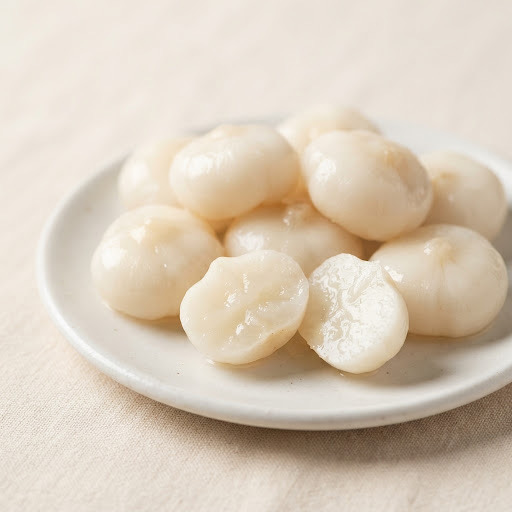
Veggies Food Library
When can babies have water chestnuts?
Can babies have water chestnuts?
Babies can have water chestnuts from about 6 months, but only finely grated or minced and mixed into soft foods. Water chestnuts stay crisp even after cooking, so whole pieces and slices are a choking hazard. Water chestnuts are not a common allergen and are not a nut.
How to serve water chestnuts by age
Shapes and textures change as your baby’s grasp and chewing grow.

6 months
Cook peeled fresh water chestnuts or rinse canned ones, then blend them completely smooth into congee, vegetable puree or mashed potato. Offer it on a spoon and check there are no crunchy bits left.

7–8 months
Grate or mince cooked water chestnuts very finely and mix them into lumpier foods like congee, mashed vegetables, scrambled egg or soft meatballs. Avoid slices and chunks, which stay crunchy.

9–12 months
Keep water chestnuts finely minced and mixed into patties, dumpling fillings or fried rice. Avoid slices and chunks, which stay crunchy.

12 months +
Toddlers can have small, finely chopped pieces of water chestnut in stir-fries. Wait until at least age 4 for slices, and serve them seated.
Why it’s good
Water chestnuts give babies fiber, potassium, manganese and some vitamin B6, plus a pleasant mild sweetness. They are mostly water and starch, so they add texture and flavor more than major nutrients.
Safety notes
- Water chestnuts stay firm and crunchy even after long cooking, so slices and chunks are a choking hazard. Grate or mince them finely for babies.
- Peel fresh water chestnuts completely and wash them well, since they grow in water and mud. Cook fresh water chestnuts before serving.
- Rinse canned water chestnuts to remove some sodium, and choose no-salt-added cans when you can.
- Check dumplings, stir-fries and spring rolls for hidden water chestnut pieces before serving them to babies.
A low-allergy food, still worth watching
Water chestnuts are not a common food allergen and are not a tree nut, despite the name. Reactions are uncommon, so start with a small amount and watch for hives, vomiting or swelling.
Water chestnuts for babies: questions parents ask
Quick answers about water chestnuts for babies and toddlers.
When can babies have water chestnuts?
Babies can have water chestnuts from about 6 months, as long as the water chestnuts are finely grated or minced and mixed into soft foods. Slices and chunks should wait until much later.
Can babies have water chestnuts?
Yes, babies can eat water chestnuts when they are grated or minced very finely. Water chestnuts add a mild sweetness to meatballs, congee and patties.
Are water chestnuts a choking hazard for babies?
Yes, water chestnuts are a high choking hazard for babies because they stay firm and crunchy even after cooking. Grate or mince them finely, check mixed dishes for hidden pieces, and always stay with your baby during meals.
Are water chestnuts a common allergen?
No, water chestnuts are not a common allergen and are not one of the Top 9 food allergens. Water chestnuts are an aquatic vegetable, not a tree nut.
How do I serve water chestnuts to a 6 month old?
To serve water chestnuts to a 6 month old, rinse canned or cook peeled fresh water chestnuts, then blend them smooth into a food like congee or mashed vegetables and offer it on a spoon. Finely grated water chestnut in meatballs or egg can follow at 7–8 months.
Can babies have canned water chestnuts?
Yes, babies can have canned water chestnuts when they are rinsed and finely grated or minced. Rinsing removes some of the added sodium.
Is water chestnut flour safe for babies?
Water chestnut flour is safe for babies when cooked into foods like pancakes or soft cakes. It is naturally gluten free, but check the label for cross-contact with wheat.
Are water chestnuts nuts?
No, water chestnuts are not nuts. Water chestnuts are the crunchy corms of an aquatic plant and are safe for children with tree nut allergies.
The takeaway
- Babies can have water chestnuts from about 6 months, but only finely grated or minced and mixed into soft foods.
- Cook peeled fresh water chestnuts or rinse canned ones, then blend them completely smooth into congee, vegetable puree or mashed potato.
- Choking risk is high. Not a Top 9 allergen, but offer a small amount first and watch for any reaction.
Read next


Sources
This guide follows current advice from these organizations.
- Starting Solid Foods American Academy of Pediatrics (HealthyChildren.org)
- When, What, and How to Introduce Solid Foods Centers for Disease Control and Prevention
- Choking Hazards Centers for Disease Control and Prevention
- Choking Prevention American Academy of Pediatrics (HealthyChildren.org)
- Recommended Drinks for Young Children Ages 0-5 American Academy of Pediatrics (HealthyChildren.org)
Track every new food in your baby’s passport
Track the first 100 foods and the Top 9 allergens. 7 days free.
More vegetables for babies
Updated November 2026. Reviewed by our dietitians. Based on AAP, CDC and NIAID guidance. Written for healthy, full-term babies; not a substitute for your pediatrician. If your baby was born early, has a medical condition, feeding difficulties or a known allergy, check with them first (medical disclaimer). Always stay with your baby while they eat.