
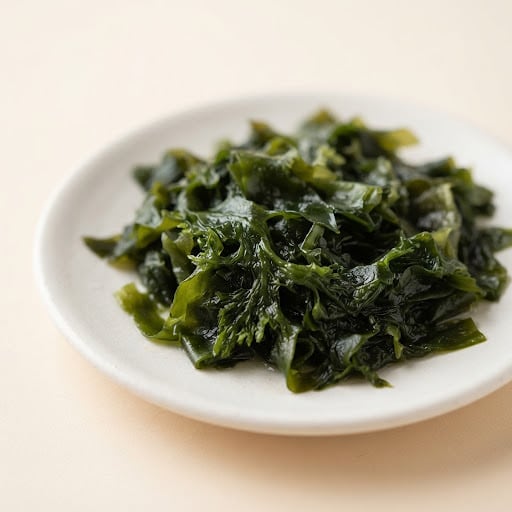
Veggies Food Library
When can babies have wakame?
Can babies have wakame?
Babies can have small amounts of wakame from about 6 months when it is rehydrated, cooked soft and blended into food, with very finely chopped wakame from about 7–8 months. Wakame is a seaweed that is naturally high in iodine, so offer it occasionally rather than daily. Wakame is not a common allergen, but seaweed salads often contain sesame and soy.
How to serve wakame by age
Shapes and textures change as your baby’s grasp and chewing grow.

6 months
Soak dried wakame in water until soft, rinse well, simmer briefly, then blend a small pinch into smooth congee, rice porridge or mashed tofu so no strands are left. Offer it on a spoon.

7–8 months
Chop soft, rinsed wakame very finely and stir a small pinch into rice, congee, soft scrambled egg or mashed tofu. Keep pieces tiny so they do not stick to the roof of the mouth.

9–12 months
Mix finely chopped soft wakame into rice, noodles, omelets or soups. Keep pieces small so they do not stick to the roof of the mouth.

12 months +
Toddlers can have chopped wakame in miso soup made with low-sodium miso, noodle bowls and rice dishes. Keep portions small and occasional.
Why it’s good
Wakame gives babies iodine for thyroid health and brain development, plus folate, magnesium, calcium and fiber. Seaweeds can contain very high amounts of iodine, so a small pinch a few times a week is enough.
Safety notes
- Seaweed is high in iodine, and too much iodine can affect the thyroid. Offer small amounts of wakame occasionally rather than every day.
- Rinse and soak dried wakame well. Some products are packed with salt.
- Large, slippery pieces of seaweed can stick to the roof of the mouth or wrap around the tongue. Chop wakame finely.
- Store-bought seaweed salad is often high in sodium and sugar and contains sesame and soy. Save it for toddlers and offer small tastes.
- Avoid hijiki seaweed, which is high in inorganic arsenic.
A low-allergy food, still worth watching
Wakame is not a common food allergen. Seaweed salads and miso soups often contain sesame, soy or wheat, so introduce those allergens separately first and read labels.
Wakame for babies: questions parents ask
Quick answers about wakame for babies and toddlers.
When can babies have wakame?
Babies can have wakame from about 6 months, as long as the wakame is rehydrated, soft and blended into food, then finely chopped from about 7–8 months. Because wakame is high in iodine, keep portions small and occasional.
Can babies have wakame?
Yes, babies can eat small amounts of wakame. Wakame adds iodine and minerals to rice, eggs and soups when chopped finely.
Is wakame a choking hazard for babies?
Wakame is a low choking risk for babies when it is soft and finely chopped. Large slippery pieces can stick in the mouth, so chop it small and always stay with your baby during meals.
Is wakame a common allergen?
No, wakame is not a common allergen and is not one of the Top 9 food allergens. Seaweed salads and miso soups made with wakame may contain sesame, soy or wheat, so check ingredients.
How do I serve wakame to a 6 month old?
To serve wakame to a 6 month old, soak dried wakame until soft, rinse it, simmer briefly and blend a small pinch into congee, rice porridge or mashed tofu until smooth. Offer it on a spoon.
Can babies have miso soup with wakame?
Babies can have a little miso soup with wakame if it is made with low-sodium miso and diluted. Miso is high in sodium and contains soy, so offer small amounts after soy has been introduced.
Can babies have seaweed salad?
Store-bought seaweed salad is best saved for toddlers because it is high in sodium and sugar and contains sesame and soy. A homemade version with plain wakame and a little oil is a better choice.
How much wakame can a baby have?
A baby only needs a small pinch of rehydrated wakame a few times a week. Wakame is very high in iodine, so larger daily amounts are not recommended.
The takeaway
- Babies can have small amounts of wakame from about 6 months when it is rehydrated, cooked soft and blended into food, with very finely chopped wakame from about 7–8 months.
- Soak dried wakame in water until soft, rinse well, simmer briefly, then blend a small pinch into smooth congee, rice porridge or mashed tofu so no strands are left.
- Choking risk is low. Not a Top 9 allergen, but offer a small amount first and watch for any reaction.
Read next



Sources
This guide follows current advice from these organizations.
- Starting Solid Foods American Academy of Pediatrics (HealthyChildren.org)
- When, What, and How to Introduce Solid Foods Centers for Disease Control and Prevention
- Choking Hazards Centers for Disease Control and Prevention
- Foods and Drinks to Avoid or Limit Centers for Disease Control and Prevention
- What You Can Do to Limit Exposure to Arsenic U.S. Food and Drug Administration
Track every new food in your baby’s passport
Track the first 100 foods and the Top 9 allergens. 7 days free.
More vegetables for babies

Updated November 2026. Reviewed by our dietitians. Based on AAP, CDC and NIAID guidance. Written for healthy, full-term babies; not a substitute for your pediatrician. If your baby was born early, has a medical condition, feeding difficulties or a known allergy, check with them first (medical disclaimer). Always stay with your baby while they eat.