
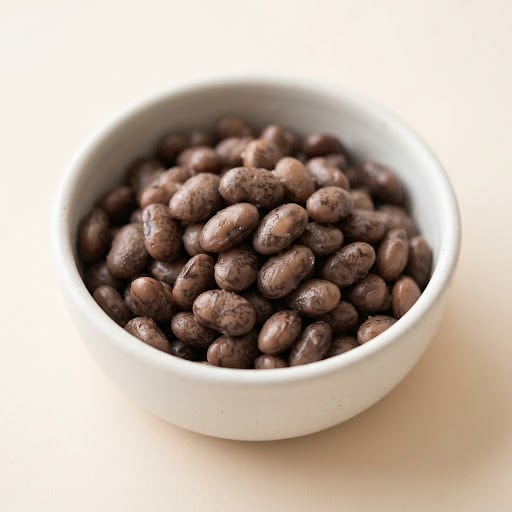
Protein Food Library
When can babies have tepary beans?
Can babies have tepary beans?
Babies can have tepary beans from about 6 months when they are cooked until very soft and mashed or flattened. Whole beans can be a choking hazard. Tepary beans are a drought-hardy bean native to the Southwest and are rich in protein, fiber and iron.
How to serve tepary beans by age
Shapes and textures change as your baby’s grasp and chewing grow.

6 months
Soak tepary beans overnight, cook until very soft, then blend or mash them smooth with a little cooking water and offer them on a spoon, on their own or mixed into vegetable puree.

7–8 months
Mash very soft tepary beans roughly so there are small lumps but no whole beans, and mix them into vegetables. You can also spread the mash thinly on a soft toast strip for baby to hold.

9–12 months
Flatten individual cooked beans for pincer practice or mash them into patties.

12 months +
Toddlers can eat soft, whole cooked tepary beans in soups, stews and tacos. Flatten them if needed.
Why it’s good
Tepary beans provide iron, protein, fiber, folate and potassium. Pair with vitamin C foods to improve iron absorption.
Safety notes
- Mash or flatten beans for babies to lower choking risk.
- Tepary beans are small and firm, so cook them longer than most beans until fully soft.
- Never serve undercooked dried beans.
- Beans can cause gas. Start small.
A low-allergy food, still worth watching
Tepary beans are not a common allergen. Babies with legume allergies may react, so start small.
Tepary beans for babies: questions parents ask
Quick answers about tepary beans for babies and toddlers.
When can babies have tepary beans?
Babies can have tepary beans from about 6 months when cooked soft and mashed. Tepary beans are rich in iron.
Can babies have tepary beans?
Yes, babies can eat tepary beans if they are fully cooked. Mash or flatten tepary beans for safety.
Are tepary beans a choking hazard for babies?
Yes, whole tepary beans can be a choking hazard. Mashing or flattening tepary beans lowers the risk.
Are tepary beans a common allergen?
No, tepary beans are not a common allergen. Babies with legume allergies may react.
How do I serve tepary beans to a 6 month old?
To serve tepary beans to a 6 month old, cook them until very soft and blend or mash them smooth, then offer them on a spoon or mixed into vegetable puree. Bean mash spread on soft toast strips can follow at 7–8 months.
How do I cook tepary beans?
To cook tepary beans, soak overnight, drain and simmer for about 1.5 to 2 hours until very soft. Tepary beans take longer than many beans.
Can tepary beans help with constipation?
Tepary beans are high in fiber, which can help soften stools. Increase portions slowly.
Where do tepary beans come from?
Tepary beans are native to the Sonoran Desert in the southwestern United States and Mexico. Tepary beans have been grown by Indigenous peoples for thousands of years.
The takeaway
- Babies can have tepary beans from about 6 months when they are cooked until very soft and mashed or flattened.
- Soak tepary beans overnight, cook until very soft, then blend or mash them smooth with a little cooking water and offer them on a spoon, on their own or mixed into vegetable puree.
- Choking risk is medium. Not a Top 9 allergen, but offer a small amount first and watch for any reaction.
Read next


Sources
This guide follows current advice from these organizations.
- Starting Solid Foods American Academy of Pediatrics (HealthyChildren.org)
- When, What, and How to Introduce Solid Foods Centers for Disease Control and Prevention
- Choking Hazards Centers for Disease Control and Prevention
- Choking Prevention American Academy of Pediatrics (HealthyChildren.org)
- Iron Centers for Disease Control and Prevention
Track every new food in your baby’s passport
Track the first 100 foods and the Top 9 allergens. 7 days free.
More protein foods for babies
Updated November 2026. Reviewed by our dietitians. Based on AAP, CDC and NIAID guidance. Written for healthy, full-term babies; not a substitute for your pediatrician. If your baby was born early, has a medical condition, feeding difficulties or a known allergy, check with them first (medical disclaimer). Always stay with your baby while they eat.