
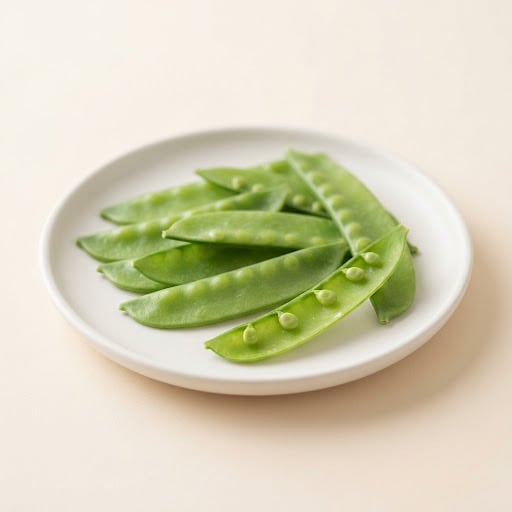
Veggies Food Library
When can babies have snow peas?
Can babies have snow peas?
Babies can have snow peas from about 6 months when they are cooked until soft. Raw snow peas are firm and fibrous and can be a choking hazard, so remove the string, blend steamed pods smooth at 6 months, and offer them finely chopped or mashed into soft foods from 7–8 months.
How to serve snow peas by age
Shapes and textures change as your baby’s grasp and chewing grow.

6 months
Remove the string, steam snow peas until very soft, then blend them with a little cooking water and press through a sieve to remove tough fibers. Stir the smooth puree into mashed potato or rice cereal and offer it on a spoon.

7–8 months
Remove the string, steam snow peas until very soft, then chop them finely or fork-mash them into rice or mashed potato for a lumpier texture. Thin whole pods can stick to the roof of the mouth, so skip whole pods to gnaw at this age.

9–12 months
Cut steamed snow peas into small, soft pieces for pincer practice, or mix them into soft noodles or fried rice. Check that the pieces squish easily.

12 months +
Toddlers can eat snow peas in stir-fries and noodle dishes, lightly cooked and cut into strips. Wait on raw snow peas until your child chews well.
Why it’s good
Snow peas give babies vitamin C, vitamin K, vitamin A, folate and fiber. The vitamin C helps babies absorb iron from beans, meat and fortified cereals at the same meal. Snow peas also add a mild, sweet crunch to family stir-fries.
Safety notes
- Raw snow peas are firm and fibrous. Cook them until soft for babies under 12 months.
- Remove the tough string along the edge of the pod before cooking.
- Thin cooked pods can stick to the roof of the mouth. Offer one at a time and stay close during meals.
- Stir-fry sauces are often salty. Set aside a portion of plain snow peas for your baby before adding sauce.
- Wash snow peas well before cooking.
A low-allergy food, still worth watching
Snow peas are not a common food allergen. Pea allergy is possible, especially in children with other legume allergies, so start with a small amount and watch for hives or vomiting.
Snow peas for babies: questions parents ask
Quick answers about snow peas for babies and toddlers.
When can babies have snow peas?
Babies can have snow peas from about 6 months when they are steamed until soft. Snow peas should have the string removed before serving.
Can babies have snow peas?
Yes, babies can eat cooked snow peas, blended, finely chopped or cut into small soft pieces depending on age. Raw snow peas are better for toddlers who can chew well.
Are snow peas a choking hazard for babies?
Snow peas can be a choking hazard for babies when served raw or firm. Steam snow peas until soft and cut them for older babies to lower the risk.
Are snow peas a common allergen?
No, snow peas are not a common allergen. Pea allergy can happen, so watch for any reaction when you first serve snow peas.
How do I serve snow peas to a 6 month old?
To serve snow peas to a 6 month old, pull off the string, steam the pods until very soft, then blend and strain them into a smooth puree and offer it on a spoon. Finely chopped soft snow peas mixed into mashes can follow at 7–8 months.
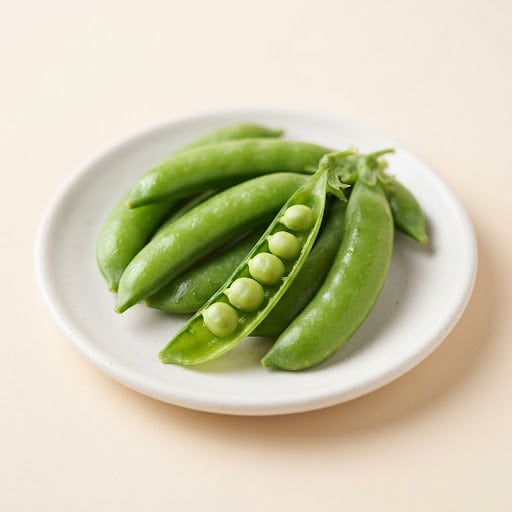
What is the difference between snow peas and snap peas?
Snow peas are flat with tiny peas inside, while snap peas are rounder with larger peas. Both are served to babies the same way, cooked soft and with the string removed.
Can babies have raw snow peas?
Raw snow peas are not recommended for babies under 12 months because they are firm and stringy. Toddlers can try thinly sliced raw snow peas with supervision.
Can babies have stir-fried snow peas?
Babies can eat stir-fried snow peas that are cooked soft and made without salty sauces. Set aside plain snow peas for your baby before seasoning the family dish.
The takeaway
- Babies can have snow peas from about 6 months when they are cooked until soft.
- Remove the string, steam snow peas until very soft, then blend them with a little cooking water and press through a sieve to remove tough fibers.
- Choking risk is medium. Not a Top 9 allergen, but offer a small amount first and watch for any reaction.
Read next



Sources
This guide follows current advice from these organizations.
- Starting Solid Foods American Academy of Pediatrics (HealthyChildren.org)
- When, What, and How to Introduce Solid Foods Centers for Disease Control and Prevention
- Choking Hazards Centers for Disease Control and Prevention
- Choking Prevention American Academy of Pediatrics (HealthyChildren.org)
Track every new food in your baby’s passport
Track the first 100 foods and the Top 9 allergens. 7 days free.
More vegetables for babies
Updated November 2026. Reviewed by our dietitians. Based on AAP, CDC and NIAID guidance. Written for healthy, full-term babies; not a substitute for your pediatrician. If your baby was born early, has a medical condition, feeding difficulties or a known allergy, check with them first (medical disclaimer). Always stay with your baby while they eat.