
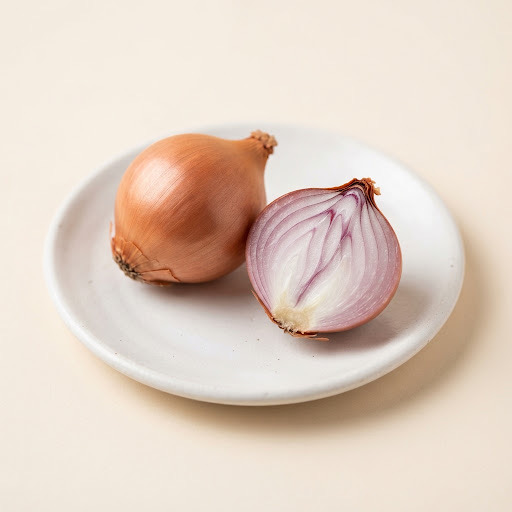
Veggies Food Library
When can babies have shallots?
Can babies have shallots?
Babies can have shallots from about 6 months, cooked until soft and finely minced or blended into food. Shallots are a mild, sweet member of the onion family that add flavor without salt. Raw shallot rings and crispy fried shallots are hard to chew and can be a choking risk.
How to serve shallots by age
Shapes and textures change as your baby’s grasp and chewing grow.

6 months
Saute or roast shallots slowly until very soft and golden, then blend or mash them smooth into vegetable purees, lentil puree or pureed meat and offer it on a spoon.

7–8 months
Finely mince soft-cooked shallots and stir them into lumpier mashes, soft scrambled eggs or minced meat. You can also roast a whole shallot until it squashes easily between your fingers and smear it on a soft toast strip.

9–12 months
Finely chop cooked shallots and mix them into pasta, rice, omelets and stews. Soft, roasted shallot halves with the layers separated can be offered as finger food.

12 months +
Toddlers can eat cooked shallots in family dishes and small amounts of finely minced raw shallot in dressings. Crispy fried shallots are best crumbled finely and kept occasional.
Why it’s good
Shallots provide small amounts of vitamin C, vitamin B6, potassium, folate and plant compounds. Their main job in baby food is flavor: they help babies enjoy savory tastes without added salt. Shallots contain only a little iron.
Safety notes
- Cook shallots until soft. Raw shallot pieces and rings are firm and slippery and can be a choking hazard.
- Separate and finely chop the layers; whole curved layers can be hard to manage.
- Crispy fried shallots are hard and often salty; crush them finely or skip them for babies.
- Peel off the papery outer skin completely before cooking.
- Large amounts of onion-family foods can cause gas in some babies; start with small amounts.
A low-allergy food, still worth watching
Shallots are not a common allergen. Reactions to onion-family foods are rare, but offer a small amount first and watch for a rash, hives or vomiting.
Shallots for babies: questions parents ask
Quick answers about shallots for babies and toddlers.
When can babies have shallots?
Babies can have shallots from about 6 months, cooked until soft and minced into food. Shallots add mild flavor without needing salt.
Can babies have shallots?
Yes, babies can eat cooked shallots as part of family meals. Cook shallots until very soft and chop them finely.
Are shallots a choking hazard for babies?
Shallots can be a choking hazard when served raw, in rings or as crispy fried pieces. Cook shallots until soft and mince or mash them for babies.
Are shallots a common allergen?
No, shallots are not a common allergen. Allergic reactions to shallots are rare, but start with a small amount.
How do I serve shallots to a 6 month old?
To serve shallots to a 6 month old, cook them slowly until very soft, then blend or mash them smooth into a vegetable or lentil puree and offer it on a spoon. Roasted shallot smeared on a soft toast strip can follow at 7–8 months.
Can babies have raw shallots?
Babies under 12 months should not eat raw shallot pieces, which are firm and pungent. Toddlers can have a little finely minced raw shallot in dressings or salsa.
Can shallots cause gas in babies?
Shallots can cause some gas in babies, like onions and garlic. Start with small amounts of well-cooked shallot, which is usually easier on the tummy.
Are shallots better than onions for babies?
Shallots are not healthier than onions for babies, but they are milder and sweeter when cooked. Use shallots or onions interchangeably to flavor baby food.
The takeaway
- Babies can have shallots from about 6 months, cooked until soft and finely minced or blended into food.
- Saute or roast shallots slowly until very soft and golden, then blend or mash them smooth into vegetable purees, lentil puree or pureed meat and offer it on a spoon.
- Choking risk is medium. Not a Top 9 allergen, but offer a small amount first and watch for any reaction.
Read next



Sources
This guide follows current advice from these organizations.
- Starting Solid Foods American Academy of Pediatrics (HealthyChildren.org)
- When, What, and How to Introduce Solid Foods Centers for Disease Control and Prevention
- Choking Hazards Centers for Disease Control and Prevention
- Choking Prevention American Academy of Pediatrics (HealthyChildren.org)
Track every new food in your baby’s passport
Track the first 100 foods and the Top 9 allergens. 7 days free.
More vegetables for babies
Updated November 2026. Reviewed by our dietitians. Based on AAP, CDC and NIAID guidance. Written for healthy, full-term babies; not a substitute for your pediatrician. If your baby was born early, has a medical condition, feeding difficulties or a known allergy, check with them first (medical disclaimer). Always stay with your baby while they eat.