
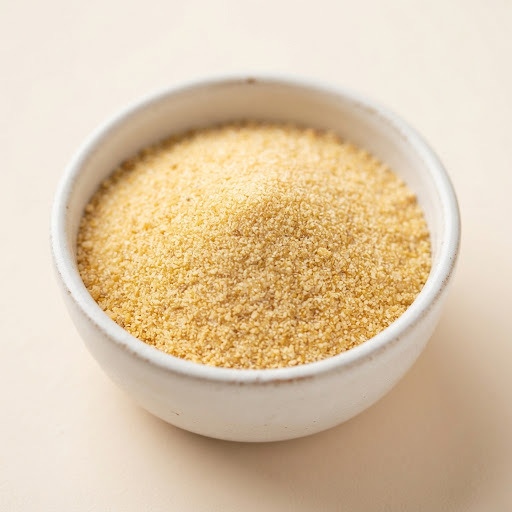
Grains Food Library
When can babies have semolina?
Can babies have semolina?
Babies can have semolina from about 6 months, cooked into a smooth porridge on a spoon at first, then in soft pasta, upma or baked goods from 7–8 months. Semolina is made from durum wheat, so it is a common wheat allergen and contains gluten. Enriched semolina provides iron, which babies need more of from 6 months.
How to serve semolina by age
Shapes and textures change as your baby’s grasp and chewing grow.

6 months
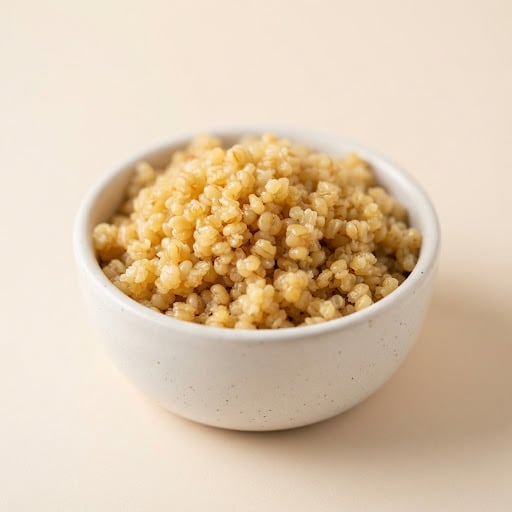
Cook semolina in breast milk, formula, whole cow's milk or water into a smooth, loose porridge with no added sugar, then cool it and offer it on a spoon or pre-loaded spoon. Stir in smooth mashed fruit or a little thinned nut butter for flavor.

7–8 months
Cook semolina porridge a little thicker and stir in roughly mashed fruit, or offer soft upma with very finely chopped vegetables. Semolina pasta cooked very soft and soft semolina pancake strips also work.

9–12 months
Offer thicker semolina porridge, soft upma with finely chopped vegetables, or semolina pancakes cut into strips. Semolina pasta cooked very soft works well too.

12 months +
Toddlers can eat semolina in porridge, upma, gnocchi alla romana, couscous dishes and baked goods. Keep sweet semolina desserts like halwa occasional because of added sugar.
Why it’s good
Semolina provides carbohydrates for energy, protein and B vitamins, and enriched semolina adds iron and folic acid. It is lower in fiber than whole grains, so pair it with vegetables or fruit. Serve it with vitamin C foods to boost iron absorption.
Safety notes
- Semolina is wheat. Introduce it in a small amount and watch for reactions, especially if your baby has eczema or other food allergies.
- Cook semolina porridge until smooth and loose. Thick, dry semolina can clump in the mouth.
- Do not add sugar, honey or jaggery for babies under 12 months; sweeten with mashed fruit instead.
- Toasted semolina dishes like upma can be salty when seasoned for adults; set baby's portion aside before adding salt.
- Semolina contains gluten and is not suitable for children with celiac disease.
Introduce semolina on its own, then keep it in
Semolina is made from durum wheat, one of the Top 9 allergens. Introduce it in a small amount, watch for hives, vomiting, swelling, coughing or wheezing, and once tolerated, keep wheat in the diet regularly.
Semolina for babies: questions parents ask
Quick answers about semolina for babies and toddlers.
When can babies have semolina?
Babies can have semolina from about 6 months, cooked into a smooth porridge, with soft pasta and upma following at 7–8 months. Semolina is a wheat food, so introduce it in a small amount first.
Can babies have semolina?
Yes, babies can eat semolina, and semolina porridge is a popular first food in many countries. Use enriched semolina for extra iron and avoid added sugar.
Is semolina a choking hazard for babies?
Semolina is a low choking risk for babies when it is cooked into a smooth, loose porridge. Very thick or dry semolina can clump, so thin it with breast milk, formula or whole cow's milk or water.
Is semolina a common allergen?
Yes, semolina is a common allergen because it is made from wheat. Introduce semolina in a small amount and keep offering it regularly if your baby tolerates it.
How do I serve semolina to a 6 month old?
To serve semolina to a 6 month old, cook a spoonful of semolina in breast milk, formula or water until smooth, cool it and offer it on a preloaded spoon. Mix in mashed banana or pear for flavor.
Is semolina gluten free?
No, semolina is not gluten free. Semolina is made from durum wheat and contains gluten, so it is not suitable for children with celiac disease.
Can babies have semolina porridge made with cow's milk?
Yes, babies can have semolina porridge cooked with whole cow's milk from 6 months, because milk in cooking is fine. Cow's milk should not be given as a drink until 12 months.
Is semolina good for babies?
Yes, semolina is good for babies as a source of energy, B vitamins and, if enriched, iron. Pair semolina with vegetables, fruit, eggs or legumes for a balanced meal.
Can babies have upma?
Babies can have upma from about 7–8 months if it is cooked soft with finely chopped vegetables and no added salt or whole spices. Remove curry leaves, whole chilies and cashews before serving.
The takeaway
- Babies can have semolina from about 6 months, cooked into a smooth porridge on a spoon at first, then in soft pasta, upma or baked goods from 7–8 months.
- Cook semolina in breast milk, formula, whole cow's milk or water into a smooth, loose porridge with no added sugar, then cool it and offer it on a spoon or pre-loaded spoon.
- Choking risk is low. Wheat is one of the Top 9 allergens: offer a small amount first, watch for a reaction, then keep it in the diet regularly.
Read next
Sources
This guide follows current advice from these organizations.
- Starting Solid Foods American Academy of Pediatrics (HealthyChildren.org)
- When, What, and How to Introduce Solid Foods Centers for Disease Control and Prevention
- Choking Hazards Centers for Disease Control and Prevention
- Foods and Drinks to Avoid or Limit Centers for Disease Control and Prevention
- Iron Centers for Disease Control and Prevention
- The Effects of Early Nutritional Interventions on the Development of Atopic Disease in Infants and Children Greer FR, Sicherer SH, Burks AW; American Academy of Pediatrics. Pediatrics. 2019;143(4):e20190281
Track every new food in your baby’s passport
Track the first 100 foods and the Top 9 allergens. 7 days free.
More grains for babies
Updated November 2026. Reviewed by our dietitians. Based on AAP, CDC and NIAID guidance. Written for healthy, full-term babies; not a substitute for your pediatrician. If your baby was born early, has a medical condition, feeding difficulties or a known allergy, check with them first (medical disclaimer). Always stay with your baby while they eat.