
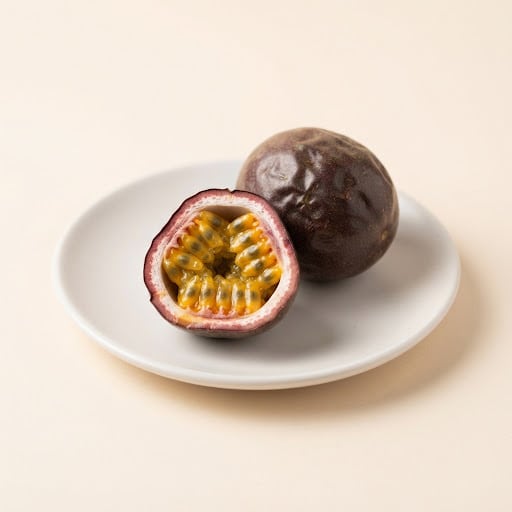
Fruit Food Library
When can babies have passion fruit?
Can babies have passion fruit?
Babies can have passion fruit from about 6 months, as long as it is fully ripe. Only the pulp is eaten: the skin, leaves and unripe fruit are not safe to eat. The tart pulp can be served with or without seeds, and passion fruit is not a common allergen.
How to serve passion fruit by age
Shapes and textures change as your baby’s grasp and chewing grow.

6 months
Scoop the pulp from a ripe, wrinkly passion fruit and press it through a sieve to remove the seeds, then stir a spoonful of the smooth pulp into plain yogurt, oatmeal or mashed banana. Offer it on a spoon.

7–8 months
Keep stirring sieved passion fruit pulp into thicker yogurt, oatmeal or lumpier mashed banana and mango. If your baby is chewing lumpy textures well, you can try leaving in a few seeds, and sieve them out again if they gag.

9–12 months
Mix passion fruit pulp, seeds and all, into yogurt, chia pudding or ricotta, or drizzle it over soft fruit pieces like mango or banana. Let your baby practice with a preloaded spoon.

12 months +
Toddlers can scoop passion fruit pulp from the shell with a spoon, with an adult holding the shell steady. Keep the skin away from your child, and enjoy the pulp in yogurt bowls, smoothies and baked treats.
Why it’s good
Passion fruit gives babies vitamin C, vitamin A and plenty of fiber from its seeds. Vitamin C helps the body absorb iron from foods like beans and fortified cereals. The tart flavor also helps babies learn to accept sour tastes.
Safety notes
- Only serve fully ripe passion fruit. Ripe purple passion fruit has wrinkled, dimpled skin and feels heavy. Unripe pulp, the skin and the leaves contain compounds that can release cyanide and should not be eaten.
- Never give babies the skin or the white pith. Scoop out the pulp and throw the shell away.
- The seeds are small and edible, but some babies gag on them. Strain the pulp for young babies if needed.
- Wash the outside of the fruit before cutting so dirt and germs from the skin do not get into the pulp.
- Passion fruit juice drinks and syrups are usually high in added sugar. Skip juice before 12 months and use the fresh pulp instead.
A low-allergy food, still worth watching
Passion fruit is not one of the Top 9 allergens. Rare reactions have been reported, including in people with latex allergy, so offer a small amount first and watch for rash around the mouth, hives, vomiting or swelling.
Passion fruit for babies: questions parents ask
Quick answers about passion fruit for babies and toddlers.
When can babies have passion fruit?
Babies can have passion fruit from about 6 months, when they start solid foods. Passion fruit must be fully ripe, and only the pulp should be served.
Can babies have passion fruit?
Yes, babies can eat the ripe pulp of passion fruit from 6 months. Passion fruit skin, leaves and unripe pulp should never be eaten.
Is passion fruit a choking hazard for babies?
Passion fruit pulp is a low choking risk for babies. The small seeds can cause gagging, so strain the pulp for young babies if needed and always supervise meals.
Is passion fruit a common allergen?
No, passion fruit is not a common allergen and is not one of the Top 9 allergens. Reactions are rare but possible, especially in people with latex allergy.
How do I serve passion fruit to a 6 month old?
To serve passion fruit to a 6 month old, cut a ripe passion fruit in half, scoop out the pulp, press it through a sieve to remove the seeds and mix a spoonful into plain yogurt or smooth mashed fruit. Offer it on a spoon.
Can babies have passion fruit seeds?
Yes, babies can eat passion fruit seeds, which are small, edible and full of fiber. Some young babies gag on passion fruit seeds, so straining the pulp is fine until your baby is used to the texture.
How can I tell if passion fruit is ripe?
A ripe passion fruit has wrinkled, dimpled skin, feels heavy for its size and smells fragrant. Smooth, hard passion fruit is not ripe yet, so leave it at room temperature for a few days.
Can babies drink passion fruit juice?
Babies under 12 months should not drink passion fruit juice, in line with guidance to avoid juice in the first year. After 12 months, small amounts of 100% juice are okay occasionally, but fresh passion fruit pulp is a better choice.
Can passion fruit help babies poop?
Passion fruit is high in fiber thanks to its seeds, which can help keep stools soft. Offer passion fruit with water and other fiber-rich foods if your baby is constipated.
The takeaway
- Babies can have passion fruit from about 6 months, as long as it is fully ripe.
- Scoop the pulp from a ripe, wrinkly passion fruit and press it through a sieve to remove the seeds, then stir a spoonful of the smooth pulp into plain yogurt, oatmeal or mashed banana.
- Choking risk is low. Not a Top 9 allergen, but offer a small amount first and watch for any reaction.
Read next


Sources
This guide follows current advice from these organizations.
- Starting Solid Foods American Academy of Pediatrics (HealthyChildren.org)
- When, What, and How to Introduce Solid Foods Centers for Disease Control and Prevention
- Choking Hazards Centers for Disease Control and Prevention
- Foods and Drinks to Avoid or Limit Centers for Disease Control and Prevention
- Dietary Guidelines for Americans, 2020-2025 U.S. Department of Agriculture and HHS
Track every new food in your baby’s passport
Track the first 100 foods and the Top 9 allergens. 7 days free.
More fruit for babies
Updated November 2026. Reviewed by our dietitians. Based on AAP, CDC and NIAID guidance. Written for healthy, full-term babies; not a substitute for your pediatrician. If your baby was born early, has a medical condition, feeding difficulties or a known allergy, check with them first (medical disclaimer). Always stay with your baby while they eat.