
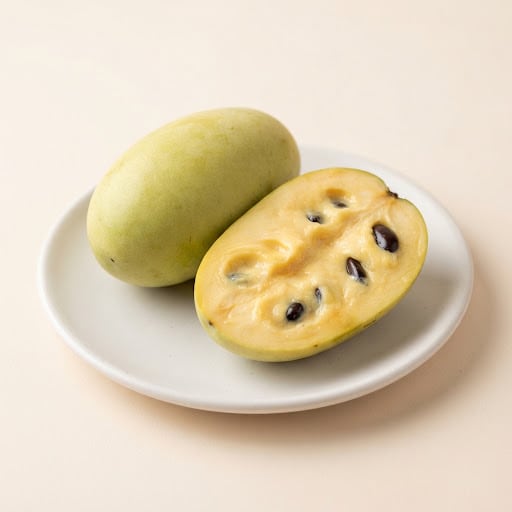
Fruit Food Library
When can babies have pawpaws?
Can babies have pawpaws?
Babies can have ripe pawpaw from about 6 months, with the skin and seeds fully removed. Pawpaw is a soft, custardy North American fruit, and its skin and seeds should never be eaten. Pawpaw is not a common allergen, but start with a small amount since some people get an upset stomach from it.
How to serve pawpaws by age
Shapes and textures change as your baby’s grasp and chewing grow.

6 months
Scoop the soft flesh of a ripe pawpaw, remove every seed, and mash it smooth. Offer it on a spoon or a preloaded spoon, or mixed into yogurt or oatmeal, and keep the skin away from your baby.

7–8 months
Mash ripe, seedless pawpaw more roughly so it has soft lumps, or offer a large, soft scoop of the flesh your baby can grab and squash. Check carefully for seeds hidden in the flesh.

9–12 months
Offer small, soft pieces of ripe pawpaw flesh about the size of a chickpea, or spread mashed pawpaw on toast strips. Check carefully for seeds hidden in the flesh.

12 months +
Toddlers can eat bite-sized pieces of pawpaw or enjoy it in smoothies and baked goods. Keep removing the skin and seeds, as they are not safe to eat at any age.
Why it’s good
Pawpaw gives babies vitamin C, potassium, magnesium, fiber and natural sugars for energy. It also contains some iron and manganese. Its soft texture and tropical flavor, like a mix of banana and mango, make it an easy fruit for new eaters.
Safety notes
- Never give babies pawpaw skin or seeds. The seeds contain natural compounds that can be toxic, and the skin can irritate the gut.
- Only serve ripe pawpaw. A ripe pawpaw gives slightly when pressed, like a ripe peach, and smells fruity.
- Some people get nausea, vomiting or tummy upset from pawpaw. Start with a small amount and stop if your baby seems unwell.
- Only eat pawpaws you are sure about. If foraging, make sure the fruit is correctly identified and has not been sprayed.
- In some countries the word pawpaw means papaya. If you are buying papaya, see our papaya page for its own tips.
A low-allergy food, still worth watching
Pawpaw is not one of the Top 9 allergens. Allergic reactions are rare, but some people have skin or stomach reactions after handling or eating it, so start small and watch for rash, hives, vomiting or swelling.
Pawpaws for babies: questions parents ask
Quick answers about pawpaws for babies and toddlers.
When can babies have pawpaw?
Babies can have ripe pawpaw from about 6 months, when they start solid foods. Pawpaw must have the skin and seeds fully removed before serving.
Can babies have pawpaw?
Yes, babies can eat the soft, ripe flesh of pawpaw from 6 months. Offer a small amount the first time, since pawpaw can upset some people's stomachs.
Is pawpaw a choking hazard for babies?
Ripe pawpaw flesh is a low choking risk for babies because it is soft and custardy. The large seeds are a choking and toxicity risk, so remove every seed before serving pawpaw.
Is pawpaw a common allergen?
No, pawpaw is not a common allergen and is not one of the Top 9 allergens. Rare reactions are possible, so watch your baby closely the first time.
How do I serve pawpaw to a 6 month old?
To serve pawpaw to a 6 month old, cut a ripe pawpaw open, scoop out the flesh and remove all seeds, then mash it smooth. Pawpaw can be offered on a preloaded spoon or mixed into yogurt or oatmeal.
Are pawpaw seeds and skin safe for babies?
No, pawpaw seeds and skin are not safe for babies or adults to eat. Pawpaw seeds contain natural toxins and the skin can cause stomach upset, so serve only the flesh.
Is pawpaw the same as papaya?
In North America, pawpaw is a different fruit from papaya, with yellow custardy flesh and large brown seeds. In Australia and some other places, pawpaw is another name for papaya, so check which fruit you have.
How do I know when pawpaw is ripe?
A ripe pawpaw feels soft when gently pressed, smells sweet and fruity, and may have some dark spots on the skin. Underripe pawpaw is firm and less sweet, so wait a day or two at room temperature.
Can pawpaw upset a baby's stomach?
Pawpaw can cause nausea or tummy upset in some people. Offer a small portion of ripe pawpaw first and stop serving it if your baby vomits or seems uncomfortable.
The takeaway
- Babies can have ripe pawpaw from about 6 months, with the skin and seeds fully removed.
- Scoop the soft flesh of a ripe pawpaw, remove every seed, and mash it smooth.
- Choking risk is low. Not a Top 9 allergen, but offer a small amount first and watch for any reaction.
Read next



Sources
This guide follows current advice from these organizations.
- Starting Solid Foods American Academy of Pediatrics (HealthyChildren.org)
- When, What, and How to Introduce Solid Foods Centers for Disease Control and Prevention
- Choking Hazards Centers for Disease Control and Prevention
Track every new food in your baby’s passport
Track the first 100 foods and the Top 9 allergens. 7 days free.
More fruit for babies
Updated November 2026. Reviewed by our dietitians. Based on AAP, CDC and NIAID guidance. Written for healthy, full-term babies; not a substitute for your pediatrician. If your baby was born early, has a medical condition, feeding difficulties or a known allergy, check with them first (medical disclaimer). Always stay with your baby while they eat.