
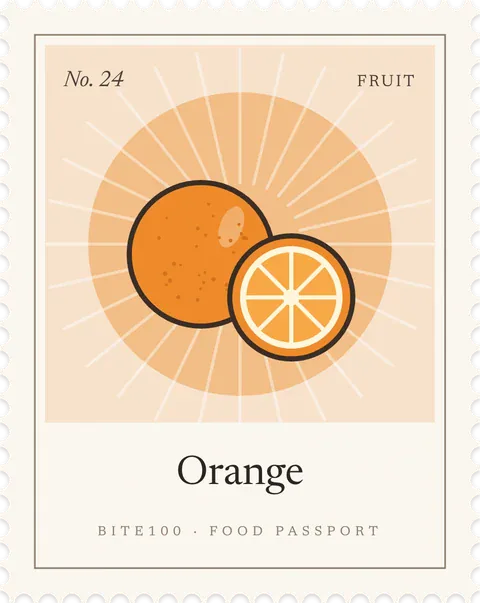
No. 24 · Fruit Passport food
When can babies have oranges?
Can babies have oranges?
Babies can have oranges from about 6 months, as soon as they are ready for solids. Remove the seeds and membrane and serve the flesh mashed or blended on a spoon at first, then offer it finely chopped or as flattened membrane-free segments from 7–8 months, because the tough membrane is the main choking risk.
How to serve oranges by age
Shapes and textures change as your baby’s grasp and chewing grow.

6 months
Peel a seedless orange, cut the flesh away from every bit of membrane, and blend or mash it smooth. Stir it into plain yogurt, oatmeal or sweet potato puree and offer it on a spoon; the tart flavor pairs well with iron-rich foods.

7–8 months
Cut the membrane away from each segment, remove the seeds, and offer the soft flesh fork-mashed or finely chopped into yogurt or oatmeal. A peeled segment with all membrane removed that squashes easily between your fingers, flattened, is fine to pick up too.

9–12 months
Cut the membrane off each segment, remove seeds, and break the flesh into small pieces about the size of a chickpea for pincer practice. Mandarin and clementine segments are handy, but still remove the membrane and cut them into pieces.

12 months +
Serve seedless segments cut in half or quarters, or peeled segments with the membrane as your toddler learns to chew it well. Toddlers can also practice peeling a clementine themselves, which is great for fine motor skills.
Why it’s good
Oranges are one of the best sources of vitamin C for babies, which supports the immune system and helps the body absorb iron from plant foods. They also give folate, potassium and some fiber. Serving orange with iron-rich foods like lentils, beans or fortified cereal makes that iron easier to use.
Safety notes
- The membrane around each segment is tough and can stick in the throat. For babies under 12 months, always cut it away and do not offer wedges to suck on.
- Check every piece for seeds and remove them, even in fruit sold as seedless.
- Citrus acid often causes redness around the mouth or a sore diaper area. This is usually irritation, not allergy; wipe baby's face after eating and offer smaller amounts if the bottom gets sore.
- Do not offer orange juice before 12 months. Whole orange gives fiber and less sugar per serving, and juice is easy to over-drink.
- Seat baby upright and stay within arm's reach. Gagging on juicy citrus is common; choking is usually silent and needs action.
A low-allergy food, still worth watching
Oranges are not a common allergen. Citrus allergy is uncommon but possible, sometimes as oral allergy syndrome in children with pollen allergies, so watch for hives, swelling or vomiting beyond simple redness where juice touched the skin.
Oranges for babies: questions parents ask
Quick answers about oranges for babies and toddlers.
When can babies have oranges?
Babies can have oranges from about 6 months of age, once they show signs they are ready to start solids. Oranges need careful prep for young babies: remove the seeds and membrane and mash the flesh at first, then offer finely chopped flesh or flattened membrane-free segments from 7–8 months.
Can babies have oranges?
Yes, babies can eat oranges from around 6 months as long as seeds are removed and the tough membrane is managed. Oranges are full of vitamin C and are a great partner for iron-rich foods.
Are oranges a choking hazard for babies?
Oranges are a medium choking risk for babies, mainly because the stringy membrane around each segment can be hard to swallow and seeds can be inhaled. Removing seeds and membrane and mashing or finely chopping the flesh lowers the risk a lot.
Are oranges a common allergen?
No, oranges are not one of the Top 9 common food allergens. Citrus allergy is uncommon, and the red rash many babies get around the mouth is usually skin irritation from the acid, not an allergy.
How do I serve oranges to a 6 month old?
To serve oranges to a 6 month old, peel a seedless orange, cut the flesh away from the membrane and mash or blend it smooth, then offer it on a spoon or stirred into yogurt or oatmeal. Finely chopped flesh and flattened membrane-free segments can follow at 7–8 months.
When can babies drink orange juice?
Babies should not drink orange juice before 12 months, based on AAP guidance. After 12 months, small amounts of 100 percent orange juice in an open cup with meals are fine, but whole orange pieces are the better everyday choice.
Why does my baby get a red rash after eating oranges?
A red rash around the mouth after eating oranges is usually caused by citrus acid irritating the skin, and it often fades within an hour. Call your pediatrician if you see hives on other parts of the body, swelling of the lips or face, or vomiting, which can point to a true allergy.
Are mandarins and clementines safe for babies?
Mandarins and clementines are safe for babies from 6 months when seeds and membrane are removed and the flesh is mashed, and from 7–8 months the segment can be flattened. Their small segments are about the right size to block an airway, so do not serve them whole to babies under 12 months.
Can oranges cause diaper rash?
Oranges and other acidic fruits can cause diaper rash in some babies because acidic stools irritate the skin. If you notice a sore bottom after citrus, offer smaller portions, change diapers promptly and use a barrier cream.
Are oranges good for babies?
Yes, oranges are good for babies from about 6 months, and are one of the best sources of vitamin C, which helps babies absorb iron from beans, lentils and fortified cereal. Remove the seeds and all of the tough membrane, then serve the flesh mashed or blended on a spoon at first.
Are oranges good for toddlers?
Yes, oranges are a healthy fruit for toddlers over 12 months, giving vitamin C, folate, potassium and fiber. Serve seedless segments cut in halves or quarters, and offer the membrane only once your toddler chews it well. Whole fruit is a better choice than juice because it keeps the fiber.
Can oranges or orange juice cause diarrhea in toddlers?
Yes, large amounts of oranges or orange juice can cause loose stools in toddlers, especially juice. Keep 100% juice to no more than 4 ounces a day for ages 1 to 3, and offer water instead. Call your pediatrician if diarrhea lasts or your child seems dehydrated.
The takeaway
- Babies can have oranges from about 6 months, as soon as they are ready for solids.
- Peel a seedless orange, cut the flesh away from every bit of membrane, and blend or mash it smooth.
- Choking risk is medium. Not a Top 9 allergen, but offer a small amount first and watch for any reaction.
Read next



Sources
This guide follows current advice from these organizations.
- Starting Solid Foods American Academy of Pediatrics (HealthyChildren.org)
- When, What, and How to Introduce Solid Foods Centers for Disease Control and Prevention
- Choking Hazards Centers for Disease Control and Prevention
- Choking Prevention American Academy of Pediatrics (HealthyChildren.org)
Stamp orange in your baby’s passport
Track the first 100 foods and the Top 9 allergens. 7 days free.
More fruit for babies
Updated November 2026. Reviewed by our dietitians. Based on AAP, CDC and NIAID guidance. Written for healthy, full-term babies; not a substitute for your pediatrician. If your baby was born early, has a medical condition, feeding difficulties or a known allergy, check with them first (medical disclaimer). Always stay with your baby while they eat.