
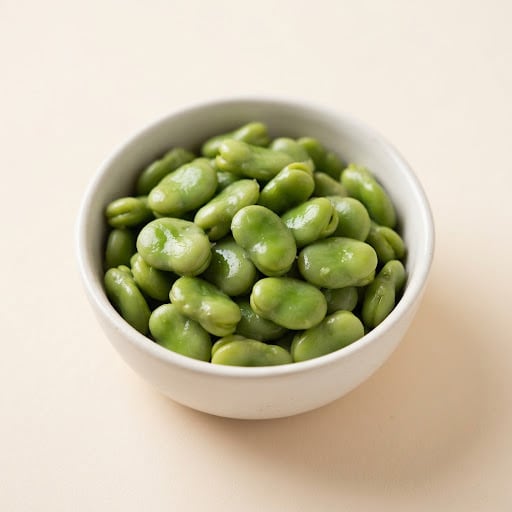
Protein Food Library
When can babies have fava beans?
Can babies have fava beans?
Babies can have fava beans from about 6 months, cooked until soft, peeled and mashed or flattened. Do not give fava beans to a baby with G6PD deficiency, an inherited condition in which fava beans can trigger a serious reaction. Whole round beans are a choking hazard, so always smash them.
How to serve fava beans by age
Shapes and textures change as your baby’s grasp and chewing grow.

6 months
Remove fava beans from the pod, cook them until very soft, then slip off the tough outer skin of each bean. Mash or blend them smooth with olive oil, yogurt or a little cooking water and serve on a spoon or preloaded spoon.

7–8 months
Fork-mash peeled cooked fava beans into a thicker, slightly lumpy mash, and stir them into soft rice or spread them thinly on soft toast strips. Soft fava patties that fall apart when pressed are fine too, but never whole beans.

9–12 months
Flatten each cooked, peeled fava bean between your fingers so it is no longer round, then offer the flattened beans for pincer practice. You can also mash them into patties or mix them into soft rice.

12 months +
Toddlers can have cooked, peeled fava beans flattened or halved, in salads, pastas and dips like ful medames. Keep smashing or halving round beans until at least age 4.
Why it’s good
Fava beans give babies plant protein, iron, folate, fiber, magnesium and potassium. Their iron is easier to absorb when served with a vitamin C food like tomato, pepper or citrus. Fava beans are a filling, budget-friendly protein for families who eat less meat.
Safety notes
- Do not give fava beans to babies or children with G6PD deficiency, or if it runs in the family and your baby has not been tested. In G6PD deficiency, fava beans can cause a sudden breakdown of red blood cells. Ask your pediatrician if you are unsure.
- Whole fava beans are round and slippery and can block the airway. Smash, mash or flatten every bean for babies and halve or flatten them for toddlers.
- Remove the tough outer skin of each bean after cooking. The skin is chewy and can be hard for babies to break down.
- Never serve raw fava beans. Cook dried fava beans by soaking and simmering until fully soft, and rinse canned beans to lower sodium.
- Watch for signs of a G6PD reaction after a first taste, such as pale skin, unusual tiredness, fast breathing, yellow skin or eyes or dark urine, and seek urgent care if they appear.
A low-allergy food, still worth watching
Fava beans are not a common allergen, though legume allergies can occur and some children with peanut allergy react to other legumes. Offer a small amount first and watch for hives, swelling or vomiting, keeping in mind that a G6PD reaction is different from an allergy.
Fava beans for babies: questions parents ask
Quick answers about fava beans for babies and toddlers.
When can babies have fava beans?
Babies can have fava beans from about 6 months of age, cooked, peeled and mashed or flattened. Fava beans should be avoided completely in babies with G6PD deficiency.
Can babies have fava beans?
Yes, most babies can eat fava beans once they are cooked until soft, skinned and served smashed. Babies with G6PD deficiency, or a family history of it without testing, should not have fava beans until you check with your pediatrician.
Are fava beans a choking hazard for babies?
Yes, fava beans are a choking hazard for babies when served whole because they are round and slippery. Mash fava beans or flatten each bean, and always stay with your baby while eating.
Are fava beans a common allergen?
No, fava beans are not one of the Top 9 common allergens. Allergies to fava beans and other legumes are possible, so introduce a small amount first and watch for any reaction.
How do I serve fava beans to a 6 month old?
To serve fava beans to a 6 month old, cook the shelled beans until soft, pop off the outer skins and mash the beans smooth. Fava bean mash can be served on a spoon or preloaded spoon, and spread on toast fingers from 7–8 months.
What is G6PD deficiency and why does it matter for fava beans?
G6PD deficiency is an inherited enzyme condition that is more common in families of Mediterranean, African, Middle Eastern and Asian descent. In children with G6PD deficiency, eating fava beans can cause a dangerous breakdown of red blood cells, so fava beans must be avoided and you should talk to your pediatrician.
Do I need to peel fava beans for a baby?
Yes, peel fava beans for a baby. After shelling and cooking, each fava bean has a tough pale skin that should be slipped off, leaving the soft green inside that mashes easily.
Can babies have canned or dried fava beans?
Babies can have canned or dried fava beans once they are fully cooked and soft. Choose low-sodium or no-salt-added canned fava beans and rinse them well, and soak and simmer dried fava beans until they squash easily.
Are fava beans good for baby constipation?
Fava beans are high in fiber, which can help soften stools in babies as part of a varied diet. Start with small amounts, since a sudden increase in beans can cause gas, and offer fluids with meals.
The takeaway
- Babies can have fava beans from about 6 months, cooked until soft, peeled and mashed or flattened.
- Remove fava beans from the pod, cook them until very soft, then slip off the tough outer skin of each bean.
- Choking risk is medium. Not a Top 9 allergen, but offer a small amount first and watch for any reaction.
Read next


Sources
This guide follows current advice from these organizations.
- Starting Solid Foods American Academy of Pediatrics (HealthyChildren.org)
- When, What, and How to Introduce Solid Foods Centers for Disease Control and Prevention
- Choking Hazards Centers for Disease Control and Prevention
- Choking Prevention American Academy of Pediatrics (HealthyChildren.org)
- Iron Centers for Disease Control and Prevention
Track every new food in your baby’s passport
Track the first 100 foods and the Top 9 allergens. 7 days free.
More protein foods for babies
Updated November 2026. Reviewed by our dietitians. Based on AAP, CDC and NIAID guidance. Written for healthy, full-term babies; not a substitute for your pediatrician. If your baby was born early, has a medical condition, feeding difficulties or a known allergy, check with them first (medical disclaimer). Always stay with your baby while they eat.