
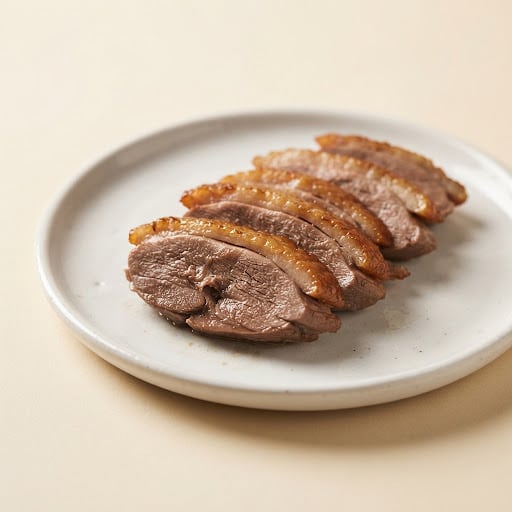
Protein Food Library
When can babies have goose?
Can babies have goose?
Babies can have goose from about 6 months, fully cooked and blended into a smooth puree at first, then served in fine shreds mixed into mashes from 7–8 months. Goose is a dark, rich poultry meat that is high in iron, zinc and protein. Trim the fatty skin, remove all bones and cook goose to a safe internal temperature.
How to serve goose by age
Shapes and textures change as your baby’s grasp and chewing grow.

6 months
Slow-cook skinless goose leg or thigh until very tender, remove every bone, then blend the meat with a little cooking liquid, breast milk or formula and smooth vegetable puree. Serve it on a spoon; moist dark meat purees most easily.

7–8 months
Finely shred or mince tender goose and stir it into lumpier mashed potato or vegetables, or mix ground goose into soft meatballs that fall apart easily when pressed. Pieces of braised leg meat so tender they squash between your fingers are fine too.

9–12 months
Serve small bite-sized shreds of tender goose, or mix ground goose into soft meatballs. Remove the skin, any gristle and every bone.

12 months +
Toddlers can share holiday goose with the family, shredded or cut into small pieces. Skip the crispy skin and drippings, which are very fatty and often salty.
Why it’s good
Goose is rich in iron and zinc, which support brain development and immunity, and it provides protein, vitamin B12, riboflavin and selenium. Goose meat is darker and richer than chicken. Most of its fat sits in and under the skin, so removing the skin keeps portions lighter.
Safety notes
- Cook goose to an internal temperature of at least 165 F (74 C) and never serve it pink or undercooked.
- Goose has small, sharp bones. Pull all meat off the bone and check carefully before serving.
- Remove the crispy skin and thick fat layer. They are hard to chew and very rich for small tummies.
- Breast meat can turn dry and chewy. Use moist leg or thigh meat, or braise goose so it shreds easily.
- Skip smoked goose, goose sausage and cured goose products, which are high in sodium and nitrates.
A low-allergy food, still worth watching
Goose is not a common allergen. Rarely, people with egg allergy related to bird proteins may react to poultry meat, so offer a small amount first and watch for hives, vomiting or swelling.
Goose for babies: questions parents ask
Quick answers about goose for babies and toddlers.
When can babies have goose?
Babies can have goose from about 6 months, once they start solids. Goose must be fully cooked, skinless and boneless, and blended into a smooth puree at first, then served in fine shreds or soft meatballs from 7–8 months.
Can babies have goose?
Yes, babies can eat goose, and it is a great source of iron. Choose tender dark meat, remove the skin and bones, and avoid smoked or cured goose.
Is goose a choking hazard for babies?
Goose can be a choking hazard for babies if it is served in dry, chewy cubes or with small bones. Serve goose finely shredded and moist, or as soft meatballs.
Is goose a common allergen?
No, goose is not a common allergen. Allergic reactions to goose meat are rare, but start with a small amount as with any new food.
How do I serve goose to a 6 month old?
To serve goose to a 6 month old, slow-cook skinless leg meat until very tender, check carefully for bones, and blend it with a little cooking liquid and smooth vegetable puree. Offer it on a spoon. Fine shreds in mashes and soft meatballs can follow at 7–8 months.
Can babies have goose fat?
Babies can have a little goose fat used for roasting vegetables, but they should not eat the thick fatty skin or drippings. Too much rich fat can upset a baby's stomach.
Is goose healthy for babies?
Yes, goose is healthy for babies because it is rich in iron, zinc, protein and B vitamins. Removing the skin keeps goose from being too fatty.
Can babies have goose liver or foie gras?
Babies should not have foie gras or goose liver pate, which are rich, often salty and may not be fully cooked. Small amounts of fully cooked plain liver are a different food, but limit liver because it is very high in vitamin A.
The takeaway
- Babies can have goose from about 6 months, fully cooked and blended into a smooth puree at first, then served in fine shreds mixed into mashes from 7–8 months.
- Slow-cook skinless goose leg or thigh until very tender, remove every bone, then blend the meat with a little cooking liquid, breast milk or formula and smooth vegetable puree.
- Choking risk is medium. Not a Top 9 allergen, but offer a small amount first and watch for any reaction.
Read next


Sources
This guide follows current advice from these organizations.
- Starting Solid Foods American Academy of Pediatrics (HealthyChildren.org)
- When, What, and How to Introduce Solid Foods Centers for Disease Control and Prevention
- Choking Hazards Centers for Disease Control and Prevention
- Choking Prevention American Academy of Pediatrics (HealthyChildren.org)
- Foods and Drinks to Avoid or Limit Centers for Disease Control and Prevention
- Iron Centers for Disease Control and Prevention
Track every new food in your baby’s passport
Track the first 100 foods and the Top 9 allergens. 7 days free.
More protein foods for babies
Updated November 2026. Reviewed by our dietitians. Based on AAP, CDC and NIAID guidance. Written for healthy, full-term babies; not a substitute for your pediatrician. If your baby was born early, has a medical condition, feeding difficulties or a known allergy, check with them first (medical disclaimer). Always stay with your baby while they eat.