
Veggies Food Library
When can babies have endive?
Can babies have endive?
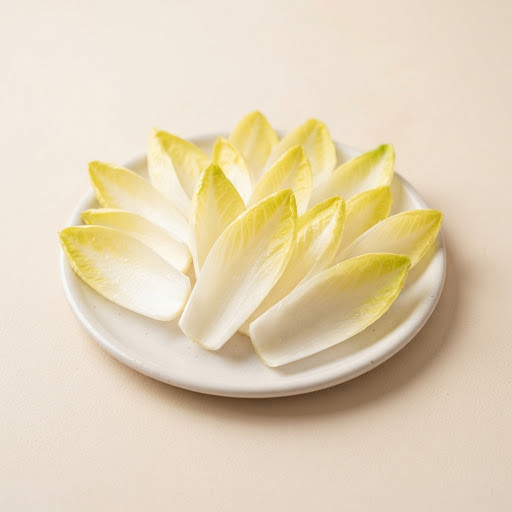
Babies can have endive from about 6 months, best served cooked until soft: blended into purees at first, then braised and finely chopped into mashes from 7–8 months. Raw endive is crisp and can be hard to chew, so save raw pieces for older babies and toddlers. Endive has a mildly bitter taste that helps babies learn to like greens.
How to serve endive by age
Shapes and textures change as your baby’s grasp and chewing grow.

6 months
Braise or roast Belgian endive with a little oil until very soft, trim off the core, then blend it into a smooth puree with potato, pear or sweet potato to soften the bitterness. Offer it on a spoon.

7–8 months
Braise endive until very soft, remove the core, then chop it finely and mix it into mashed potato or beans for a lumpier texture. Skip wedges and whole leaves at this age.

9–12 months
Offer finely chopped cooked endive mixed into eggs, pasta or risotto, or soft pieces of braised endive for pincer practice. Raw endive should still be finely minced at this age.

12 months +
Toddlers can try raw endive leaves as edible scoops for dips like hummus or yogurt, or thinly sliced raw endive in salads. Keep cooked endive on the menu too.
Why it’s good
Endive gives babies vitamin K for healthy blood clotting, folate for growth, and vitamin A, potassium and fiber. Its gentle bitterness exposes babies to a wider range of flavors, which can help with accepting other greens later.
Safety notes
- Raw endive is crisp and can break into firm pieces. Cook it until soft for babies under 12 months, or mince raw endive finely.
- Thick raw stems and leaf bases are the hardest parts. Trim the core and offer the softer outer leaves.
- Wash endive well and remove any brown or slimy leaves.
- Braised endive recipes often use lots of butter, salt or sugar. Cook it with a little oil or unsalted butter and skip added salt and sugar.
A low-allergy food, still worth watching
Endive is not a common food allergen. People with ragweed or chicory pollen allergy occasionally react to related leaves, so start with a small amount and watch for itching or swelling around the mouth.
Endive for babies: questions parents ask
Quick answers about endive for babies and toddlers.
When can babies have endive?
Babies can have endive from about 6 months, once they are ready for solids. Cooked endive that is soft enough to squash between your fingers is the best way to start.
Can babies have endive?
Yes, babies can eat endive. Braised or roasted endive is soft and mild, and the slight bitterness helps babies get used to the taste of leafy greens.
Is endive a choking hazard for babies?
Endive can be a choking hazard for babies when served raw in thick, crisp pieces. Cook endive until soft or mince raw endive very finely, and always stay with your baby while they eat.
Is endive a common allergen?
No, endive is not a common allergen and is not one of the Top 9 food allergens. Introduce endive in a small amount and watch for any unusual reaction, as with any new food.
How do I serve endive to a 6 month old?
To serve endive to a 6 month old, braise or roast it until very soft, remove the core, and blend it into a smooth puree with potato, pear or sweet potato. Offer it on a spoon. Soft braised endive, finely chopped into lumpier mashes, can follow at 7–8 months.
Can babies have raw endive?
Babies under 12 months should mainly eat cooked endive, because raw endive is crisp and harder to chew safely. Toddlers can try thin slices of raw endive or use endive leaves as scoops for soft dips.
How do I make endive less bitter for babies?
To make endive less bitter for babies, cook it until soft and lightly caramelized, and remove the core where much of the bitterness sits. Pairing endive with sweet foods like pear, apple or sweet potato also mellows the flavor.
What is the difference between endive and escarole?
Belgian endive grows as a small, tight, pale head, while escarole has broad, loose green leaves. Endive and escarole are close relatives and can both be cooked until soft for babies.
The takeaway
- Babies can have endive from about 6 months, best served cooked until soft: blended into purees at first, then braised and finely chopped into mashes from 7–8 months.
- Braise or roast Belgian endive with a little oil until very soft, trim off the core, then blend it into a smooth puree with potato, pear or sweet potato to soften the bitterness.
- Choking risk is medium. Not a Top 9 allergen, but offer a small amount first and watch for any reaction.
Read next



Sources
This guide follows current advice from these organizations.
- Starting Solid Foods American Academy of Pediatrics (HealthyChildren.org)
- When, What, and How to Introduce Solid Foods Centers for Disease Control and Prevention
- Choking Hazards Centers for Disease Control and Prevention
- Choking Prevention American Academy of Pediatrics (HealthyChildren.org)
- Foods and Drinks to Avoid or Limit Centers for Disease Control and Prevention
Track every new food in your baby’s passport
Track the first 100 foods and the Top 9 allergens. 7 days free.
More vegetables for babies
Updated November 2026. Reviewed by our dietitians. Based on AAP, CDC and NIAID guidance. Written for healthy, full-term babies; not a substitute for your pediatrician. If your baby was born early, has a medical condition, feeding difficulties or a known allergy, check with them first (medical disclaimer). Always stay with your baby while they eat.