
Protein Food Library
When can babies have conch?
Can babies have conch?
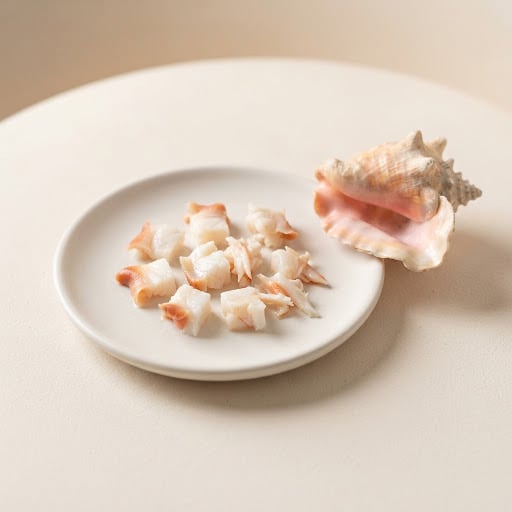
Babies can have conch from about 6 months if it is fully cooked, tenderized and finely minced or ground. Conch is very chewy and rubbery, so pieces are a high choking risk. Conch is a mollusk shellfish, so introduce it carefully and watch for allergic reactions.
How to serve conch by age
Shapes and textures change as your baby’s grasp and chewing grow.

6 months
Pound or pressure-cook conch until tender and fully cooked, then grind it very finely and blend it with a little cooking liquid into smooth foods like mashed potato or vegetable puree. Offer it on a spoon, and never offer whole or sliced conch.

7–8 months
Keep conch ground or very finely minced and stir it into thicker, lumpier mashes like fork-mashed potato or rice. You can also shape it into moist, soft patties that fall apart easily when pressed between your fingers.

9–12 months
Keep conch finely minced and cooked into soft foods, such as fish cakes, stews with soft vegetables or scrambled egg. Check every bite for rubbery bits.

12 months +
Toddlers can eat finely chopped, well-cooked conch in soups, chowders and patties. Pieces of conch should stay minced for young toddlers, because conch stays firm and chewy even when cooked.
Why it’s good
Conch gives babies lean protein, vitamin B12, magnesium, selenium and some zinc. Conch is low in fat, so serve it with an oil, avocado or other fat for energy. Conch is low in mercury.
Safety notes
- Conch meat is rubbery and hard to chew. Tenderize it and mince or grind it finely; whole pieces, rings and strips are a choking hazard.
- Never serve raw conch, such as conch salad or ceviche, to babies or toddlers. Raw shellfish can carry bacteria and viruses.
- Fried conch fritters and conch chowders are often high in salt. Make a baby portion with no added salt.
- Buy conch from a trusted seller, keep it cold, and cook it until fully opaque and firm.
- Some populations of queen conch are protected. Choose legally harvested or farmed conch.
Mollusk shellfish: introduce it carefully
Conch is a mollusk shellfish. Mollusk allergy is less common than crustacean allergy, but shellfish allergy can be severe, so offer a small amount first and watch for hives, vomiting, swelling, coughing or wheezing. If your baby has a known shellfish allergy, ask your pediatrician first.
Conch for babies: questions parents ask
Quick answers about conch for babies and toddlers.
When can babies have conch?
Babies can have conch from about 6 months as long as it is fully cooked, tenderized and finely minced. Conch should never be served raw or in chunks.
Can babies have conch?
Yes, babies can eat conch when it is cooked well and ground or minced into soft foods. Conch is a good source of lean protein and vitamin B12.
Is conch a choking hazard for babies?
Yes, conch is a high choking hazard for babies because the meat is rubbery and hard to chew. Grind or mince cooked conch finely and mix it into moist foods.
Is conch a common allergen?
Conch is a mollusk shellfish, and shellfish allergies can be serious. Mollusks are not on the US Top 9 list the way shrimp and crab are, but reactions do happen, so introduce conch in a small amount and watch closely.
How do I serve conch to a 6 month old?
To serve conch to a 6 month old, pressure-cook or simmer tenderized conch until soft, then grind it finely and blend it into mashed potato or vegetable puree. Offer it on a spoon. Soft patties made with ground conch can follow at 7–8 months.
Can babies have conch salad or ceviche?
No, babies and toddlers should not eat conch salad or ceviche, because the conch is raw or only cured in citrus. Raw shellfish can carry harmful bacteria, so serve only fully cooked conch.
Can babies have conch fritters?
Conch fritters are fried and usually salty, and the conch inside can be chunky. Homemade fritters with finely ground conch, no added salt and a soft texture can be shared occasionally with toddlers.
How do I tenderize conch for a baby?
To tenderize conch for a baby, pound it with a meat mallet and then pressure-cook or simmer it until soft. Grinding the cooked conch in a food processor gives the safest texture.
Is conch high in mercury?
No, conch is low in mercury, like most shellfish. Conch can be part of a baby's seafood meals alongside low-mercury fish such as salmon and cod.
The takeaway
- Babies can have conch from about 6 months if it is fully cooked, tenderized and finely minced or ground.
- Pound or pressure-cook conch until tender and fully cooked, then grind it very finely and blend it with a little cooking liquid into smooth foods like mashed potato or vegetable puree.
- Choking risk is high. Not a Top 9 allergen, but offer a small amount first and watch for any reaction.
Read next


Sources
This guide follows current advice from these organizations.
- Starting Solid Foods American Academy of Pediatrics (HealthyChildren.org)
- When, What, and How to Introduce Solid Foods Centers for Disease Control and Prevention
- Choking Hazards Centers for Disease Control and Prevention
- Choking Prevention American Academy of Pediatrics (HealthyChildren.org)
- Foods and Drinks to Avoid or Limit Centers for Disease Control and Prevention
Track every new food in your baby’s passport
Track the first 100 foods and the Top 9 allergens. 7 days free.
More protein foods for babies
Updated November 2026. Reviewed by our dietitians. Based on AAP, CDC and NIAID guidance. Written for healthy, full-term babies; not a substitute for your pediatrician. If your baby was born early, has a medical condition, feeding difficulties or a known allergy, check with them first (medical disclaimer). Always stay with your baby while they eat.