
Drinks & extras Food Library
When can babies have chamomile?
Can babies have chamomile?
Babies under 12 months should not be given chamomile tea or other herbal teas. Breast milk or formula, plus small sips of water from 6 months, are the only drinks babies need. After 12 months, an occasional small amount of weak, cooled, unsweetened chamomile tea is generally considered fine, but check with your pediatrician first.
How to serve chamomile by age
Shapes and textures change as your baby’s grasp and chewing grow.

6 months
Do not offer chamomile tea at this age. Breast milk or formula is your baby's main drink, with small sips of water from an open cup at meals. If your baby is fussy or has colic, talk to your pediatrician instead of trying herbal remedies.

7–8 months
Chamomile tea is still not recommended. Keep breast milk or formula as the main drink and offer small sips of water from an open cup with meals, and avoid chamomile in bottles, sippy cups, gripe waters and teething remedies.

9–12 months
Chamomile is still best avoided before 12 months, including in bottles, sippy cups and teething remedies. Offer water with meals and keep breast milk or formula as the main drink.

12 months +
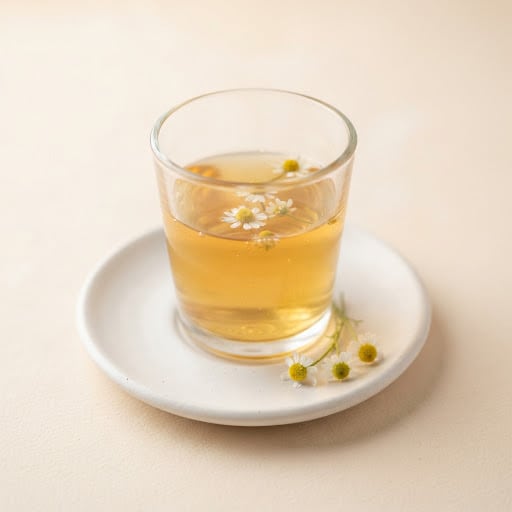
From 12 months, you can offer a few sips to a small cup of weak chamomile tea, brewed briefly, cooled to lukewarm and served without sugar or honey. Keep it occasional, and do not let it replace milk, water or meals.
Why it’s good
Chamomile tea has almost no vitamins, minerals or calories, so it adds no real nutrition for babies or toddlers. Herbal teas can fill a small tummy and push out milk and food. Some tea compounds can also reduce iron absorption when drunk with meals.
Safety notes
- No herbal teas as a drink for babies under 12 months. Tea can replace breast milk or formula, and too much fluid can upset a young baby's sodium balance.
- Dried herbs, including chamomile, are not sterile and can carry bacterial spores. This is one more reason to avoid chamomile for young babies.
- Never sweeten chamomile tea with honey for a baby under 12 months because of the risk of infant botulism, and avoid added sugar before age 2.
- Always cool chamomile tea to lukewarm before a toddler drinks it, and keep hot mugs out of reach. Hot drinks are a common cause of burns in young children.
- Do not use chamomile gripe waters, teething tinctures or herbal sleep products for babies without your pediatrician's advice. Herbal products are not tested for safety in infants.
A low-allergy food, still worth watching
Chamomile is not a common allergen, but it belongs to the daisy family, and children with ragweed, chrysanthemum or other daisy-family pollen allergies may react to it. Stop and seek medical help if you see hives, swelling, vomiting, coughing or trouble breathing after chamomile.
Chamomile for babies: questions parents ask
Quick answers about chamomile for babies and toddlers.
When can babies have chamomile?
Babies should not have chamomile tea before 12 months. After 12 months, small amounts of weak, cooled, unsweetened chamomile tea are generally considered fine on occasion, but it is best to check with your pediatrician first.
Can babies drink chamomile tea?
Babies under 12 months should not drink chamomile tea or any herbal tea. Breast milk or formula and small sips of water from 6 months are the only drinks babies need.
Is chamomile a choking hazard for babies?
Chamomile tea is not a choking hazard, since it is a liquid. The bigger risks with chamomile are burns from hot tea and filling up on tea instead of milk.
Is chamomile a common allergen?
No, chamomile is not a common allergen. Chamomile is in the daisy family, so children with ragweed or other daisy-family pollen allergies may be more likely to react.
How do I serve chamomile to a 6 month old?
You should not serve chamomile to a 6 month old. Offer breast milk or formula, small sips of water with meals, and talk to your pediatrician if you were hoping chamomile would help with fussiness or sleep.
Can chamomile help with colic?
Chamomile is not a proven or recommended treatment for colic in babies. Colic usually improves on its own, and your pediatrician can help you rule out other causes and find safe ways to soothe your baby.
Does chamomile help toddlers sleep?
There is no good evidence that chamomile tea helps toddlers sleep. A calm, consistent bedtime routine works better, and drinks right before bed can lead to night waking and wet diapers.
Is chamomile gripe water safe for babies?
Chamomile gripe water and herbal colic drops are not tested for safety or effect in babies, and ingredients vary by brand. Talk to your pediatrician before giving any herbal product to a baby.
How much chamomile tea can a toddler have?
A toddler only needs a few ounces of weak chamomile tea now and then, if any. Brew chamomile tea briefly, cool it to lukewarm, and do not let it replace milk, water or meals.
Is chamomile tea good for babies?
No, chamomile tea is not recommended for babies under 12 months. Babies only need breast milk or formula, plus small sips of water from 6 months, and tea can fill a small tummy without adding nutrition. Chamomile is not a proven remedy for colic or sleep, so ask your pediatrician about fussiness instead.
How do I make chamomile tea for babies?
Do not make chamomile tea for babies under 12 months. For a toddler over 12 months, and after checking with your pediatrician, steep a chamomile tea bag in hot water briefly for a weak brew, cool it to lukewarm, and offer a few sips to a small cup with no honey or sugar.
Is chamomile tea good for toddlers?
Chamomile tea is generally considered fine for toddlers 12 months and older in small amounts, but it is not needed and adds almost no nutrition. If you offer it, keep it weak, lukewarm, unsweetened and occasional so it does not replace milk, water or meals. Check with your pediatrician first.
The takeaway
- Babies under 12 months should not be given chamomile tea or other herbal teas.
- From 12 months, you can offer a few sips to a small cup of weak chamomile tea, brewed briefly, cooled to lukewarm and served without sugar or honey.
- Choking risk is low. Not a Top 9 allergen, but offer a small amount first and watch for any reaction.
Read next


Sources
This guide follows current advice from these organizations.
- Starting Solid Foods American Academy of Pediatrics (HealthyChildren.org)
- When, What, and How to Introduce Solid Foods Centers for Disease Control and Prevention
- Choking Hazards Centers for Disease Control and Prevention
- Recommended Drinks for Young Children Ages 0-5 American Academy of Pediatrics (HealthyChildren.org)
- Foods and Drinks to Avoid or Limit Centers for Disease Control and Prevention
- Dietary Guidelines for Americans, 2020-2025 U.S. Department of Agriculture and HHS
- Botulism Prevention Centers for Disease Control and Prevention
Track every new food in your baby’s passport
Track the first 100 foods and the Top 9 allergens. 7 days free.
More drinks and extras for babies
Updated November 2026. Reviewed by our dietitians. Based on AAP, CDC and NIAID guidance. Written for healthy, full-term babies; not a substitute for your pediatrician. If your baby was born early, has a medical condition, feeding difficulties or a known allergy, check with them first (medical disclaimer). Always stay with your baby while they eat.