
Fruit Food Library
When can babies have ackee?
Can babies have ackee?
Babies can have ackee from about 6 months, but only commercially canned or frozen ackee, or fresh ackee prepared by someone experienced from fully ripe, naturally opened fruit. Unripe ackee and ackee seeds contain a toxin called hypoglycin that can cause severe vomiting and dangerously low blood sugar, and young children are especially at risk. If you are not sure the ackee was picked ripe and prepared correctly, do not serve it.
How to serve ackee by age
Shapes and textures change as your baby’s grasp and chewing grow.

6 months
Use canned ackee, rinsed well to remove the salty brine, and heat it until very soft. Mash it until smooth and stir it into smooth sweet potato, yam or pumpkin puree, then offer it on a spoon or a preloaded spoon.

7–8 months
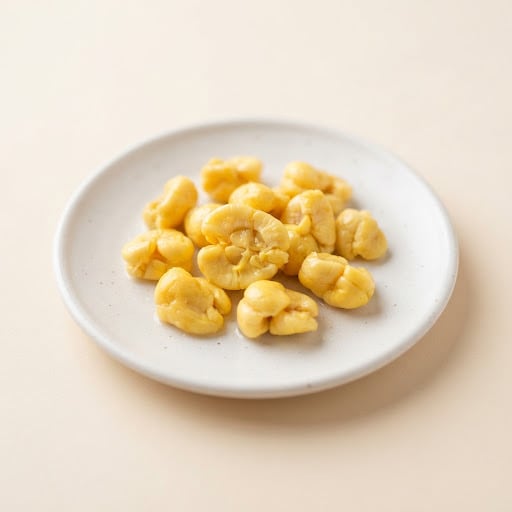
Mash rinsed, warmed ackee more roughly with a fork so it has soft lumps, and mix it into mashed sweet potato, yam or callaloo. Ackee flesh is creamy, so soft lobes broken in half that squash easily between your fingers can also go on the tray.

9–12 months
Offer small, soft pieces of rinsed, cooked ackee, gently broken up, mixed with mashed callaloo, soft vegetables or scrambled egg. Ackee is creamy and soft, but check every piece and remove any seed or red membrane if you are using fresh fruit.

12 months +
Toddlers can eat ackee as part of family meals, such as ackee sauteed with onion, tomato and peppers. If you make ackee and saltfish, soak and boil the saltfish in several changes of water to remove salt, and flake it carefully to remove bones.
Why it’s good
Ackee is unusual for a fruit because it is rich in healthy fats, mostly unsaturated, plus protein and fiber. Ackee also provides some vitamin C, B vitamins, potassium and zinc. Its soft, buttery texture and mild flavor work well in savory meals for babies.
Safety notes
- Never serve unripe ackee or ackee seeds. Unripe fruit and seeds contain hypoglycin, which can cause Jamaican vomiting sickness with severe vomiting, very low blood sugar, seizures and, rarely, death. Children are at higher risk.
- Fresh ackee is only safe when the pod has opened naturally on the tree to show the black seeds. Remove all seeds and the pink or red membrane, boil the yellow flesh, and throw away the cooking water. If you are unsure, use canned ackee from a trusted brand.
- In the US, only commercially processed canned or frozen ackee from approved producers is legally sold. Do not buy fresh imported ackee or ackee of unknown origin.
- Canned ackee is packed in salty brine. Drain and rinse it well, and do not add salt for babies under 12 months.
- Seek emergency care right away if your child vomits, is unusually sleepy, floppy or confused after eating ackee. Tell the doctor your child ate ackee so they can check blood sugar.
A low-allergy food, still worth watching
Ackee is not a common allergen and is not one of the Top 9 allergens, though rare allergic reactions have been reported. Ackee and saltfish contains fish, which is a Top 9 allergen, so introduce fish separately first and watch for hives, swelling or vomiting.
Ackee for babies: questions parents ask
Quick answers about ackee for babies and toddlers.
When can babies have ackee?
Babies can have ackee from about 6 months, but only if it is commercially canned or frozen, or fresh ackee prepared correctly from fully ripe, naturally opened fruit. Ackee should be soft, cooked and mashed for young babies.
Is ackee safe for babies?
Ackee is safe for babies only when it is ripe and properly prepared. Unripe ackee and its seeds contain hypoglycin, a toxin that can cause severe vomiting and dangerously low blood sugar. Canned ackee from a trusted brand is the safest choice for families.
Is ackee a choking hazard for babies?
Cooked ackee flesh is soft and creamy, but ackee is a medium choking risk because its large black seeds are a hazard and must always be removed. Mash or break up the soft flesh for babies, and stay with your baby while they eat.
Is ackee a common allergen?
Ackee is not a common allergen and is not one of the Top 9 food allergens. Allergic reactions to ackee are rare. Dishes like ackee and saltfish contain fish, which is a common allergen.
How do I serve ackee to a 6 month old?
To serve ackee to a 6 month old, drain and rinse canned ackee, warm it until soft, then mash it smooth and mix it into mashed sweet potato, yam or pumpkin. Offer a small amount on a spoon or a preloaded spoon. Lumpier mash and soft broken pieces can follow at 7–8 months.
Is canned ackee safe for babies?
Canned ackee from an approved commercial producer is the safest form of ackee for babies, because it is processed from ripe fruit with the seeds and membranes removed. Rinse canned ackee well to reduce the salt before serving.
How can I tell if ackee is ripe and safe?
Ripe ackee pods are red to yellow-red and split open on their own on the tree, showing shiny black seeds and creamy yellow flesh. Never force open a closed pod or eat fruit that fell before opening. Even ripe ackee needs the seeds and red membrane removed and must be boiled.
What are the symptoms of ackee poisoning?
Ackee poisoning usually starts with sudden vomiting a few hours after eating unripe ackee, followed by weakness, sleepiness, confusion or seizures caused by very low blood sugar. Ackee poisoning is a medical emergency, so call emergency services or go to the nearest emergency room right away.
Can babies have ackee and saltfish?
Toddlers over 12 months can have ackee and saltfish if the saltfish is soaked and boiled in several changes of water to remove most of the salt and all bones are removed. For babies under 12 months, serve plain ackee with a fresh, unsalted, deboned fish instead.
The takeaway
- Babies can have ackee from about 6 months, but only commercially canned or frozen ackee, or fresh ackee prepared by someone experienced from fully ripe, naturally opened fruit.
- Use canned ackee, rinsed well to remove the salty brine, and heat it until very soft.
- Choking risk is medium. Not a Top 9 allergen, but offer a small amount first and watch for any reaction.
Read next



Sources
This guide follows current advice from these organizations.
- Starting Solid Foods American Academy of Pediatrics (HealthyChildren.org)
- When, What, and How to Introduce Solid Foods Centers for Disease Control and Prevention
- Choking Hazards Centers for Disease Control and Prevention
- Choking Prevention American Academy of Pediatrics (HealthyChildren.org)
Track every new food in your baby’s passport
Track the first 100 foods and the Top 9 allergens. 7 days free.
More fruit for babies

Updated November 2026. Reviewed by our dietitians. Based on AAP, CDC and NIAID guidance. Written for healthy, full-term babies; not a substitute for your pediatrician. If your baby was born early, has a medical condition, feeding difficulties or a known allergy, check with them first (medical disclaimer). Always stay with your baby while they eat.