
Herbs & spices Food Library
When can babies have sumac?
Can babies have sumac?
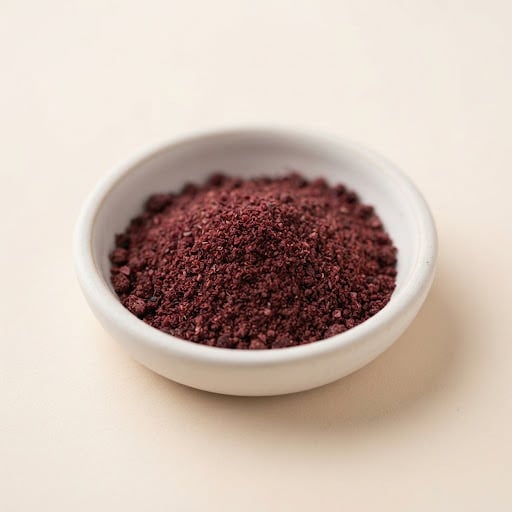
Babies can have ground sumac from about 6 months as a sprinkle mixed into food. Sumac is a tangy, lemony red spice from the Middle East and Mediterranean, and it is a different plant from poison sumac. Sumac is not a common allergen, but it is related to cashews and mangoes, so take care if your baby has a cashew or pistachio allergy.
How to serve sumac by age
Shapes and textures change as your baby’s grasp and chewing grow.

6 months
Stir a small pinch of ground sumac into smooth hummus, plain yogurt or mashed avocado and offer it on a spoon. Mix it in well so there are no dry clumps of spice.

7–8 months
Stir sumac into lumpier mashed chickpeas or avocado, or sprinkle it on soft roasted vegetable spears that squash easily between your fingers. It adds a sour, lemony taste without salt.

9–12 months
Season soft finger foods like chicken strips, roasted potato wedges, lentil patties or omelet pieces with sumac. It adds a sour, lemony taste without salt.

12 months +
Toddlers can enjoy family dishes with sumac, such as fattoush-style salads with soft chopped vegetables, grilled meats and rice. Check spice blends for added salt.
Why it’s good
Sumac is used in small amounts, so it adds flavor more than nutrition. It is rich in plant antioxidants and gives a bright, sour taste that can replace salt and lemon in many dishes. Introducing spices like sumac helps babies get used to a wide variety of flavors.
Safety notes
- Only use food-grade sumac from a store. Never forage sumac: poison sumac, a related plant with white berries, is toxic.
- Dry spice powder can cause coughing if inhaled. Mix sumac into moist foods rather than dusting it thickly on top.
- Some sumac blends contain added salt. Check the label and choose plain ground sumac.
- Za'atar blends often include sesame seeds, a Top 9 allergen. Introduce sesame on its own before serving za'atar.
- Sumac is in the same plant family as cashews, pistachios and mangoes. If your baby has a cashew or pistachio allergy, ask your allergist before offering it.
A low-allergy food, still worth watching
Sumac is not one of the Top 9 allergens, and reactions are rare. Because sumac is related to cashews, pistachios and mangoes, babies with those allergies could react, so offer a small amount first and watch for hives, vomiting, swelling or wheezing.
Sumac for babies: questions parents ask
Quick answers about sumac for babies and toddlers.
When can babies have sumac?
Babies can have sumac from about 6 months, when they start solid foods. Ground sumac should be mixed into moist foods in small amounts.
Can babies have sumac?
Yes, babies can eat ground sumac from 6 months. Sumac adds a tangy, lemony flavor to food without salt.
Is sumac a choking hazard for babies?
Ground sumac is a low choking risk because it is a fine powder. Mix sumac into moist food so your baby does not inhale dry spice and cough.
Is sumac a common allergen?
No, sumac is not a common allergen and is not one of the Top 9 allergens. Sumac is related to cashews and pistachios, so talk to your allergist first if your baby has one of those allergies.
How do I serve sumac to a 6 month old?
To serve sumac to a 6 month old, stir a small pinch of ground sumac into smooth hummus, yogurt or mashed avocado and offer it on a spoon. Sumac-seasoned soft roasted vegetables to hold can follow at 7–8 months.
Is sumac poisonous?
The sumac spice sold in stores is safe and comes from red-berried plants used in cooking for centuries. Poison sumac is a different plant with white berries, which is why you should never forage sumac yourself.
Can babies have za'atar?
Babies can have za'atar from 6 months if they have already safely eaten sesame and the blend has little or no added salt. Za'atar usually contains thyme, sumac and sesame seeds, so grind the blend finely for young babies.
What does sumac taste like?
Sumac tastes tangy and sour, similar to lemon, with a slight fruity note. Sumac is a good way to add bright flavor to baby food without salt or citrus juice.
Is sumac healthy for babies?
Sumac is a healthy way to season baby food because it adds flavor without salt or sugar. Sumac is used in small amounts, so it does not add much nutrition on its own.
The takeaway
- Babies can have ground sumac from about 6 months as a sprinkle mixed into food.
- Stir a small pinch of ground sumac into smooth hummus, plain yogurt or mashed avocado and offer it on a spoon.
- Choking risk is low. Not a Top 9 allergen, but offer a small amount first and watch for any reaction.
Read next



Sources
This guide follows current advice from these organizations.
- Starting Solid Foods American Academy of Pediatrics (HealthyChildren.org)
- When, What, and How to Introduce Solid Foods Centers for Disease Control and Prevention
- Choking Hazards Centers for Disease Control and Prevention
- Foods and Drinks to Avoid or Limit Centers for Disease Control and Prevention
Track every new food in your baby’s passport
Track the first 100 foods and the Top 9 allergens. 7 days free.
More herbs and spices for babies
Updated November 2026. Reviewed by our dietitians. Based on AAP, CDC and NIAID guidance. Written for healthy, full-term babies; not a substitute for your pediatrician. If your baby was born early, has a medical condition, feeding difficulties or a known allergy, check with them first (medical disclaimer). Always stay with your baby while they eat.