
Veggies Food Library
When can babies have seaweed?
Can babies eat seaweed?
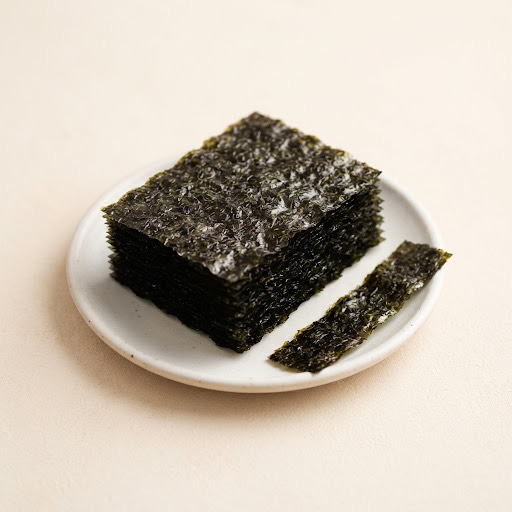
Babies can have seaweed such as nori from about 6 months, crumbled finely or softened into food. Dry seaweed sheets turn sticky and gummy with saliva, so avoid whole sheets for young babies. Skip hijiki, which can contain high levels of arsenic, and limit kelp and kombu, which are extremely high in iodine.
How to serve seaweed by age
Shapes and textures change as your baby’s grasp and chewing grow.

6 months
Grind plain, unseasoned nori into a fine powder and stir a pinch into smooth foods like mashed avocado, sweet potato or rice porridge. Never offer dry sheets.

7–8 months
Keep crumbling nori into tiny flakes over lumpier rice, avocado or scrambled eggs. You can also wrap a soft rice log in nori that has been softened in a little warm broth.

9–12 months
Keep crumbling nori into food, or offer small strips of nori softened in soup or wrapped around soft rice balls. Avoid big dry sheets, which can stick to the roof of the mouth.

12 months +
Toddlers can have small pieces of nori, simple homemade rice rolls and miso soup with soft wakame pieces. Seasoned seaweed snacks are fine occasionally once your child is older, broken into small pieces.
Why it’s good
Seaweed is one of the few natural food sources of iodine, which babies need for thyroid and brain development. Nori also provides vitamin A, folate, vitamin C and some protein. Seaweed varies a lot by type, and some kinds have far too much iodine for babies.
Safety notes
- Avoid hijiki (hiziki), which can contain high levels of inorganic arsenic. Several food safety agencies advise against eating it.
- Kelp, kombu and kelp supplements are very high in iodine, and too much iodine can affect the thyroid. Use kombu only to flavor broth and remove it, and never give kelp supplements to babies.
- Dry nori sheets get sticky with saliva. Crumble, grind or soften nori and avoid large dry pieces for young babies.
- Seasoned seaweed snacks are usually high in salt and may contain soy, wheat or sesame oil. Choose plain, unseasoned nori for babies.
- Buy seaweed made for eating from a trusted brand; do not forage seaweed from beaches.
A low-allergy food, still worth watching
Seaweed is not a common allergen. Seasoned nori snacks and many seaweed products contain sesame, soy or wheat, so read labels and introduce those allergens separately first.
Seaweed for babies: questions parents ask
Quick answers about seaweed for babies and toddlers.
When can babies have seaweed?
Babies can have seaweed like nori from about 6 months, finely crumbled or softened into other foods. Avoid hijiki entirely and limit high-iodine seaweeds like kelp and kombu.
Can babies eat seaweed?
Yes, babies can eat small amounts of seaweed, especially plain nori. Seaweed adds iodine and flavor without adding salt, as long as it is unseasoned.
Is seaweed a choking hazard for babies?
Seaweed can be a choking hazard for babies because dry sheets become sticky and gummy when wet with saliva. Crumble nori into tiny flakes or soften it in liquid before serving.
Is seaweed a common allergen?
No, seaweed is not a common allergen. Seasoned seaweed snacks often contain sesame, soy or wheat, which are common allergens, so check the label.
How do I serve seaweed to a 6 month old?
To serve seaweed to a 6 month old, grind a little plain, unseasoned nori into a fine powder and stir it into rice porridge, mashed avocado or a vegetable puree. Do not offer whole dry sheets.
Is all seaweed safe for babies?
Not all seaweed is safe for babies. Nori and wakame are good choices in small amounts, kelp and kombu should be limited because of very high iodine, and hijiki should be avoided because of arsenic.
Can babies eat seasoned seaweed snacks?
Babies under 12 months are better off with plain nori than seasoned seaweed snacks, which are salty and oily. Toddlers can have seasoned seaweed snacks occasionally, broken into small pieces.
Can babies eat too much iodine from seaweed?
Yes, babies can get too much iodine from seaweed, especially from kelp, kombu or seaweed supplements. A sprinkle of nori a few times a week is a safe amount for most babies.
Can babies eat miso soup with seaweed?
Babies can have a little homemade miso soup with soft wakame, but miso is salty, so use a small amount of miso and dilute the broth. Remove any large pieces of seaweed or chop them finely.
Is seaweed good for toddlers?
Yes, plain seaweed like nori is a good food for toddlers 12 months and older in small amounts, adding iodine, vitamin A and folate. Offer small pieces of nori or simple rice rolls, limit kelp and kombu because of their very high iodine, and avoid hijiki.
Is seaweed good for babies?
Seaweed can be a good food for babies from about 6 months when it is plain nori, finely ground or softened into food. Nori is a natural source of iodine for thyroid and brain development; skip hijiki, which can contain arsenic, and limit kelp and kombu, which have far too much iodine.
The takeaway
- Babies can have seaweed such as nori from about 6 months, crumbled finely or softened into food.
- Grind plain, unseasoned nori into a fine powder and stir a pinch into smooth foods like mashed avocado, sweet potato or rice porridge.
- Choking risk is medium. Not a Top 9 allergen, but offer a small amount first and watch for any reaction.
Read next



Sources
This guide follows current advice from these organizations.
- Starting Solid Foods American Academy of Pediatrics (HealthyChildren.org)
- When, What, and How to Introduce Solid Foods Centers for Disease Control and Prevention
- Choking Hazards Centers for Disease Control and Prevention
- Choking Prevention American Academy of Pediatrics (HealthyChildren.org)
- What You Can Do to Limit Exposure to Arsenic U.S. Food and Drug Administration
Track every new food in your baby’s passport
Track the first 100 foods and the Top 9 allergens. 7 days free.
More vegetables for babies
Updated November 2026. Reviewed by our dietitians. Based on AAP, CDC and NIAID guidance. Written for healthy, full-term babies; not a substitute for your pediatrician. If your baby was born early, has a medical condition, feeding difficulties or a known allergy, check with them first (medical disclaimer). Always stay with your baby while they eat.